Nvidia’s Kyber AI Rack Reportedly Delayed to 2028 on Board Snag
Nvidia’s Kyber rack for its 2027 Rubin Ultra chips has slipped more than a year to 2028 over a hard-to-manufacture circuit board, SemiAnalysis says, with no proven fallback.
Explore AIstify's latest reporting, research, and expert analysis tagged with "ai hardware", collected in one continuously updated archive.
Nvidia’s Kyber rack for its 2027 Rubin Ultra chips has slipped more than a year to 2028 over a hard-to-manufacture circuit board, SemiAnalysis says, with no proven fallback.

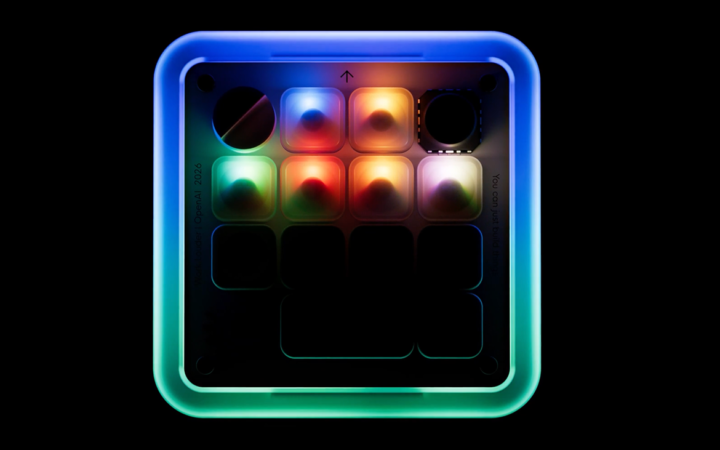
OpenAI teased its first branded hardware, Codex Micro, a programmable macro pad built with Work Louder to give developers physical shortcuts for its Codex coding agent, launching July 15.
A record European heatwave is highlighting a growing threat to the AI boom: extreme weather that stresses data centers and the power grids they depend on at once.
SK Hynix filed to raise about $29 billion through a Nasdaq ADR listing set for July 10, roughly double earlier estimates, to fund its AI memory expansion.
Qualcomm agreed to acquire Modular, the AI software startup led by Chris Lattner, to build a hardware-agnostic software layer and challenge Nvidia in data center AI.
Nvidia has unveiled its first Arm-based PC processor, the RTX Spark superchip, which will power a new generation of Windows laptops and desktops.
Google and Blackstone have formed a new AI infrastructure company focused on offering cloud access to Google’s TPU chips. The venture aims to expand alternatives to Nvidia-powered AI infrastructure with $5 billion in initial funding.
XLA (Accelerated Linear Algebra) is a compiler that optimizes tensor operations for faster and more efficient machine learning training and inference.
OpenAI’s rumored AI-focused smartphone could enter mass production in 2027, earlier than previously expected, according to analyst Ming-Chi Kuo.
Intel stock surges to record as Apple explores U.S. chip production, highlighting AI-driven demand and renewed momentum in the semiconductor sector.
A GPU is a highly parallel processor widely used to train and run neural networks and other compute-intensive AI workloads.
Model quantization lowers the numerical precision of AI weights or calculations to reduce memory, inference time, energy use, and deployment cost.
As John Ternus prepares to take over as Apple CEO, investors are demanding a clearer AI strategy. The company risks falling behind rivals investing heavily in AI.
Snap’s Specs unit will use Qualcomm chips for upcoming smart glasses, deepening a long-standing partnership. The move comes as competition intensifies in AI-powered wearables.
Intel has joined Elon Musk’s Terafab project aimed at scaling AI chip production, though its exact role remains unclear. The effort targets massive compute output for AI and robotics.