Key Notes
- NVIDIA’s new Super VL model combines visual understanding with reasoning and tool use for document-heavy, multistep agent workflows.
- The larger Bolt model uses compression and low-precision weights to target local deployment within a 24GB memory budget on supported hardware.
- A smaller Bolt model targeting 4GB is scheduled for October 23, extending the lineup toward voice assistants and embedded agents.
NVIDIA is expanding its open AI model lineup with Nemotron 3.5 Super VL, a 120-billion-parameter model for agents that work with text, images and documents, alongside a compressed Bolt model designed for local computers. The October 15 release gives developers a choice between a larger multimodal system and a version built around a 24GB memory budget.
Super VL and Bolt 74B-A9B are available now, NVIDIA announced. A smaller Bolt E4B model, targeting a 4GB footprint for conversational and physical agents, is scheduled for October 23. The releases extend the company’s effort to make agent software useful across servers, workstations and edge devices.
Super VL Reads the Documents Agents Work With
Super VL combines visual understanding with reasoning and tool use. Its intended workloads include reading tables and charts, extracting information from document pages, researching websites and completing tasks that require several steps. That is a practical extension of the agent-focused approach in the earlier Nemotron 3 Super.
The model card lists 120 billion total parameters, with 12 billion active for each token, and a context window of up to one million tokens. Its inputs include text, images and video, while its output is text. Documents can be supplied as page images with accompanying text, rather than assuming every deployment directly accepts an arbitrary PDF file.
The architecture combines Mamba, attention and mixture-of-experts components. Activating only part of the model reduces computation, but the full weights still need to be stored or made available. NVIDIA lists specific deployment recipes, including DGX Spark and data-center GPUs, and notes that context settings may need to shrink to accommodate memory and concurrent users.
Bolt Compresses a Larger Model Into a Local Workhorse
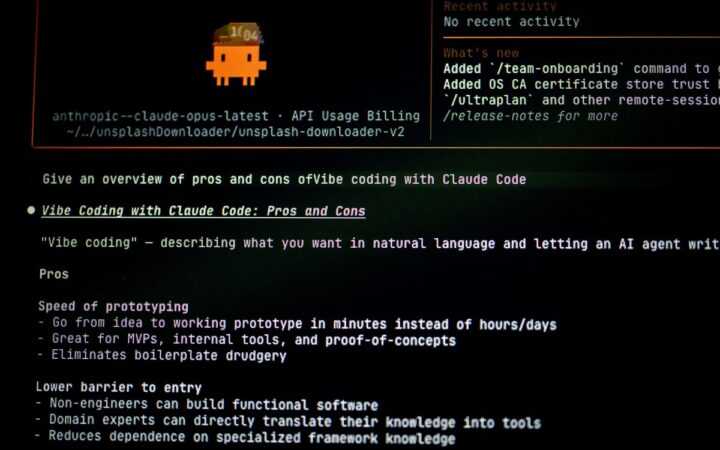
Bolt 74B-A9B takes a different route to local AI: NVIDIA compressed Super VL rather than starting with a small model. It retains 74 billion parameters, with nine billion active, then uses aggressive quantization and further training to recover accuracy. Its target tasks include web research, writing code and debugging through local agent applications.
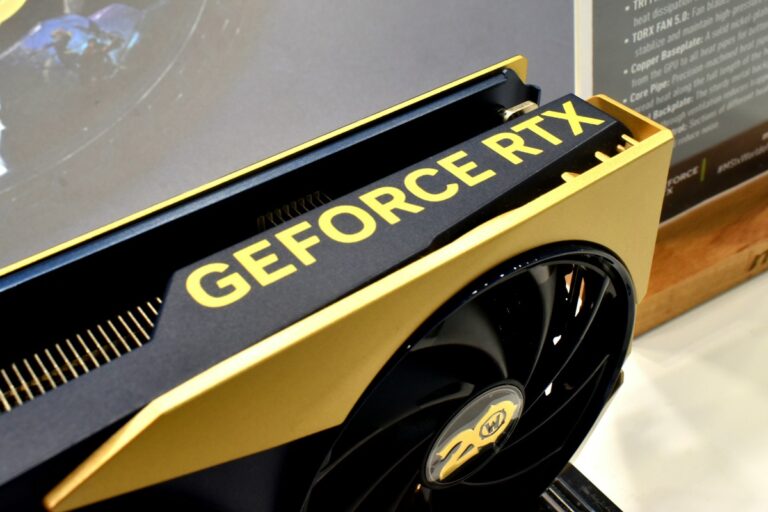
The Bolt research explains that most expert weights use roughly two bits per value, while other components retain higher precision. The 24GB figure is the design’s memory budget, not a promise that any computer with 24GB of system RAM will provide the advertised experience. NVIDIA’s published performance tests used a specific RTX Spark system and software configuration.
The company reports about 84 generated tokens per second in its coding speed test on that system. That measures one configuration, not universal agent productivity: web access, tool execution, context length and retries can all affect the time needed to finish a project. The release includes quantized weights, an unquantized checkpoint for customization and a companion model that accelerates generation.
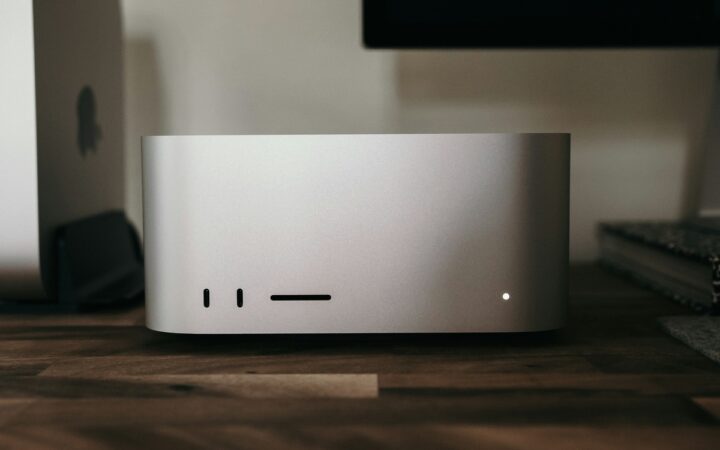
This targets a different hardware scale from Muse Spark Open, whose highlighted local setup uses two high-memory Mac Studio computers. The comparison is about deployment choices, not a claim that the smaller model matches Meta’s model on every task.
Open Weights Are Part of a Customization Strategy
NVIDIA’s technical overview describes an accompanying release of training recipes, datasets and reinforcement-learning environments. Teams can use NeMo libraries to adapt Super VL to their own terminology, tools and workflows, rather than relying solely on a general-purpose model’s default behavior.
The examples include document extraction, financial workflows and security analysis. Those applications explain why customization matters: reading a number from a chart is only one step; an agent also needs to understand which records to compare and which action the organization permits. Reported gains from specialized training should therefore be read in the context of the particular workload.
Super VL is available through Hugging Face, OpenRouter and NVIDIA NIM, while Bolt is downloadable from Hugging Face. The forthcoming E4B model is aimed at local voice assistants, interactive characters and embedded interfaces on supported NVIDIA systems. Its October 23 release remains a scheduled launch, rather than a download available today.
Together, the releases broaden NVIDIA’s software offering around its hardware. For developers, the useful choice is less about selecting the biggest parameter count than matching a model to the documents, tools, memory and response times a real agent needs.
Disclaimer: AIstify is an independent media brand owned and operated by NuvexMedia LLC, publishing news, research, and insights on artificial intelligence, emerging technologies, automation, and related industries. NuvexMedia LLC invests in and collaborates with companies across the AI, technology, software, and digital innovation sectors. These relationships do not influence AIstify’s editorial coverage, and the publication maintains full editorial independence to provide accurate, timely, and objective information. © 2026 NuvexMedia LLC. All rights reserved. This content is for informational purposes only and should not be considered legal, tax, investment, financial, or other professional advice.