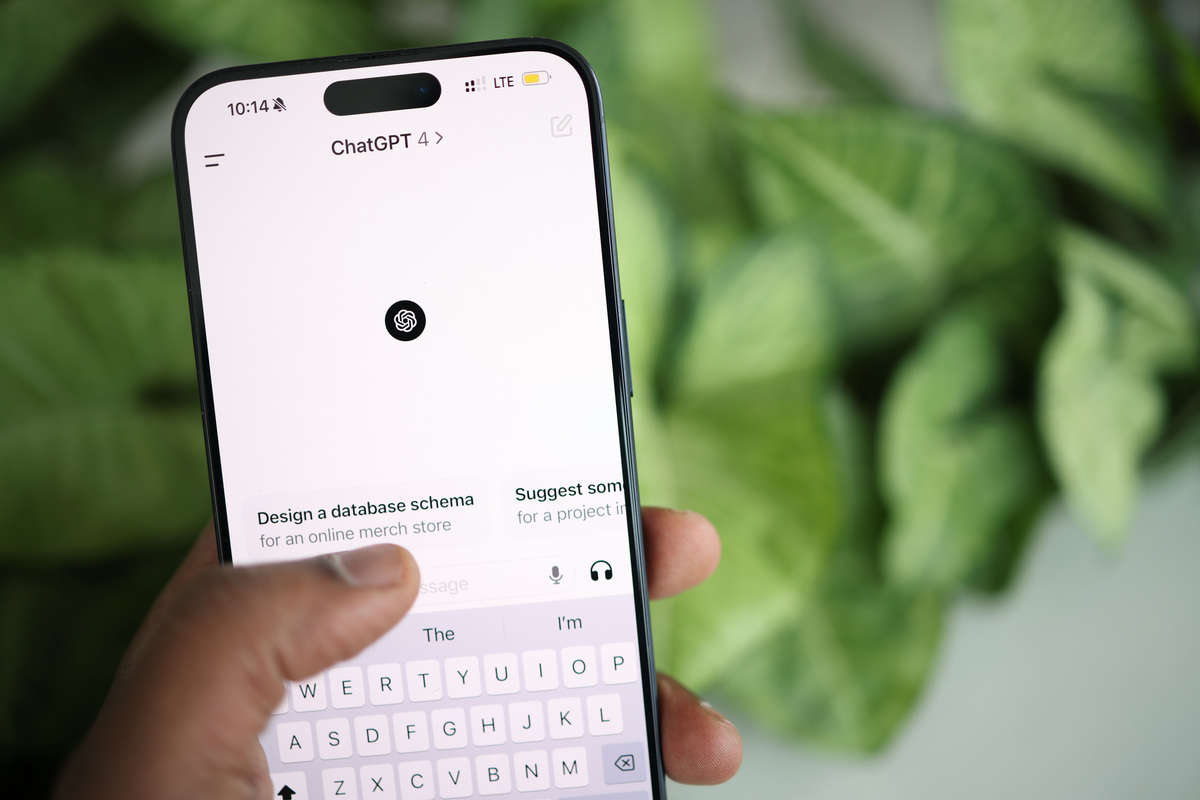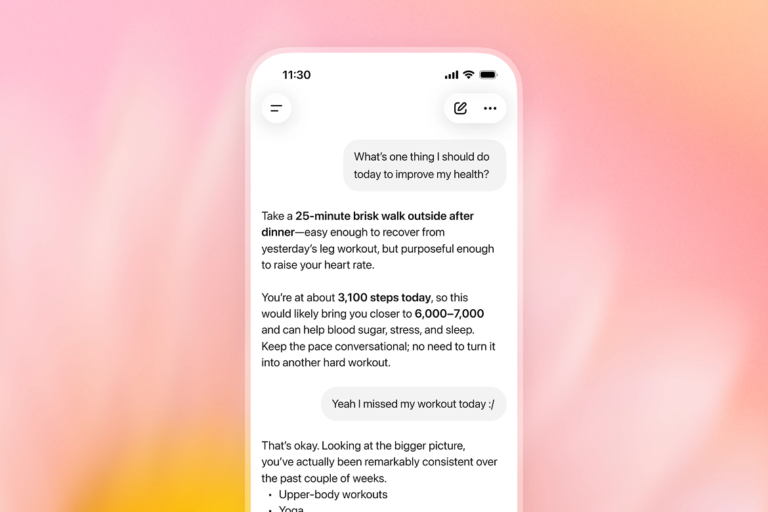

OpenAI said it is making ChatGPT Health available to all US users aged 18 and over across every plan, including free accounts, on web and iOS. The feature lets people connect data from services such as Apple Health, MyFitnessPal and Function, and import medical records from hospital systems including Epic and Oracle Health. Users can compare lab results over time, track changes in activity and prepare questions for a doctor’s appointment.
A significant change accompanies the rollout: health information can now inform answers throughout ChatGPT rather than only inside a dedicated hub, after OpenAI observed that 70% of health queries happened outside it. The company says health conversations are stored separately from ordinary chats and that user data is not used to train its models.
The scale is substantial. OpenAI said health-related queries have risen from 230 million a week in January to about 300 million now. It also reported progress on accuracy, saying the smallest model in its latest release, GPT-5.6 Luna, outperforms the older GPT-5.5 on HealthBench, an open-source benchmark OpenAI itself developed, a caveat worth noting.
The company says it works with physicians to improve health responses, while its terms of service continue to state that the service is “not intended for use in the diagnosis or treatment of any health condition.” OpenAI says it wants people to verify information and make medical decisions based on professional advice.
The timing is difficult. The announcement came a day after Florida pastor Scott Winters sued OpenAI and CEO Sam Altman in San Francisco Superior Court, alleging that ChatGPT’s advice led him to delay care for what proved to be a pulmonary embolism, blood clots in both lungs that doctors said brought him near death.
According to the complaint, the chatbot told him his symptoms were not dangerous, invoked his faith by saying “God did not design your body to endlessly fail,” and discouraged him from heeding friends and church members urging him to seek care. His suit seeks damages, stronger guardrails and a halt to ChatGPT Health until independent evaluators deem it safe.
These are allegations that OpenAI has not conceded; the company points to its terms and says it is working to make health answers safer. It faces at least two other suits alleging harm from health-related advice, including wrongful death claims.
The Timing Problem
Expanding a health feature the day after such a lawsuit sharpens an unresolved tension in OpenAI’s position. The company markets a dedicated health product, encourages users to upload medical records, and reports hundreds of millions of health queries weekly, while simultaneously disclaiming any role in diagnosis or treatment. Plaintiffs’ lawyers argue that combination is the problem, with one calling the chatbot a wedge between users and their real-life support networks.
Multiple academic studies have found AI chatbots unreliable for medical advice, yet the commercial pull is strong enough that Anthropic and Google have launched their own health features. The practical guidance the episode reinforces is unglamorous but important: these tools may help someone organize questions or understand terminology, but they are not a substitute for a clinician, particularly when symptoms are new, worsening or frightening.
What Happens to Your Records
The privacy dimension is less discussed and arguably more consequential. HIPAA, the federal law protecting medical records, applies to healthcare providers and insurers, not to consumer technology companies.
Once a person exports their records into ChatGPT, those records are governed by OpenAI’s terms of service rather than federal health privacy law, a structural feature of US regulation rather than a flaw in OpenAI’s product. OpenAI’s commitments, that health chats are siloed and not used for training, are meaningful but are company policy that can change, not statutory protection, and they have not been independently audited.
For users weighing the convenience of an AI that can read their lab history against the permanence of that decision, understanding which protections travel with the data, and which do not, is the threshold question before connecting anything.
Disclaimer: AIstify is an independent media brand owned and operated by NuvexMedia LLC, publishing news, research, and insights on artificial intelligence, emerging technologies, automation, and related industries. NuvexMedia LLC invests in and collaborates with companies across the AI, technology, software, and digital innovation sectors. These relationships do not influence AIstify’s editorial coverage, and the publication maintains full editorial independence to provide accurate, timely, and objective information. © 2026 NuvexMedia LLC. All rights reserved. This content is for informational purposes only and should not be considered legal, tax, investment, financial, or other professional advice.