
Key Notes
- Jensen Huang welcomed Kazakhstan’s ambition to develop physical AI for mining, agriculture and other industries during an October 23 visit to Astana.
- New computing commitments build on existing infrastructure, with Firebird targeting a commercial launch in the third quarter of 2027.
- A separate robotaxi memorandum provides an early application to assess, but deployment still depends on feasibility work and government agreement.
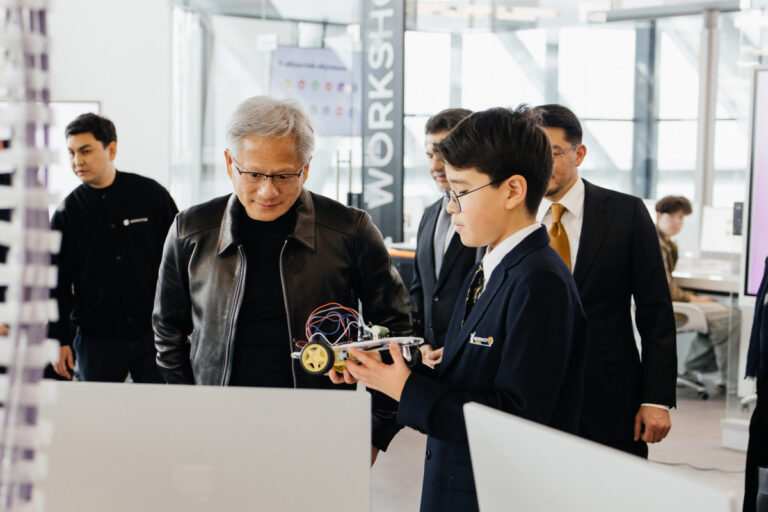
NVIDIA chief executive Jensen Huang has welcomed Kazakhstan’s ambition to become a center for physical AI, calling the proposal “fantastic” during a visit to Astana. The opportunity, he argued, extends into the country’s mines, mineral processing and agriculture, where AI would need to work with machines and real operating conditions.
Huang met President Kassym-Jomart Tokayev and joined Deputy Prime Minister Zhaslan Madiyev for an October 23 fireside chat at Alem.AI, the capital’s international AI center. The appearance concluded Kazakhstan’s AI Month program and came alongside further commitments to expand the country’s computing infrastructure.
From AI Ambitions to Industrial Work
In NVIDIA’s account of the discussion, Madiyev asked how Kazakhstan could become a hub for training models for robots and other physical systems. Factories, transport and logistics were among the areas he identified, alongside the country’s resource industries.
Physical AI describes systems that perceive and act in the world, including robots and autonomous vehicles. Applying it in a mine or on a farm requires more than a capable language model: equipment must operate reliably around people, changing terrain and machinery. Local operating data, testing and engineering expertise therefore become central parts of the investment.
That emphasis connects Kazakhstan’s proposal with the industrial AI partnership we covered in Germany. Both initiatives seek to build on existing economic strengths. For Kazakhstan, the practical test will be whether additional computing capacity helps domestic companies improve real operations and develop products they can sell.
The Computing Buildout Already Has a Foundation
The latest visit builds on the $10 billion framework we reported earlier this year. In June, Kazakhstan’s government announced agreements totaling $10 billion with Firebird and NVIDIA, including cooperation around the Data Center Valley project and plans for Firebird Labs Kazakhstan. The government presented the initiative as a foundation for domestic research, startups and export-oriented technology services.
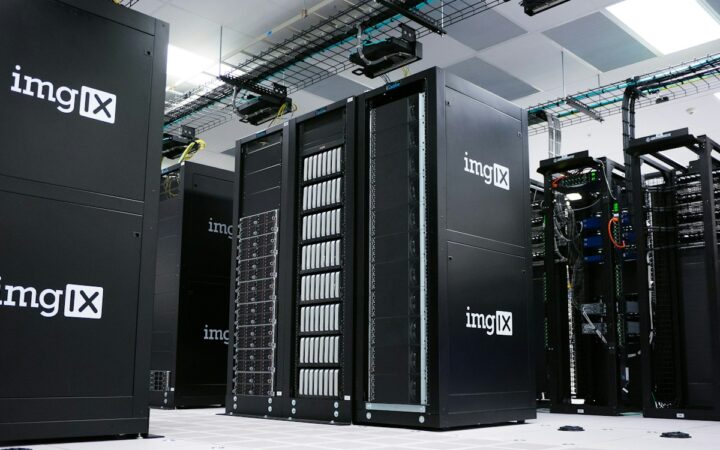
NVIDIA now says Kazakhtelecom has deployed 400 H200 and 480 B300 GPUs in Astana and Almaty. Firebird’s first Kazakhstan phase is under construction with the telecom operator, targeting commercial launch in the third quarter of 2027. Further expansion remains planned capacity, rather than computing power already available to customers.
The broader question is who can use that infrastructure. Affordable access for engineers, universities and smaller businesses would make it more useful than a collection of large installations serving only a few organizations. Huang also emphasized the value of domestic data and AI that reflects Kazakhstan’s language and culture.
Robotaxis Offer a More Concrete Test
A separate company announcement gives one example of what physical AI could look like locally. Pony.ai, inDrive and NVIDIA have signed a memorandum to explore autonomous ride-hailing in Kazakhstan, with Astana identified as the first intended deployment city.
The companies will evaluate technical, regulatory, operational and commercial feasibility. Pony.ai would provide its seventh-generation robotaxis, inDrive would operate the service through its app, and NVIDIA would support the project with AI infrastructure. A launch would require agreement with Kazakhstan’s government; the memorandum does not establish that public robotaxi service has begun.
Huang’s support gives Kazakhstan’s ambitions a prominent advocate, but the outcome will depend on execution. Mines, farms and city streets will demand evidence of safety, reliability and economic value. The next milestone is turning the country’s growing AI infrastructure into systems that people and businesses can depend on.
Disclaimer: AIstify is an independent media brand owned and operated by NuvexMedia LLC, publishing news, research, and insights on artificial intelligence, emerging technologies, automation, and related industries. NuvexMedia LLC invests in and collaborates with companies across the AI, technology, software, and digital innovation sectors. These relationships do not influence AIstify’s editorial coverage, and the publication maintains full editorial independence to provide accurate, timely, and objective information. © 2026 NuvexMedia LLC. All rights reserved. This content is for informational purposes only and should not be considered legal, tax, investment, financial, or other professional advice.