Key Notes
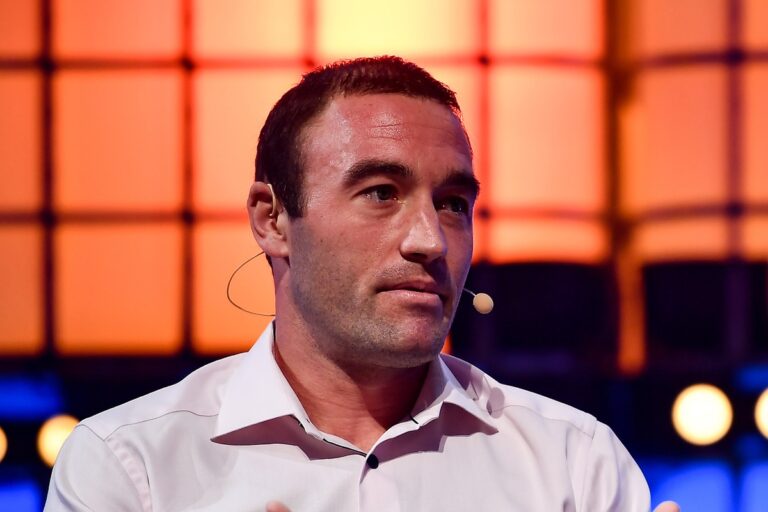
- Kevin Weil has launched Warp Sciences with a Series A led by Lightspeed to build chemistry research capacity in the United States.
- Warp will make molecules for customer drug programs rather than develop medicines of its own, with payments tied to delivered compounds.
- Experienced chemists will lead the work while the company progressively automates workflows and collects experimental data to improve its AI systems.
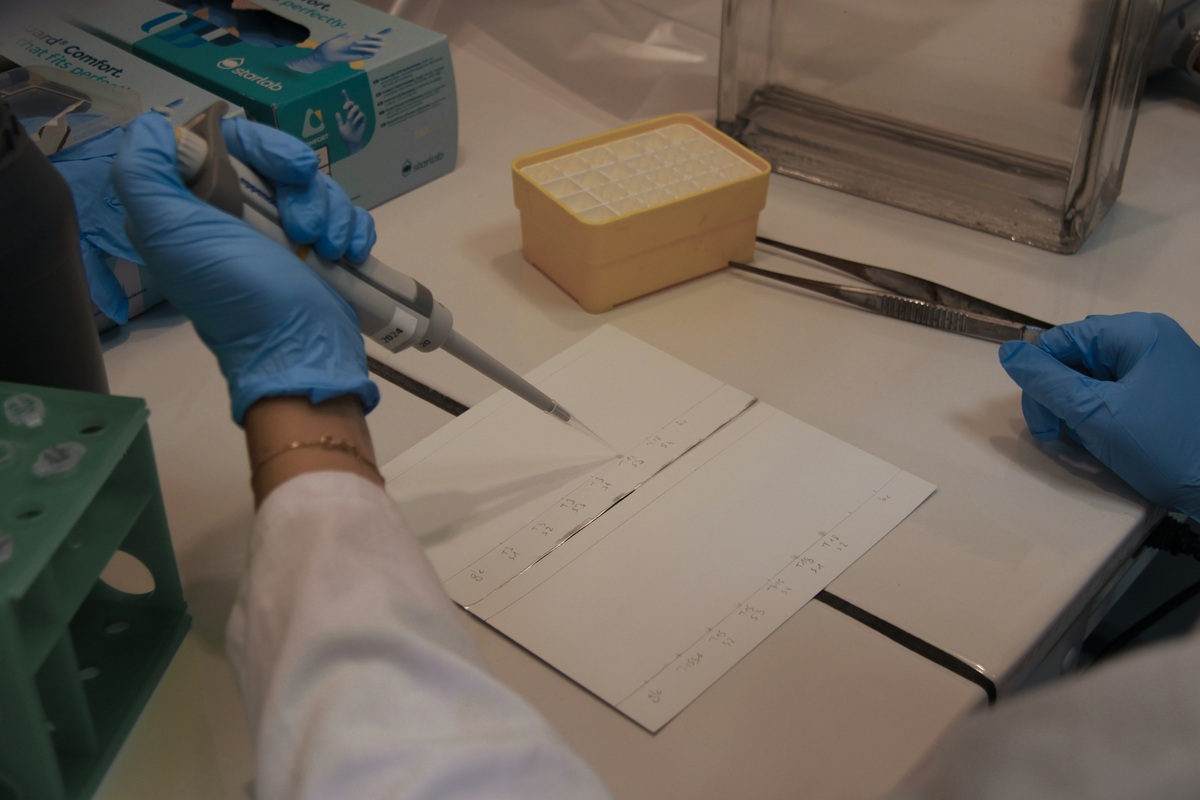
Kevin Weil, the former chief product officer and science leader at OpenAI, has launched Warp Sciences with $215 million to build AI-assisted chemistry laboratories in the United States. The startup will make and test molecules for biotechnology and pharmaceutical companies, with a longer-term ambition to use robots and AI to keep experiments running around the clock.
Weil announced a Series A led by Lightspeed Venture Partners. Bloomberg reported that the financing values Warp at $865 million after the investment. That is a valuation of the company, rather than the amount available to spend on laboratories.
Starting With the Work Between a Molecule and a Medicine
Warp is entering the market as a contract research organization, or CRO, rather than developing its own drug pipeline. Its initial focus is analog synthesis during lead optimization: making variations of promising molecules so customer scientists can compare them and decide which deserve further development.
The company’s service page describes work at milligram to multi-gram scale, typically involving molecules that require five to 15 synthesis steps. Customers will pay per compound delivered, with prices agreed individually. Warp says customers do not pay if it fails to produce the compound, and that it is working with a small number of design partners.
That approach gives the automation effort a concrete commercial test. A useful system must deliver the requested compounds at an acceptable quality, cost and turnaround time. Generating a plausible research plan is one part of the process; reliably producing material another laboratory can test is a different requirement.
Chemists First, More Automation Over Time
In its founding statement, Warp describes scientists setting research questions, AI designing experiments and robots carrying out the work. But it also makes the starting point clear: experienced chemists will lead the laboratories as more workflows are progressively automated. The round-the-clock laboratory is the ambition, not evidence that a fully autonomous operation is already running.
Warp plans to record what was attempted and what happened, including unsuccessful experiments, and to run dedicated campaigns that generate training data. The intended feedback loop is straightforward: more experimental evidence helps improve the models, and better models help guide subsequent experiments and laboratory operations.
The challenge extends beyond attaching a model to a robotic arm. Our earlier coverage of wet-lab agents examined the state tracking, simulation and human review needed to connect AI plans to physical equipment. Warp’s commercial model will need its own evidence that the whole workflow remains dependable across customer assignments.
A U.S. Laboratory Business With a Broader AI Goal
Weil co-founded Warp with DJ Patil, Manohar Paluri and medicinal chemist Solomon “Sol” Reisberg. The company’s funding announcement also lists Premji Invest, IVP, Lux Capital, Mayfield and other investors. Its pitch combines AI development with the construction of domestic scientific capacity.
Premji Invest’s investment note emphasizes an incremental approach, with automation expanding as the work justifies it. Warp also argues that U.S.-based chemistry can offer customers closer collaboration and greater control over sensitive research while competing with offshore pricing. Those are business objectives that still need to be demonstrated through comparable customer results.
The broader opportunity is to make physical experimentation keep pace with the growing number of ideas AI can propose. As our Carbon-X coverage showed, specialized models are becoming more accessible to researchers. Warp is tackling a separate bottleneck: building the facilities, operating processes and experimental evidence needed to turn computational suggestions into work at the laboratory bench.
Disclaimer: AIstify is an independent media brand owned and operated by NuvexMedia LLC, publishing news, research, and insights on artificial intelligence, emerging technologies, automation, and related industries. NuvexMedia LLC invests in and collaborates with companies across the AI, technology, software, and digital innovation sectors. These relationships do not influence AIstify’s editorial coverage, and the publication maintains full editorial independence to provide accurate, timely, and objective information. © 2026 NuvexMedia LLC. All rights reserved. This content is for informational purposes only and should not be considered legal, tax, investment, financial, or other professional advice.