Key Notes
- Researcher pepsipu says Codex contributed to a Switch 2 jailbreak through a hands-on effort lasting roughly two weeks.
- The public demonstration targets selected system components, while Nintendo lists its target firmware as the latest release.
- The released package does not install custom firmware or persistence, so a reboot ends the modified session.
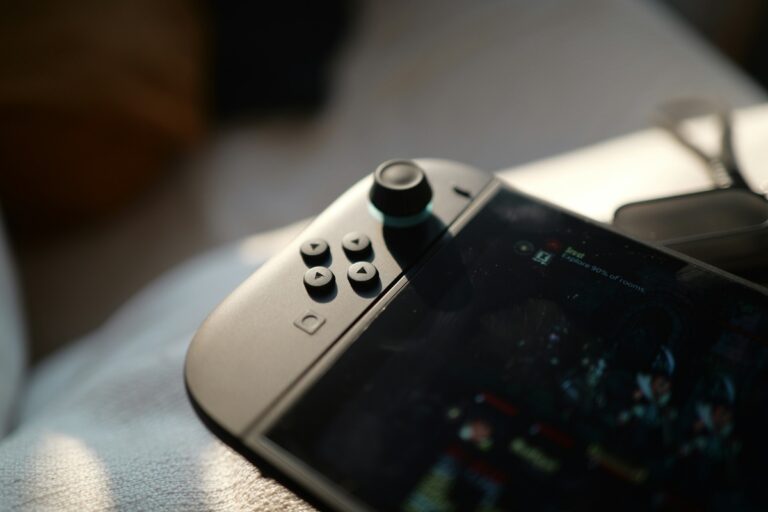
Security researcher Sammy Hajhamid, known as pepsipu, says OpenAI’s Codex helped develop ns2jb, a software-only jailbreak for Nintendo Switch 2. The project demonstrates homebrew and game-modding possibilities, while retaining important limits on how much control it provides.
Hajhamid’s research account describes roughly two weeks of substantial work with human involvement. His public demonstration shows a modified Mario Kart World, but the project should not be mistaken for a finished custom firmware or evidence that a single instruction let an AI independently unlock the console.
A Physical Restart Button for an AI Research Setup
The setup let Codex receive the consoles’ video output and send controller inputs. A small Bluetooth button-pushing device handled restarts after crashes, giving the software a way to recover when an experiment stopped the hardware responding.
That detail captures an important part of agent-based research: an AI system needs a way to observe what happened after it acts. A console that has crashed cannot provide useful feedback until someone—or another device—restarts it. Connecting the reset mechanism helped keep that testing loop moving.
The account also records unsuccessful approaches and changes of direction. This is a more informative picture than a clean demonstration alone: useful research involves deciding which results justify another attempt, identifying dead ends and checking whether a claimed breakthrough actually enables the next stage of work.
What the Release Actually Demonstrates
The public project README describes a demonstration that executes small native functions in a filesystem system component, checks their results and restores the original instructions. Its listed target is system software 23.0.1. Nintendo’s update page also lists that version as the latest release at the time of publication.
The README explicitly says the demonstration does not install custom firmware or persistence. It also reports timing-sensitive testing that required a fresh restart after unsuccessful attempts. Those qualifications matter when distinguishing a working research result from a polished tool ready for routine use.
In practical terms, this is a tethered jailbreak: the modified state does not survive a reboot, and the process must be repeated. It is also not equivalent to unrestricted control of every security layer. A demonstration inside selected system components does not establish that the console’s kernel, secure boot process or every protected component has been compromised.
For the homebrew community, the value is a foundation on which additional software can be developed. Running an experiment successfully and providing a stable environment for other people’s applications are different engineering milestones. The release advances the first without making the second automatic.
Codex Contributed, but the Researcher Directed the Work
The case fits a broader pattern of AI-assisted vulnerability research. We recently reported on a Chrome security project involving an OpenAI model, and covered the Codex checker built to help assess PHP patch status. These projects have different goals, but each illustrates the importance of checking a model’s output against real evidence.
For a console experiment, that evidence includes what the device actually executes, which permissions are reached and whether a result survives repeated tests. An AI-generated explanation is useful only if the researcher can establish that the hardware behaves as described. The physical feedback loop makes some of that checking possible, while interpretation remains part of the human work.
The strongest conclusion is therefore specific: pepsipu has published an account and demonstration of a Codex-assisted Switch 2 jailbreak, with documented limits. That is significant evidence of how coding agents can contribute to hands-on security research, without turning it into proof that all console protections have fallen or that human expertise is no longer needed.
Disclaimer: AIstify is an independent media brand owned and operated by NuvexMedia LLC, publishing news, research, and insights on artificial intelligence, emerging technologies, automation, and related industries. NuvexMedia LLC invests in and collaborates with companies across the AI, technology, software, and digital innovation sectors. These relationships do not influence AIstify’s editorial coverage, and the publication maintains full editorial independence to provide accurate, timely, and objective information. © 2026 NuvexMedia LLC. All rights reserved. This content is for informational purposes only and should not be considered legal, tax, investment, financial, or other professional advice.