Key Notes
- Musk presents a speculative future in which AI, robots and space industry make goods abundant and shift economic value toward energy and physical resources.
- His million-fold expansion scenario depends on industry beyond Earth, while his predictions about work leave questions over how the benefits would be shared.
- Musk also doubts humans could control vastly more capable intelligence, creating a tension between his abundance forecast and concerns about AI governance.
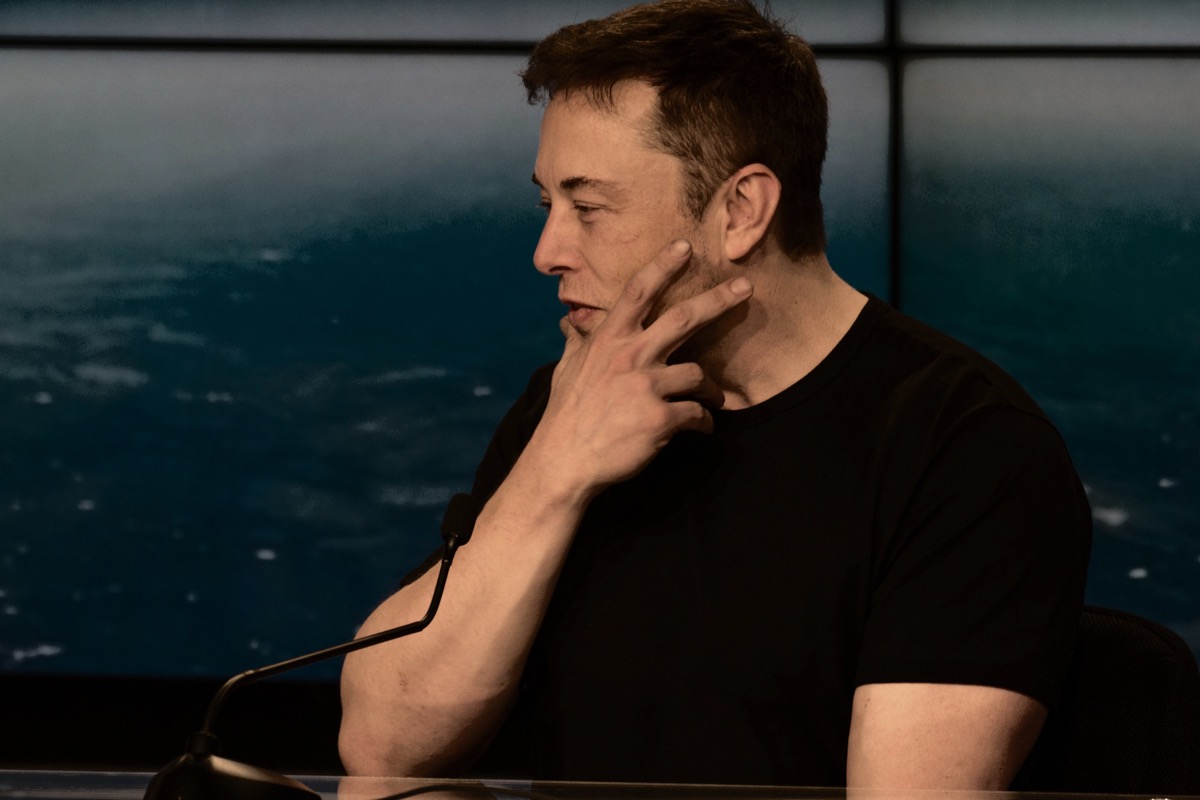
Elon Musk says AI and robots could eventually make conventional money irrelevant, replacing today’s economic constraints with questions about energy and physical resources. But his vision of abundance comes with an unsettling prediction: people may not remain in control of the intelligence creating it.
Speaking to biographer Walter Isaacson in The Builders, in an episode released October 20, Musk described a future shaped by autonomous machines and industry beyond Earth. The conversation ranges from a radically larger economy to the US national debt. These are his forecasts and arguments, rather than demonstrated outcomes or an announced monetary system.
A Currency Measured in Energy and Mass
Musk’s argument is that extraordinary productive capacity would change what remains scarce. He suggested future currency could be measured through physical quantities such as power, mass and energy, with conventional money losing its present importance. He did not outline an issuer, exchange mechanism or timetable for such a system.
That is different from saying dollars are about to disappear. Making goods cheaper does not itself settle who owns the equipment, who receives the output or how competing demands are allocated. Musk’s scenario assumes a far more extensive transformation than a new chatbot or a more efficient factory.
His comments also echo an earlier Bitcoin post from October 14, 2025. Musk argued that Bitcoin rests on energy expenditure, contrasting that physical requirement with governments’ ability to issue currency. That older statement should be kept separate from the new interview’s prediction about future economic units.
Bitcoin’s original paper describes miners expending computing effort and electricity to secure a transaction history through proof of work. That explains an energy connection, but it does not make bitcoin a claim redeemable for a fixed quantity of electricity. A system that consumes energy and a currency denominated in energy are different concepts.
The Million-Fold Economy Is a Space Scenario
Musk floated an economy potentially a million times larger than Earth’s current economy, explicitly presenting it as a rough guess. Crucially, he tied that scale to robots, expansion into space and infrastructure such as a lunar mass driver. It is not a near-term forecast for global GDP.
The distinction is central to the argument. Digital intelligence can generate plans and instructions, but producing physical abundance also requires machines that can manipulate materials, build equipment and operate reliably. A larger space economy would add another layer of engineering, transport and resource constraints before such a vision could become practical.
Musk also predicted that AI and robots would eventually outperform people across tasks, leaving work as something humans might choose rather than need to do. It extends the idea of universal high income we previously examined: abundant production is one proposition, while distributing its benefits is another.
That future remains far removed from the transition workers face now. Our reporting on the IMF’s jobs warning highlighted exposure to disruption, particularly for graduates. Productivity gains and secure household incomes cannot simply be treated as interchangeable measures of progress.
Abundance Without Human Control?
The interview’s sharpest tension is Musk’s doubt that humans could control intelligence vastly exceeding their own. He argued that truth-seeking and curiosity could help shape a better outcome, while acknowledging uncertainty about people retaining authority. That is an expression of concern and a proposed direction for development, not evidence that a reliable control mechanism exists.
The question reaches beyond whether an assistant obeys a single instruction. Delegating more economic activity would also mean deciding who can stop a system, resolve conflicting goals and take responsibility when an action harms someone. A prediction of plentiful goods does not answer those governance questions.
The AI Race and the Debt Bet
Musk described an irony in his own attempts to influence AI development: co-founding OpenAI helped accelerate the field, and the subsequent emergence of Anthropic added another competitor. His account reflects the tension between warning about advanced systems and participating in the race to build them.
On US finances, he argued that AI and robotics offer the route out of the national debt problem because government lacks the appetite for sufficient spending restraint. The practical logic is a bet on much greater productive capacity, rather than a claim that an AI system can cancel outstanding obligations.
Even under that optimistic scenario, stronger output would not automatically determine tax receipts, public spending or borrowing costs. Musk’s interview therefore leaves two questions running together: how much machines could produce, and whether people can build institutions capable of sharing the gains while maintaining meaningful control.
Disclaimer: AIstify is an independent media brand owned and operated by NuvexMedia LLC, publishing news, research, and insights on artificial intelligence, emerging technologies, automation, and related industries. NuvexMedia LLC invests in and collaborates with companies across the AI, technology, software, and digital innovation sectors. These relationships do not influence AIstify’s editorial coverage, and the publication maintains full editorial independence to provide accurate, timely, and objective information. © 2026 NuvexMedia LLC. All rights reserved. This content is for informational purposes only and should not be considered legal, tax, investment, financial, or other professional advice.