
Key Notes
- Elon Musk predicts AI and robots could raise living standards far beyond a basic income.
- He expects jobs to evolve and sees major healthcare benefits, without specifying a funding plan or timetable.
- Economic and health research shows that broad access depends on policy, investment and safeguards.
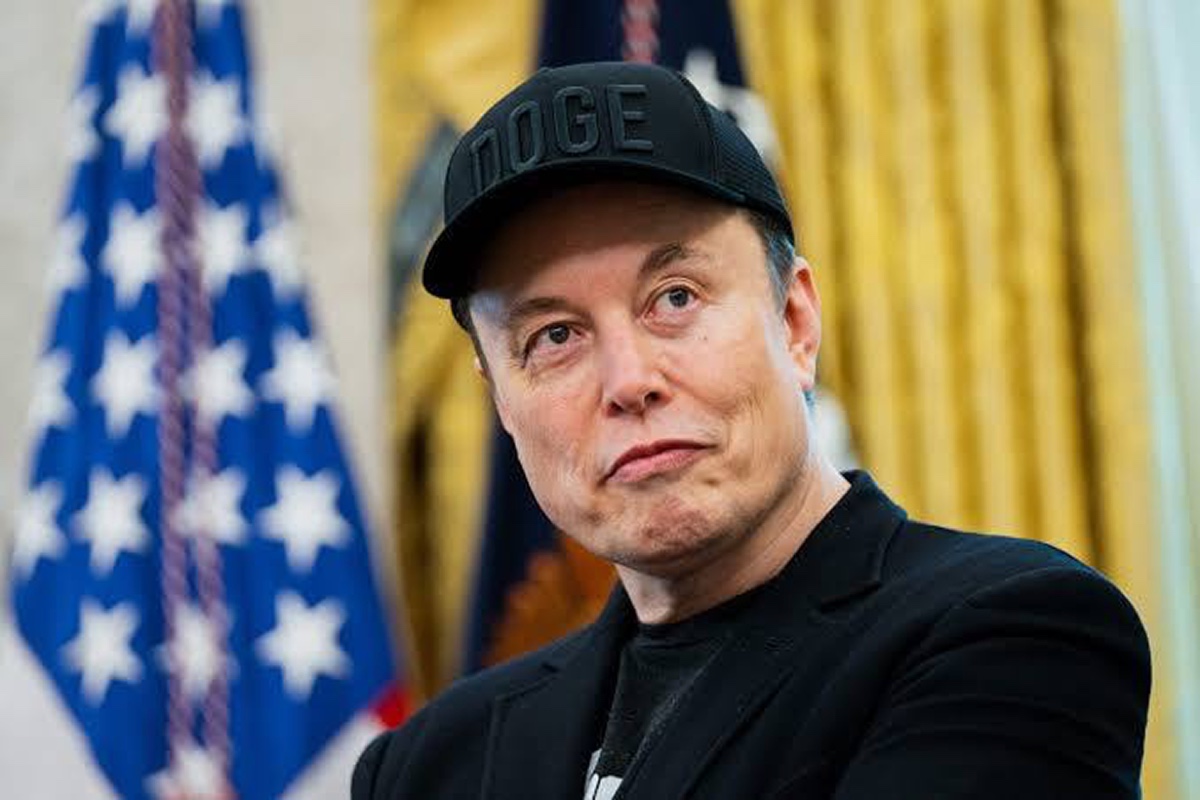
Elon Musk predicted that superintelligent AI and robots could bring a future of universal high income, arguing that technological progress is more likely to produce widespread prosperity than permanent economic exclusion. He made the remarks alongside President Donald Trump at the White House on September 29, as technology executives faced questions about AI’s impact on employment.
Musk described an economy capable of providing far more than a basic financial safety net. He also forecast that advanced machines could eventually make exceptional medical care available worldwide, including treatment better than the care accessible to wealthy people today.
His recorded remarks offered an optimistic destination for AI development. They did not set out a payment amount, a funding mechanism or a timetable for making that standard of living universal.
🚨 JUST NOW: Elon Musk, shoulder to shoulder with President Trump, explains why AI is going to lift up ALL of humanity — not force them into poverty@elonmusk: “I think by FAR the most likely outcome is an AGE OF ABUNDANCE where we don’t have just universal basic income, we… pic.twitter.com/ohp7KHo9YY
— Nick Sortor (@nicksortor) September 29, 2026
Musk’s Case for an Age of Abundance
Musk said the outcome he considered most likely was an economy in which AI and robotics expand what people can produce and afford. His phrase, universal high income, goes beyond the minimum financial floor usually associated with proposals for universal basic income.
The distinction is between supporting people through disruption and making living standards substantially higher. Musk’s argument rests on machines increasing the supply of useful goods and services so dramatically that today’s constraints on prosperity become less important.
That remains a forecast. Producing more output and making its benefits available to everyone are separate challenges. Lower costs could improve purchasing power, but households would still need access to income, assets or public services. The exchange did not explain how those arrangements would change as automation advances.
Jobs Will Change, Musk Says
Challenged about employment, Musk pointed to earlier technological transitions. He used human computers as an example: workers once performed large volumes of calculations that digital machines now handle. His response emphasized occupations evolving as particular tasks become automated.
The historical comparison helps explain why replacing a task does not necessarily eliminate all demand for workers. It does not establish how quickly people displaced by a new technology can move into another role, whether their wages will recover or whether new opportunities will appear in the same places.
The IMF’s analysis illustrates that distinction. In January 2024, it estimated that almost 40% of global employment was exposed to AI, rising to about 60% in advanced economies. Exposure includes jobs that could become more productive with AI, as well as work facing reduced demand; it is not a forecast that those shares of jobs will disappear.
The IMF also warned that the gains could be uneven. Workers able to use AI effectively may benefit, while others struggle to adapt. Higher returns for businesses and asset owners could widen wealth inequality even as overall productivity improves.
Healthcare Is Central to the Prediction
Musk’s medical example made the ambition especially clear: he envisioned robots and advanced intelligence giving people around the world care superior to what even he can obtain today. He presented that prospect as a reason to take AI’s potential benefits seriously.
There is already a practical foundation for using AI in health. WHO’s health guidance describes applications in diagnosis, clinical care, drug development and health-system management. Those uses are narrower than a demonstration that autonomous robots can deliver better overall care to everyone.
A 2025 WHO report, based on responses from 50 European-region countries, found substantial gaps in readiness. The organization called for clearer accountability and testing for safety, fairness and effectiveness before systems reach patients. It also warned that weak investment and safeguards could deepen existing inequalities.
For Musk’s vision to translate into a public benefit, the technology would therefore need to work reliably and reach people who currently lack care. Clinical performance, physical infrastructure, affordability and responsibility when something goes wrong all affect that outcome.
Who Receives the Productivity Gains?
The economic question behind the prediction is distribution. An economy can become more productive while some workers lose earnings. Whether the resulting wealth reaches households depends on wages, ownership, competition, taxation and the provision of public services.
AIstify’s earlier coverage of tax-revenue risks examined another part of that transition: governments rely heavily on income generated by human work. If that base weakens before other revenues grow, funding support for displaced workers could become harder precisely when it is needed.
That is why the timing of the transition matters alongside the eventual size of the economy. A long-term abundance forecast does not resolve a household’s immediate loss of earnings, or determine who pays for training and essential services during the adjustment.
Optimism Alongside the Safety Debate
Musk’s optimistic outlook also sits alongside his recent warnings about advanced AI. AIstify previously reported on his safety concerns and his proposal that leading companies test one another’s models before release.
Those positions can coexist: expecting large benefits does not remove the need to manage risks. The unresolved issue is how to move from increasingly capable systems to broadly shared improvements in living standards. Musk has described the future he expects; the path to delivering it remains the harder question.
Disclaimer: AIstify is an independent media brand owned and operated by NuvexMedia LLC, publishing news, research, and insights on artificial intelligence, emerging technologies, automation, and related industries. NuvexMedia LLC invests in and collaborates with companies across the AI, technology, software, and digital innovation sectors. These relationships do not influence AIstify’s editorial coverage, and the publication maintains full editorial independence to provide accurate, timely, and objective information. © 2026 NuvexMedia LLC. All rights reserved. This content is for informational purposes only and should not be considered legal, tax, investment, financial, or other professional advice.