
Key Notes
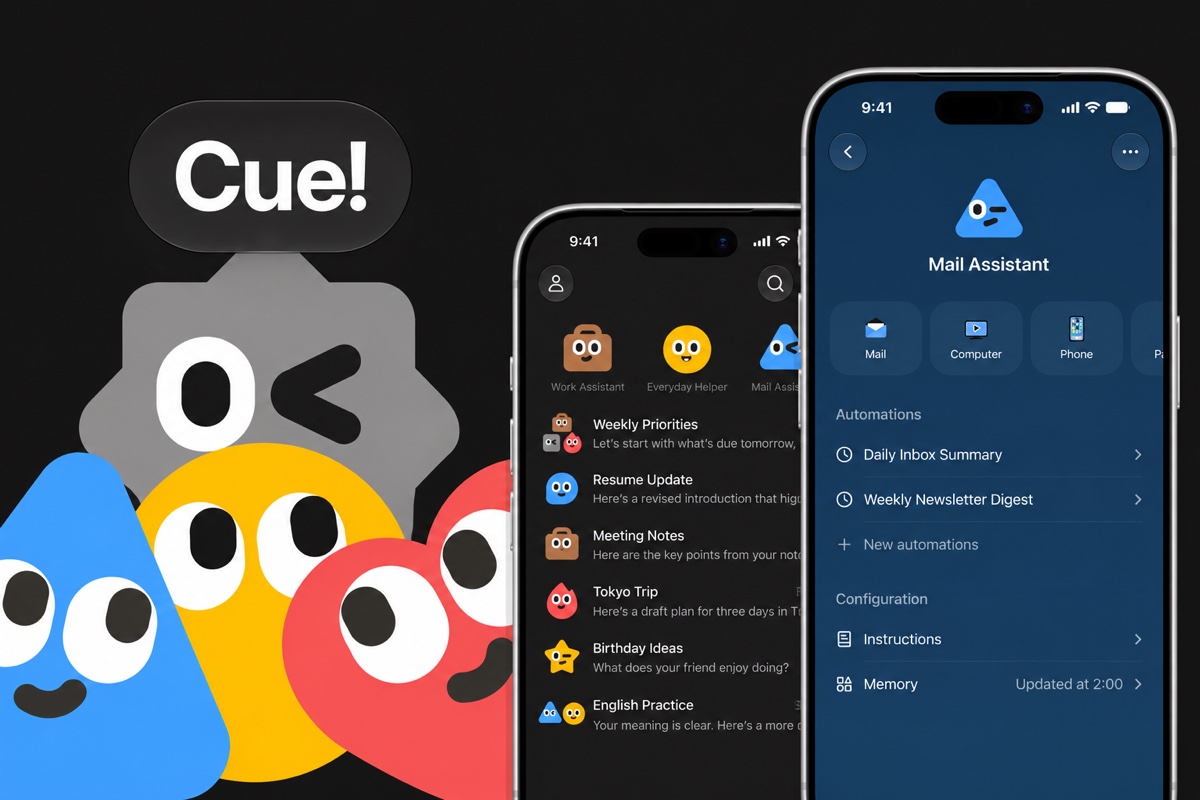
- Cue gives personal agents phone numbers, email, wallets and dedicated computers with user-controlled permissions.
- Manus 2.0 adds event-triggered workflows, while Cue agents can collaborate in group chats.
- Cue launched in free invite-only early access, with phone features varying by country.
Manus & @CueAgents can now have their own phone number so your agent can make and receive calls and texts. You can even forward your calls to your agent!
Available in select countries for now, with voice-only support in some. We’re working hard to bring it to more countries… pic.twitter.com/bwjBcxJKyp — Manus (@ManusAI) September 28, 2026
A Phone Number and Wallet for Each Agent
Cue’s examples include contacting hotels about room arrangements, comparing travel options and answering calls while a user is unavailable. Its dedicated email address and phone number provide channels for those follow-ups, while a separate computer gives the agent a workspace for the job. Payments bring a further layer of delegation. Manus says Cue can spend within a budget chosen by the user. Cue’s own description emphasizes payment permissions and review boundaries: users decide when work should come back to them for a decision. That distinction matters when an assignment involves money. Choosing an acceptable price ceiling is only part of the instruction; the agent also needs to understand what to buy, which alternatives are acceptable and when to stop. A cheaper option that fails the original requirements would still be the wrong result.Several Agents Can Share a Project
Cue also supports group conversations in which agents collaborate on one goal. Manus describes teams dividing research, selection and presentation work, with the user directing the assignment and retaining the final decision. The potential benefit is less manual coordination. Someone organizing an event could avoid repeatedly carrying findings between separate conversations. The useful test, however, is whether each handoff preserves the constraints and produces something the next agent can use. More agents do not automatically mean less work for the person supervising them.Manus 2.0 Adds Tasks Triggered by Events
The broader Manus 2.0 announcement extends automation beyond scheduled starts. Incoming email, calendar activity, Slack messages, Notion changes and shifts in advertising performance can trigger work. Users describe the event to watch and the next action in a prompt. This could make an agent useful between conversations, rather than only after a new request. An incoming project update, for example, might become the starting point for preparing a fresh summary. The value depends on selecting events that warrant attention and defining an output that is actually useful. For projects requiring a persistent environment, Manus also offers a separately purchased Cloud Computer. Its examples include hosting an automation around the clock or keeping a multiplayer game’s server running after a laptop closes.Early Access Comes With Limits
At launch, Manus described Cue as free during invite-only early access, with a limited first-come code and additional invitations for admitted users. It listed web, desktop and mobile availability, while noting that the iOS release was awaiting App Store review. These launch conditions leave practical questions for prospective users. An invitation does not establish that every phone feature works in every country, and free early access does not guarantee a permanent free service. The announcement did not specify Cue’s eventual paid pricing.A New Product After Manus’s Return to Independence
The release follows Manus’s September 1 statement confirming its return to independent operations under the founding team. The company said it would focus on agents that fit more closely into everyday workflows and act more proactively for users. AIstify previously covered the Meta deal unwind and the disruption it created for affected customers. Cue now gives Manus a consumer-facing product with which to pursue that independent strategy. It also enters a growing market for persistent personal assistants, including OpenAI’s newly introduced Dots agents. The products differ in their tools and access rules, but both aim to maintain context and complete ongoing assignments. For Cue, the decisive measure will be completed tasks that require less supervision. Phone numbers, email accounts and spending tools expand what an agent can attempt. Consistent follow-through, understandable permissions and useful escalation to the user will determine how much responsibility people actually delegate.Disclaimer: AIstify is an independent media brand owned and operated by NuvexMedia LLC, publishing news, research, and insights on artificial intelligence, emerging technologies, automation, and related industries. NuvexMedia LLC invests in and collaborates with companies across the AI, technology, software, and digital innovation sectors. These relationships do not influence AIstify’s editorial coverage, and the publication maintains full editorial independence to provide accurate, timely, and objective information. © 2026 NuvexMedia LLC. All rights reserved. This content is for informational purposes only and should not be considered legal, tax, investment, financial, or other professional advice.