
Key Notes
- The Senate passed BAAJA by 62 votes to 33 on November 19, but House approval and a presidential signature are still required.
- The package combines faster energy permitting and transmission reforms with protections against shifting data-center infrastructure costs to other customers.
- Federal rules and state utility decisions would shape implementation, while environmental groups warn that the bill weakens safeguards.
The U.S. Senate has approved a major energy-permitting overhaul that could help AI companies secure electricity faster while making data centers shoulder more of the infrastructure costs their expansion creates.
Senators passed the Bipartisan American Affordability and Jobs Act, or BAAJA, by 62 votes to 33 on November 19, CNBC reported. The legislation would change environmental reviews and electricity transmission rules, but it still needs House approval and the president’s signature before becoming law.
For the AI industry, the stakes extend beyond construction permits. A site filled with advanced chips needs enough generation and grid capacity to operate them. Faster approvals could make that capacity easier to build; tougher cost protections could also leave developers with a larger share of the bill.
Who Pays for the Grid Upgrades?
The package seeks to stop utilities from spreading the extra costs of serving data centers across other customers. The Bipartisan Policy Center explains that the amended bill would make new and existing data centers contribute toward both the existing transmission system and the additional costs they trigger, with lower charges for flexible or interruptible service.
For new data centers of any size, it would bar shifting the added cost of serving them to other customers and address the risk that a facility closes before infrastructure built for it is paid off. It would also give states more room to establish distinct electricity rates and service requirements for these facilities.
Senator Martin Heinrich, one of the bill’s negotiators, cited a Grid Strategies estimate that data centers would contribute about $55 billion toward transmission over the next decade, roughly $35 billion more than under current policy. Those figures are modeled projections, rather than money already collected or a fixed charge imposed on individual projects.
Power Access Becomes Part of the AI Race
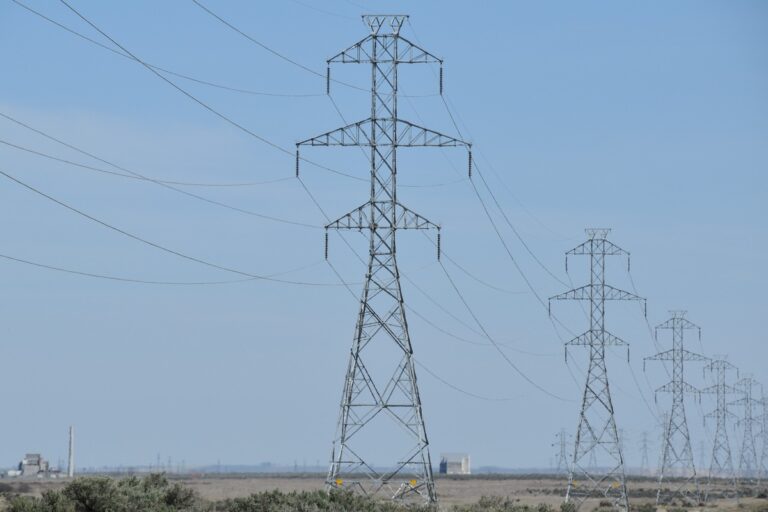
The legislation combines changes to federal permitting with stronger regional and interregional transmission planning. Its reach extends across the energy sector, including renewable generation, fossil-fuel projects and the lines needed to move electricity between regions.
That could matter as much to AI deployment as another shipment of processors. A developer’s investment in computing equipment cannot produce revenue until the facility can obtain reliable power. More predictable infrastructure approvals would help planning, although they would not eliminate construction timelines or guarantee an immediate connection.
Developers are already negotiating how to share that burden. OpenAI has proposed making future campuses more flexible electricity customers through its Grid Protectors program, including reducing demand when utilities need capacity for other users. Such arrangements illustrate how AI expansion increasingly depends on utility contracts and operating commitments alongside chip purchases.
Environmental Opposition Remains
Supporters argue that shorter, more predictable reviews can accelerate energy supply and contain electricity costs. Heinrich says the agreement preserves important environmental protections and strengthens tribal consultation.
The Natural Resources Defense Council opposes the bill, arguing that it weakens environmental safeguards and favors fossil-fuel companies and data-center developers. It has urged the House to reject the package, warning that the administration could advance fossil-fuel infrastructure while continuing to obstruct wind and solar projects.
For AI companies, Senate passage is a significant step toward changing the rules governing their power supply. The next tests are House action and, if the bill becomes law, the federal regulations and state utility decisions that determine how its cost protections work in practice. It does not change a data center’s electricity bill overnight.
Disclaimer: AIstify is an independent media brand owned and operated by NuvexMedia LLC, publishing news, research, and insights on artificial intelligence, emerging technologies, automation, and related industries. NuvexMedia LLC invests in and collaborates with companies across the AI, technology, software, and digital innovation sectors. These relationships do not influence AIstify’s editorial coverage, and the publication maintains full editorial independence to provide accurate, timely, and objective information. © 2026 NuvexMedia LLC. All rights reserved. This content is for informational purposes only and should not be considered legal, tax, investment, financial, or other professional advice.