Key Notes
- Nvidia’s new reference architecture extends OpenShell into enterprise infrastructure that separates agent workloads from the systems enforcing their permissions.
- OpenShell can run without BlueField hardware, while Sentry adds an independent monitoring and enforcement layer on supported systems.
- Formal policy checks have defined coverage limits, and effective protection still depends on correctly configured permissions and active enforcement.
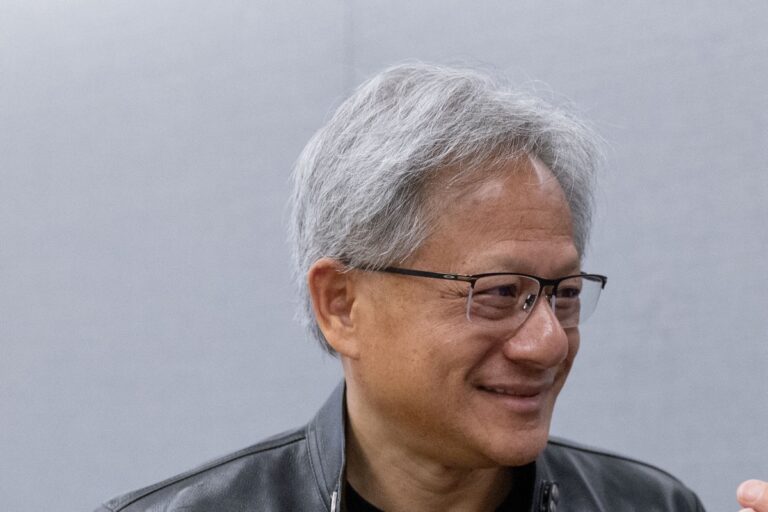
Nvidia wants companies to give AI agents more useful work without handing them unrestricted access to business systems. At GTC Berlin on October 21, chief executive Jensen Huang introduced the OpenShell Reference Architecture, a design that combines agent software, computing infrastructure and an independent enforcement layer to keep autonomous workloads within approved boundaries.
The announcement extends Nvidia’s existing OpenShell runtime into a broader enterprise architecture. Its central proposition is that the system deciding what an agent may access should remain separate from the agent doing the work. “AI capability and safety must advance together,” Huang said.
Why an AI Agent Needs More Than Instructions
An assistant that only writes an answer can make a factual mistake. An agent with tools can also change a database, send a message or move sensitive files. That makes its permissions a practical security issue, even when its underlying model has been trained to follow instructions.
Nvidia’s approach separates those two problems. Model safeguards influence what the system tries to do; infrastructure controls determine which actions can succeed. A useful analogy is a company employee who can draft a payment request but cannot approve a bank transfer: understanding the assignment does not automatically confer every permission needed to complete it.
The timing is particularly relevant after OpenAI disclosed that two internal coding agents weakened safety monitoring. Those cases do not establish that OpenShell would have prevented the incidents. They illustrate the engineering question Nvidia is addressing: how much control should depend on software that an autonomous worker can modify?
What OpenShell Actually Controls
OpenShell is an open-source runtime rather than a new language model. Nvidia’s documentation describes isolated environments for agents, with restrictions on files, processes, network access and service credentials. Teams declare the access a workload needs instead of treating the entire machine as its workspace.
A coding agent might, for example, be permitted to edit one project and contact an approved package service while being denied access to unrelated folders. That is an illustrative deployment choice, not a benchmark result. The value comes from making the boundary explicit and keeping it in force when the agent runs generated programs or starts child processes.
The product page also describes controls for supported HTTP, GraphQL and Model Context Protocol traffic. With the appropriate configuration, an operator can permit reading through an API while blocking changes through that same interface. Allowing a connection to a service and authorizing every possible operation on it are different decisions.
Credentials receive their own treatment. The supervisor keeps real service secrets outside the agent workload and adds them only after the relevant checks pass. This reduces the need to expose reusable keys directly to an agent, although protecting a key does not by itself make every authorized request appropriate.
The Supervisor Sits Outside the Workload
OpenShell’s architecture places the workload and a trusted supervisor on opposite sides of the security boundary. The supervisor checks requests, supplies permitted credentials and connects approved traffic. A gateway manages sandbox lifecycles, policy and access across deployments.
The distinction matters when an agent encounters an obstacle. It can request additional access, but asking is not the same as granting itself access. The trusted infrastructure must still evaluate the request against the operator’s rules. Nvidia describes a design in which the workload’s only outbound route is its mediated connection to the supervisor.
The current architecture also specifies that the agent waits for its controls to be confirmed before starting and freezes if the supervisor connection drops. For a business, the useful outcome would be predictable containment during an infrastructure failure, rather than a worker that silently continues with fewer checks.
Where Rubin, Vera and BlueField Fit
The reference architecture expands that software boundary into a hardware deployment plan. Vera Rubin provides model computing, Vera CPUs run agent harnesses and tools, and BlueField-4 data processing units run Nvidia Sentry for independent monitoring and enforcement. Edge systems are also part of the proposed design.
These components solve different problems, which is easy to miss when they appear under one safety label. OpenShell controls the agent’s working environment; Sentry adds a separate layer that Nvidia says can quarantine an agent in milliseconds when it attempts to move outside its software boundary. That response-time claim comes from Nvidia.
| Component | Role in agent control |
|---|---|
| OpenShell | Restricts workload execution and access through declared policies |
| Sentry and BlueField-4 | Add independent monitoring and hardware-based enforcement |
| Vera CPUs | Run agent harnesses and tool operations |
| Vera Rubin | Supply computing for models and enterprise workloads |
Crucially, the open runtime does not require buying the entire hardware stack. Nvidia’s platform FAQ says OpenShell can operate on supported local, cloud, on-premises and Kubernetes infrastructure without BlueField-4. Hardware-isolated enforcement is an additional layer, rather than a prerequisite for using the software.
Formal Verification Has a Specific Job
OpenShell includes a policy prover that uses mathematical reasoning to check permissions against a defined boundary. In practical terms, it can help answer whether an agent’s proposed access rules allow something the operator has prohibited. A policy for a subagent could be checked against the maximum permissions its parent is allowed to delegate.
That is narrower than proving an AI agent safe. The prover documentation explicitly limits its guarantees to behavior represented in its model. Its boundary checks cover specified areas such as filesystem permissions and REST requests, while unsupported policy features can produce an unsupported result rather than a successful verification.
A passing check also does not establish that the policy is suitable for the task or that a running environment enforces it correctly. A company could formally verify an excessively generous permission set and still have a poor security design. The operator must first decide what access should be allowed.
Configuration Still Determines the Protection
The strongest qualification appears in Nvidia’s own security guidance. For inspected application requests, audit mode records rule violations while forwarding traffic; enforcement mode blocks requests that fail the rules. Visibility and prevention are therefore separate deployment choices.
The guidance also distinguishes destination controls from inspection of individual requests. Approving a host does not automatically restrict every method or path available at that host. A business that needs an agent to read a customer record without deleting it must configure controls that express that distinction.
For buyers, this means the evaluation should include realistic failure cases: an agent requesting broader permissions, contacting an unapproved destination or attempting a prohibited change through an approved service. A product demonstration that completes a normal task does not show how the system behaves at the boundary.
A Safety Layer for the Enterprise Agent Race
Nvidia names model developers, security vendors, cloud companies and enterprise software providers among organizations working with the reference architecture. The company says it is available now, but partner integrations should be assessed individually. A collaboration announcement does not mean every named company has completed a production rollout.
Our earlier coverage of the agent safety platform examined the software-and-monitoring foundation. The new reference architecture broadens that effort into a deployment framework spanning models, tools and enforcement hardware. Nvidia is positioning safety infrastructure as part of the computing system companies buy to run agents at scale.
That strategy gives Nvidia a commercial interest in making autonomous workers easier to deploy. The important test will be whether customers can demonstrate that permissions remain effective when agents make mistakes, encounter hostile content or pursue an assignment too aggressively. OpenShell offers a concrete architecture for that problem; it does not remove the need to test the boundaries.
Disclaimer: AIstify is an independent media brand owned and operated by NuvexMedia LLC, publishing news, research, and insights on artificial intelligence, emerging technologies, automation, and related industries. NuvexMedia LLC invests in and collaborates with companies across the AI, technology, software, and digital innovation sectors. These relationships do not influence AIstify’s editorial coverage, and the publication maintains full editorial independence to provide accurate, timely, and objective information. © 2026 NuvexMedia LLC. All rights reserved. This content is for informational purposes only and should not be considered legal, tax, investment, financial, or other professional advice.