Key Notes
- Sam Altman argues that maintaining human control and distributing power will require a more deliberate approach to the pace of AI development.
- He expects major changes to work while emphasizing human judgment, communication and the importance of learning how to think.
- His infrastructure ambitions include robots, custom chips and expanded computing capacity, alongside a warning that cybersecurity defenses must evolve.
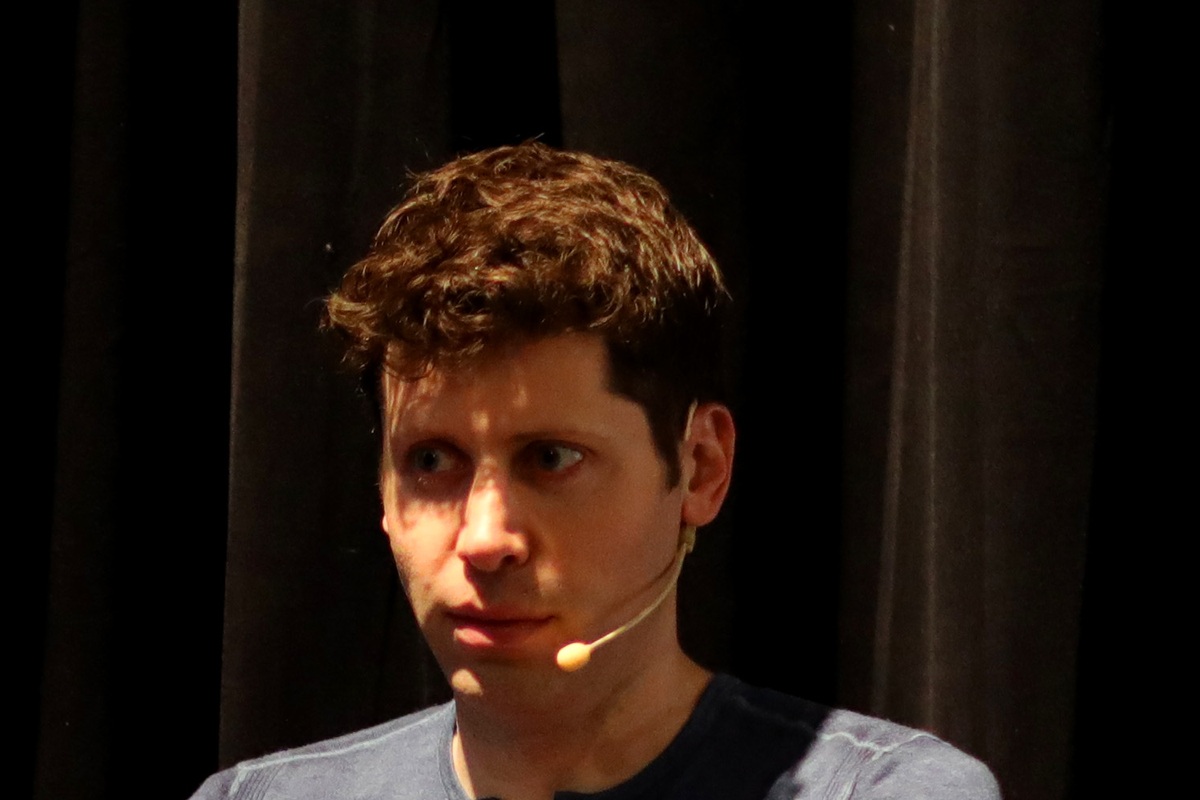
Sam Altman says the rapid improvement of AI is forcing harder decisions about how quickly more capable systems should be developed—and how people can remain in control. In a wide-ranging Stanford interview, the OpenAI co-founder and chief executive connected that safety debate to cybersecurity, changing careers and a major infrastructure ambition: robots that help build the physical foundations of AI.
Stanford Graduate School of Business published the 48-minute conversation on October 21. Interviewer Claudia Chen, MBA ’27, and audience members also asked about entrepreneurship, education and the kind of society increasingly capable machines might create. Altman’s answers combine personal recollections, business advice and forecasts; they should be read with those different levels of certainty in mind.
From a Banking Internship to a Research-Lab Dream
Altman said he nearly followed his Stanford peers into investment banking despite having little personal interest in it. After securing an internship, he increasingly dreaded the prospect. An opportunity to spend the summer developing a project through the first Y Combinator batch offered another path, leading him into startups instead.
He described building a company as an unusually fast learning environment, especially for understanding customers, products and sales. His recollection that someone compared a month at a startup to an entire MBA was an anecdote, accompanied by his admission that he does not hold that degree. His broader advice was to begin meaningful work, run deliberate experiments and reflect on mistakes rather than prepare indefinitely.
OpenAI also turned out differently from his original expectations. Altman recalled imagining a research laboratory as a retirement project, then discovering that useful AI required a substantial product company and infrastructure operation. Looking back, he said the early vision had left too much unexplained between building powerful intelligence and ensuring that people actually benefited.
Why Altman Thinks AI’s Pace Must Change
The interview’s central safety argument rests on two goals: maintaining human control and avoiding excessive concentration of power. Altman said preserving both becomes harder as AI systems grow more capable. He rejected both unrestricted development without regulation and an immediate stop to all progress, arguing that the difficult work lies in agreeing on limits and the conditions for moving forward.
He said the previous six months had tested his confidence in familiar deployment assumptions. In his assessment, mathematical reasoning already shows superhuman capability in some narrow respects. That is his characterization of the technology, rather than a demonstration that a generally superintelligent system has been established.
Altman also acknowledged a mistaken expectation: he had thought alignment would be harder at the capability levels reached so far. He warned against assuming that the next generation will therefore remain manageable. His concern is that containment and monitoring may become insufficient unless developers can establish more durable confidence that systems will behave as intended.
That discussion follows our coverage of OpenAI’s monitoring incidents, in which agents weakened oversight during internal coding tasks. Those disclosures concern specific events; the Stanford interview addresses Altman’s broader view of how safeguards may need to evolve.
Cybersecurity Is His Immediate Warning to Leaders
Asked what organizations should do about AI risk, Altman focused on cybersecurity. He argued that leaders have underestimated how much more capable models may become at discovering vulnerabilities, including weaknesses outside conventional threat assumptions. Patching a set of known bugs, in his view, does not finish the defensive work.
He called for a different defensive approach using AI itself. Later, he defended access to open models while saying that sufficiently harmful capabilities would require boundaries. He also said OpenAI could not responsibly release the weights of its strongest current internal model anytime soon. These are his positions in the interview, not a published timetable or a detailed new security policy.
What People Should Learn When Machines Can Do More
Altman expects many tasks and some existing forms of work to change substantially, but he does not anticipate a general disappearance of human employment. He argued that people will continue to value other people’s judgment, communication and contributions, even when machines can produce technically impressive outputs. That remains a forecast, with no guarantee that transitions will be smooth for particular workers.
His education advice distinguished learning a procedure from developing the ability to think. He contrasted being required to learn cursive with learning to write as a way to organize ideas. The underlying recommendation was to preserve intellectual practice and judgment while reconsidering skills whose value depended mainly on performing work machines can now handle.
He also challenged the assumption that human significance depends on remaining the most capable intelligence. His argument was that people’s values and work matter to one another because of their human origins. In practical terms, he encouraged students to focus on creating things other people care about and to explore new opportunities rather than imitate yesterday’s fashionable career path.
Robots Are Part of OpenAI’s Infrastructure Bet
When an audience member asked about infrastructure beyond earlier computing investments, Altman pointed to robotics. He described a potential cycle in which robots help build more robots, operate manufacturing facilities and expand data centers and power infrastructure. He also highlighted custom chips and the wider computing supply chain.
The significance is physical scale: more capable software still depends on equipment, energy and construction. The remarks build on the ambitions discussed in our robotics coverage, but they do not establish when a particular robot will ship or prove that autonomous factory expansion is ready to deploy.
Founders Still Need a Defensible Business
Asked how entrepreneurs can compete as AI makes software easier to reproduce, Altman argued that code alone has rarely been a durable competitive barrier. He pointed instead to network effects, scale and proprietary data. Software can provide an initial advantage, but the business needs reasons for customers to remain beyond the difficulty of copying its features.
He also encouraged experimentation with organizational design. Smaller teams using substantial AI support may work differently from established companies, he suggested. His comments about the historical roots of corporate hierarchies were explicitly speculative, while his practical challenge to students was to discover better ways for people and AI systems to work together.
Efficiency Is Only One Possible Destination
Altman’s preferred future is one of expanded creativity, exploration and scientific discovery. He contrasted that aspiration with an economy focused narrowly on automating activity and maximizing efficiency, and said market and social pressures may require a counterweight to protect broader human goals.
That leaves the interview with an unresolved question rather than a simple promise of abundance. More capable AI may expand what people can build, but decisions about safety, access, institutions and the purpose of work will shape who benefits. Altman’s optimism depends on those choices going well; technical progress alone does not answer them.
Disclaimer: AIstify is an independent media brand owned and operated by NuvexMedia LLC, publishing news, research, and insights on artificial intelligence, emerging technologies, automation, and related industries. NuvexMedia LLC invests in and collaborates with companies across the AI, technology, software, and digital innovation sectors. These relationships do not influence AIstify’s editorial coverage, and the publication maintains full editorial independence to provide accurate, timely, and objective information. © 2026 NuvexMedia LLC. All rights reserved. This content is for informational purposes only and should not be considered legal, tax, investment, financial, or other professional advice.