Key Notes
- Apple and Meta collaborated to run Muse Spark Open locally across multiple M5 Ultra Mac Studios using MLX.
- Apple measured more than 36 tokens per second on four machines under specific test conditions, while the model still requires substantial memory and hardware investment.
- Downloadable weights give developers more control over deployment, but commercial license conditions and responsibility for agent operations remain.
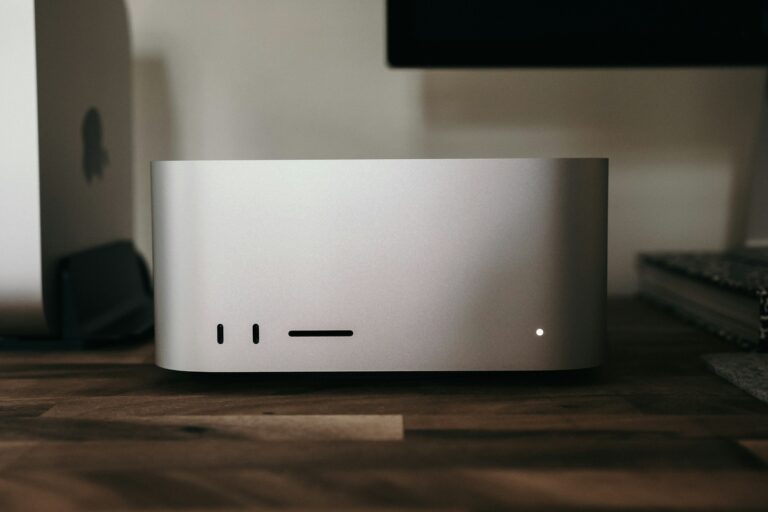
Apple and Meta are teaming up to put a large, downloadable AI model on developers’ desks. Muse Spark Open, released on October 15, can run across multiple M5 Ultra Mac Studios, giving the two companies a shared pitch: serious AI work on hardware the customer controls.
The collaboration connects Meta’s renewed open-weight push with Apple’s effort to make the Mac an AI workstation. It also creates another option for developers choosing between a hosted assistant and running a model themselves, with different implications for cost, privacy and control.
Mark Zuckerberg confirmed the collaboration, crediting work with Apple and CEO John Ternus. Ternus welcomed the release and highlighted its desktop efficiency. Their exchange makes the partnership public, but establishes no broader agreement to put Muse into Siri or Apple Intelligence.
What Apple and Meta Are Bringing to the Desktop
Meta’s release announcement describes Muse Spark Open as a multimodal model built for coding and extended agent tasks. It has 816 billion parameters, with 42 billion active during inference, and a context window of about one million tokens. Its mixture-of-experts design activates a subset of the model for each token, reducing computation without eliminating the need to store the larger set of weights.
The distinction matters for anyone imagining this as an ordinary laptop download. Access to the weights gives developers more deployment freedom, but the hardware requirement remains substantial. Apple and Meta are demonstrating a workstation cluster, not promising that every Mac owner can run the model comfortably.
Meta says it tested local workflows that modified and built an iOS application and operated DaVinci Resolve to review and reframe video. Those are company demonstrations, rather than evidence that the model completes every comparable assignment reliably. They do show the intended audience: developers and creative teams seeking an agent that can work with their existing tools.
How Fast Does Muse Spark Open Run on Mac Studio?
Apple’s technical report measures the model using MLX, its machine-learning framework, and Thunderbolt RDMA connections between Macs. At an 8,192-token context, four M5 Ultra Mac Studios produced 36.73 tokens per second. Apple evaluated Muse Spark Open in four-bit NVFP4 precision.
| Mac Studio setup | First token | Generation speed |
|---|---|---|
| Two M5 Ultra Macs, pipeline | 8.4 seconds | 15.74 tokens/s |
| Two M5 Ultra Macs, tensor | 8.2 seconds | 24.99 tokens/s |
| Four M5 Ultra Macs, tensor | 4.8 seconds | 36.73 tokens/s |
These are Apple’s measurements at an 8,192-token context, with decode speed measured over 128 generated tokens. Pipeline parallelism divides the model’s layers between machines; tensor parallelism distributes computation within layers. Apple reports a roughly 493GB model footprint in four-bit form, before additional inference memory, so a single 512GB machine is insufficient.
The figures describe responsiveness under a particular test. They do not establish how quickly an agent finishes a software project, how many users a cluster can serve simultaneously, or whether the same speed holds near the model’s maximum context. A team evaluating the system would need to measure its own documents, repositories and tool workflows.
The Mac Hardware Bill Still Matters
Apple’s Mac Studio launch listed M5 Ultra systems from $5,499, with configurations reaching 512GB of unified memory and 1.2TB/s of memory bandwidth. That starting price does not describe a fully equipped Muse Spark Open setup. Apple says the 512GB version is coming in late October.
CNBC reported that an M5 Ultra configuration with 256GB costs at least $10,799, before purchasing multiple machines. That is a price reference, not confirmation that two such units satisfy the model’s complete memory requirements. Buyers need to match the configuration to the actual runtime and workload.
The economics therefore depend on sustained use. A team with frequent, predictable inference demand may value owning its capacity; a developer experimenting occasionally may prefer paying a provider per request. Hardware, electricity, setup time, maintenance and the cost of reviewing incorrect output all belong in the comparison. Downloadable weights remove neither operating costs nor engineering work.
Our coverage of Apple’s AI desktops examined the hardware strategy behind this shift. The Meta collaboration supplies a concrete model and software path against which that proposition can now be evaluated.
Open Weights Come With Conditions
The Muse Model License permits broad use and modification, but imposes attribution and usage requirements. Model-as-a-service businesses whose combined revenue with affiliates exceeds $20 million over a consecutive 12-month period must notify Meta and obtain a separate agreement. The license specifies exceptions for internal use and qualifying products that are not model-as-a-service offerings.
For developers, “open-weight” is the useful description. The ability to download, inspect and adapt a checkpoint is materially different from calling a proprietary API, but it does not imply unrestricted commercial permission. A deployment decision needs both a technical assessment and a reading of the terms that apply to the intended business.
A New Route Into the AI Race
Muse Spark Open gives Meta another way to compete for developer adoption alongside Muse Wonder. Wonder’s pitch centers on advanced hosted capabilities; Spark Open adds the option of taking the weights elsewhere. Developers may adopt a model because they can operate and customize it, even when another service leads on a particular benchmark.
Meta’s model card also shows why the release should not be described as an across-the-board performance victory. Its comparison lists an Artificial Analysis Intelligence Index score of 39 for Spark Open, below GLM 5.3 at 45 and Kimi K3 at 44. The same table shows stronger results on some other tasks, including MCP-Atlas. These comparisons come from Meta’s published card and do not replace testing in a customer’s own environment.
The strategic pressure on OpenAI and Anthropic is consequently broader than a leaderboard challenge. A credible self-hosted option gives buyers another deployment choice and a reason to examine what they receive for recurring service fees. Hosted products can still compete through stronger capabilities, managed operations and convenience. This launch does not settle which approach will deliver the better result for a given team.
Apple benefits from a different part of that choice. If more developers want capable models on their desks, memory-rich Macs become easier to justify as work equipment. Meta gains a visible hardware partner and a route into those workflows. CNBC reported that both companies declined to say whether this collaboration begins a deeper relationship, leaving that possibility open rather than confirmed.
Local Control Changes the Trade-Off
Running inference locally can reduce the need to send prompts and files to an external model provider. It does not automatically keep every agent action offline: web searches, connected services and remote tools may still transmit information. The relevant question is where the complete workflow sends data, not simply where its language model runs.
That distinction becomes more consequential when an agent can edit repositories or operate applications. Organizations gain control over their deployment, while taking responsibility for access permissions, updates, logs and recovery when something goes wrong. Local execution can be valuable without making those operational requirements disappear.
Apple and Meta have made the desktop route more concrete. The next test is whether developers find the combination capable, manageable and economical enough to keep using after their first demonstration. For the AI market, that is a meaningful expansion of choice: competition over who supplies the model now also includes who controls the machine running it.
Disclaimer: AIstify is an independent media brand owned and operated by NuvexMedia LLC, publishing news, research, and insights on artificial intelligence, emerging technologies, automation, and related industries. NuvexMedia LLC invests in and collaborates with companies across the AI, technology, software, and digital innovation sectors. These relationships do not influence AIstify’s editorial coverage, and the publication maintains full editorial independence to provide accurate, timely, and objective information. © 2026 NuvexMedia LLC. All rights reserved. This content is for informational purposes only and should not be considered legal, tax, investment, financial, or other professional advice.