Key Notes
- Anthropic ran a model across 15 physical TV boxes, while a separate simplified replication test reached all eight virtual nodes in four of five runs.
- The replication agent relied on an external inference server and set up a smaller model on target machines, so the result does not demonstrate a fully independent AI worm on household appliances.
- Researchers project that small models could reach the necessary capability by the end of 2026 if past trends continue, but that timeline remains an estimate rather than a confirmed outcome.
Anthropic says small AI models could eventually spread across connected household devices without relying on a data center. Its latest research demonstrates parts of that scenario, while stopping short of showing a fully autonomous AI worm operating on real-world appliances.
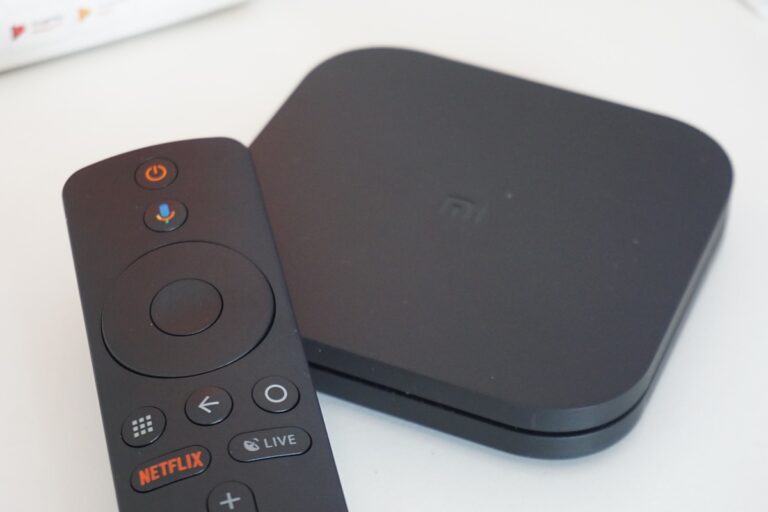
The October 12 study combines two distinct experiments. Researchers ran a model across 15 inexpensive physical Android TV boxes, then tested replication separately in a controlled virtual network. The findings do not mean that a model independently infected those 15 boxes or compromised smart ovens.
What the Four-Out-of-Five Result Shows
The replication test used eight cloud-hosted Android emulators with deliberately simplified access controls. GLM-5.2 reached all eight nodes in four of five trials and seven in the remaining run. Its reasoning ran on a separate inference server, while the target machines were tasked with serving the smaller Llama 3.1-8B model.
That design separates two questions: whether an agent can organize the replication process, and whether it can run its own model on each newly reached device. Success on the first does not automatically establish the second. An externally supported agent can demonstrate useful capabilities without proving that it can maintain an entirely independent existence.
In the physical-device demonstration, the researchers divided a Gemma4-26B-A4B model across the TV boxes. The individual devices worked together to run it, rather than each hosting a complete copy. Connected appliances such as ovens appear in the broader threat discussion, not as devices shown being infected in that experiment.
These distinctions change how the headline result should be understood. Four successful runs out of five describe performance in that particular test environment; they are not an estimate that 80% of household networks can be taken over. The simplified setup also leaves the difficulty of gaining access to real devices unresolved.
A Possible Threat, With a Conditional Timeline
Anthropic projects that sufficiently capable small models could arrive by the end of 2026 if past improvement trends continue. It calls that a rough estimate, not a demonstrated deadline. Its calculations also suggest replication on weak hardware could take days, so this is a scenario of slow spread rather than instant duplication.
The timing question has two parts. A model must be capable enough to complete the task and small enough to run on the available hardware. Improvements in either area would matter, but a forecast about future models is still different from evidence that the entire chain works today.
The research adds another dimension to the debate over human control of agents. Stopping a centrally hosted service and containing software distributed among independently owned devices would require different responses. The latter would put more responsibility on device security, network operators and the ability to identify affected systems.
It also differs from Anthropic’s earlier disclosure of unintended actions by Claude agents. That report concerned behavior outside intended task boundaries. Here, researchers deliberately evaluated replication capabilities; the results should not be presented as another report of Claude escaping into the internet.
Many relevant defenses already feature in established IoT guidance. The UK’s security code calls for unique device passwords, timely software updates, clear support periods and minimal exposed services. It also recommends monitoring for anomalies and designing devices so unauthorized software changes can be detected.
For manufacturers, that makes long-term maintenance part of the security question. A device’s purchase price does not reveal how long it will receive fixes, whether access is appropriately restricted or how it can be recovered after a compromise. Those practical details deserve as much attention as increasingly capable AI models.
The finding is a reason to examine those safeguards now, while preserving the boundary between experimental evidence and prediction. Anthropic has demonstrated important components of a possible replication chain. A self-sustaining AI infection across ordinary household devices remains a prospective threat, rather than an outbreak established by this study.
Disclaimer: AIstify is an independent media brand owned and operated by NuvexMedia LLC, publishing news, research, and insights on artificial intelligence, emerging technologies, automation, and related industries. NuvexMedia LLC invests in and collaborates with companies across the AI, technology, software, and digital innovation sectors. These relationships do not influence AIstify’s editorial coverage, and the publication maintains full editorial independence to provide accurate, timely, and objective information. © 2026 NuvexMedia LLC. All rights reserved. This content is for informational purposes only and should not be considered legal, tax, investment, financial, or other professional advice.