Key Notes
- Mark Zuckerberg told the Financial Times that Meta has reached the AI frontier alongside OpenAI and Anthropic while rejecting calls to slow development.
- Meta is introducing Muse Wonder and Muse Wonder Full for agent and coding tasks, with access initially focused on developer tools and subscribers.
- Meta’s published risk framework still sets conditions for developing and deploying high-risk systems, so rejecting a coordinated slowdown does not remove its stated safety requirements.
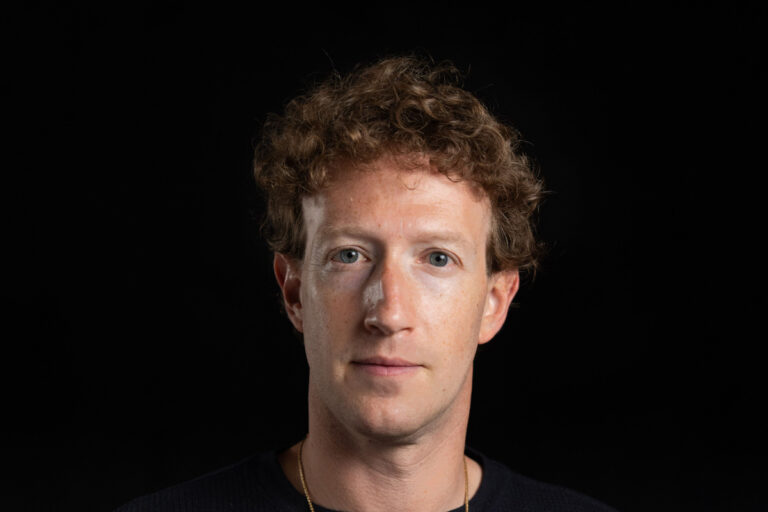
Mark Zuckerberg says Meta has caught up with OpenAI and Anthropic at the frontier of artificial intelligence, while rejecting calls to slow development. His claim arrives with the launch of Muse Wonder, giving Meta a new model family on which to stake its argument that it belongs alongside the industry’s leaders.
In an October 12 Financial Times interview, Zuckerberg tied that confidence to more sophisticated agent behavior and committed to further substantial spending. The statement is a competitive claim from Meta’s chief executive; it does not establish that its systems outperform every rival across every task.
The timing puts two questions together: how much ground Meta has gained, and whether the companies building the most capable AI should agree to move more slowly. A successful product launch could strengthen Zuckerberg’s answer to the first without settling the second.
Muse Wonder Puts Agents at the Center
Meta’s announcement introduces Muse Wonder and Muse Wonder Full, emphasizing coding and personal and professional agents. Active Memory retrieves relevant context across conversations, while Active Focus is intended to sustain work through obstacles, adapt and seek clarification.
Muse Wonder is available through the Meta Model API and Muse Code. Muse Wonder Full is available to Muse Code subscribers, with broader Muse experiences planned to follow and subscribers getting access first.
For users, the relevant distinction is between an assistant that answers a question and an agent that carries a project forward. The latter must preserve requirements, handle interruptions and recognize when it needs permission. Better language generation alone would not demonstrate that all of those pieces work reliably together.
That direction builds on Zuckerberg’s personal-agent vision, in which assistants understand individual goals and act across daily tasks. It also differs from the appeal of Muse Glimmer, Meta’s smaller open-weight model for local hardware: a model’s accessibility and its position at the frontier are separate questions.
Rejecting a Slowdown Still Leaves Safety Conditions
Zuckerberg’s position continues a disagreement we examined during the Dreamforce debate, when Anthropic’s Dario Amodei argued for deliberate pacing and Nvidia’s Jensen Huang opposed treating speed and safety as competing goals. The latest remarks put Meta firmly back in that discussion.
Meta’s own scaling framework, updated in October, identifies catastrophic risks involving chemical and biological misuse, cybersecurity and loss of control. It covers development as well as deployment, with different conditions depending on the assessed risk.
For systems assessed at critical risk, the framework requires validated safeguards before deployment and says continued development depends on risks being reduced to the specified threshold. Rejecting an industrywide slowdown therefore does not mean Meta’s published policy allows every project to proceed regardless of its safety assessment.
The difference is consequential. A coordinated slowdown would constrain the pace across participating companies; a company’s risk framework governs decisions about particular systems. Whether those internal controls are sufficient is a separate question from whether a model posts strong benchmark results.
The Frontier Claim Has to Survive Everyday Use
Meta says the Wonder models were trained at its gigawatt-scale Prometheus data center and presents benchmark comparisons to support its claims. It also says a fuller report containing additional safety evaluations will follow. Those disclosures will matter alongside performance testing.
For developers choosing among Meta, OpenAI and Anthropic, the useful comparison is the same workload under comparable conditions: task completion, cost, latency, failure recovery and handling of sensitive information. A strong result on one evaluation cannot answer all of those questions, particularly when an agent has permission to take actions.
Zuckerberg has made Meta’s position clear: compete at the frontier and keep developing. The practical test now is whether Muse Wonder can deliver sustained, dependable work for users—and whether the safeguards hold when those capabilities leave a demonstration and encounter real systems.
Disclaimer: AIstify is an independent media brand owned and operated by NuvexMedia LLC, publishing news, research, and insights on artificial intelligence, emerging technologies, automation, and related industries. NuvexMedia LLC invests in and collaborates with companies across the AI, technology, software, and digital innovation sectors. These relationships do not influence AIstify’s editorial coverage, and the publication maintains full editorial independence to provide accurate, timely, and objective information. © 2026 NuvexMedia LLC. All rights reserved. This content is for informational purposes only and should not be considered legal, tax, investment, financial, or other professional advice.