
Key Notes
- Odyssey-3 Flash offers interactive world generation in a browser.
- Pro scores 66.10 on Physics-IQ Verified using best-of-eight sampling.
- Odyssey reports demonstrations with robots and a vehicle in India.
Odyssey has introduced Odyssey-3, a world model that generates interactive environments from text and predicts how they change when a person or AI agent acts. The October 8 announcement combines a browser preview with demonstrations involving robots, vehicles and games.
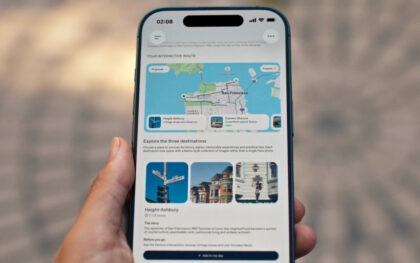
Users can explore generated scenes, move the camera and introduce events while the model produces what happens next. Odyssey-3 Flash is available as a research preview. The company’s more powerful Pro version also leads the published video-to-video Physics-IQ Verified ranking, although its headline result uses eight candidate generations.
Interactive Worlds That Respond to Actions
Odyssey-3 treats the world as an evolving sequence of observations and actions. Instead of generating a finished clip that viewers can only watch, it continually predicts the scene’s next state. First-person and third-person experiences let users influence that sequence as it unfolds.
The distinction matters for applications that need feedback. An agent training inside a generated environment must see the consequences of moving, turning or interacting with an object. A convincing image alone cannot show whether those consequences remain consistent over time, or whether the environment remembers what the agent has already encountered.
What the Physics-IQ Result Shows
The Physics-IQ leaderboard lists Odyssey-3 Pro at 66.10 on its verified video-to-video score. That entry uses best-of-eight sampling: multiple candidate continuations are generated and a preferred result is selected. Pro’s single-generation entry scores 63.37, which makes the sampling setting an essential part of the comparison.
The test asks models to continue videos of real physical experiments, with generated outcomes compared against the recorded continuation. It provides evidence about physical prediction under a defined evaluation, rather than proving that a model can reliably handle every real-world situation.
The standard Odyssey-3 model scores 61.56 for a single generation and 64.43 with best-of-eight sampling. These are the published verified video-to-video scores checked on October 10. Generating eight candidates requires more inference work than producing one, so the higher score comes with a different computational budget. It should not be read as a like-for-like single-attempt comparison.
Interactive models also face tests beyond physics. WorldMark evaluates whether movement follows controls and whether scenes remain consistent after navigation. For example, turning away and returning should preserve the environment rather than invent a replacement. Those requirements help separate an attractive demonstration from a dependable environment for an agent.
From Simulated Scenes to Robots and Cars
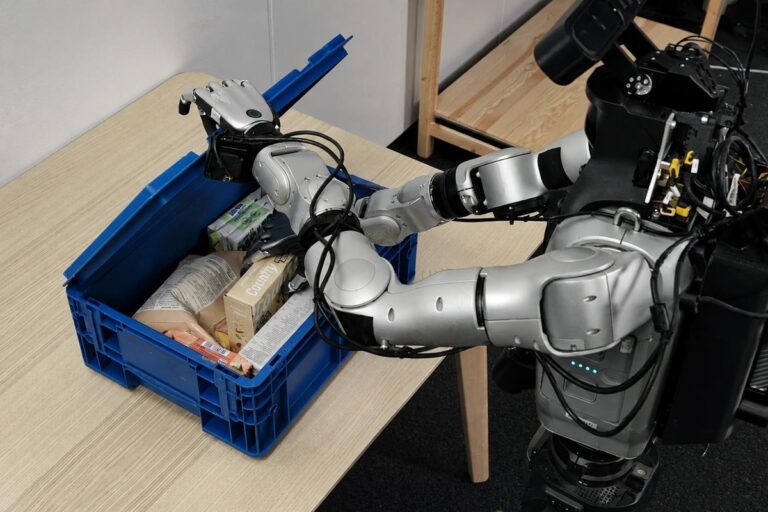
Odyssey’s launch release describes a shared foundation adapted across robot arms, humanoids, vehicles and drones. The company says its robotics work includes recovering from failed actions, while its collaboration with Flexion produces humanoid control policies that cope with environmental changes better than the baselines it tested.
Odyssey also says a driving policy using approximately 20 hours of driving data controlled a vehicle on roads in India. That figure concerns the task-specific policy and should not be mistaken for the total training behind the foundation model. The demonstration is a company-reported result, not an announcement of a commercial autonomous-driving service.
Why World Models Matter for Physical AI
The broader ambition is to reuse learned knowledge about environments across different machines. NVIDIA’s work on Cosmos world models reflects a similar push toward physical AI, where predicting events and choosing actions become part of the same engineering problem.
For now, the Flash preview gives users a way to experience Odyssey’s interactive generation directly. The larger question is how well that experience transfers to unfamiliar settings: environments must respond to controls, retain their structure and produce useful consequences across many actions. Physics scores offer one measure of progress; sustained performance in deployed systems will be another.
Disclaimer: AIstify is an independent media brand owned and operated by NuvexMedia LLC, publishing news, research, and insights on artificial intelligence, emerging technologies, automation, and related industries. NuvexMedia LLC invests in and collaborates with companies across the AI, technology, software, and digital innovation sectors. These relationships do not influence AIstify’s editorial coverage, and the publication maintains full editorial independence to provide accurate, timely, and objective information. © 2026 NuvexMedia LLC. All rights reserved. This content is for informational purposes only and should not be considered legal, tax, investment, financial, or other professional advice.