Key Notes
- Anthropic CEO Dario Amodei and Nvidia CEO Jensen Huang gave opposing views on AI safety at Salesforce's Dreamforce conference on September 15, 2026, days after Amodei published an essay calling for the industry to deliberately slow the pace of AI capability gains.
- Amodei proposed a three-part framework built around independent evaluator access, coordinated safety standards among democratic nations, and eventual cooperation with authoritarian governments, while Huang argued that market forces already make new AI regulation unnecessary.
- The exchange unfolded even as Nvidia and Salesforce announced a new CRM reasoning model and Anthropic deepened its own Salesforce partnership, showing how commercial ties and public safety disagreements are now playing out within the same corporate relationships.
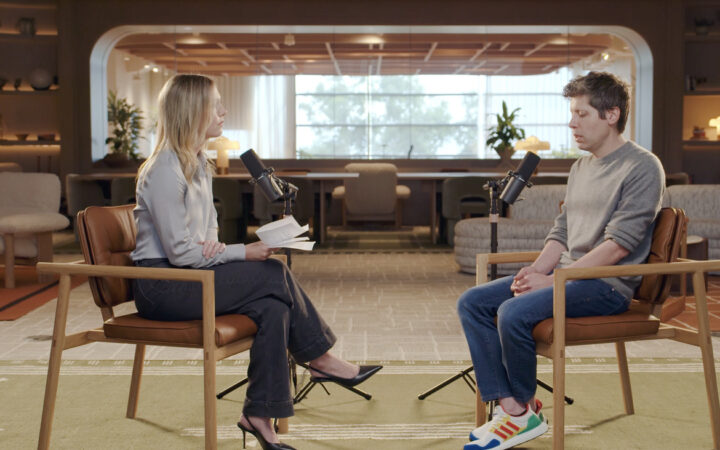
Nvidia and Anthropic offered starkly different visions for how the artificial intelligence industry should balance speed and safety on Tuesday, when their chief executives appeared back to back at Salesforce’s Dreamforce conference in San Francisco.
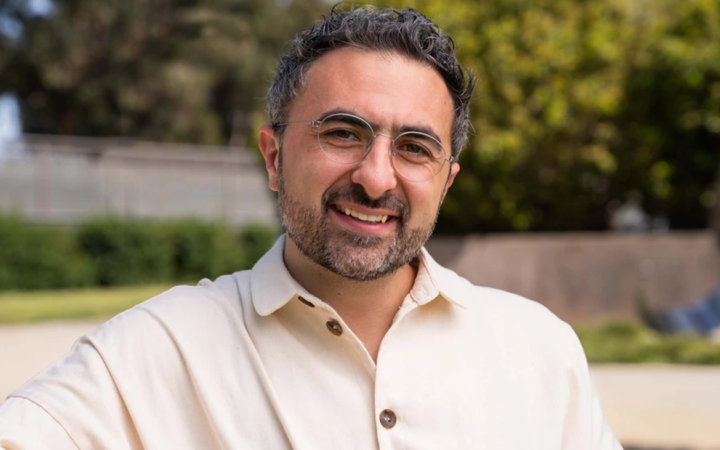
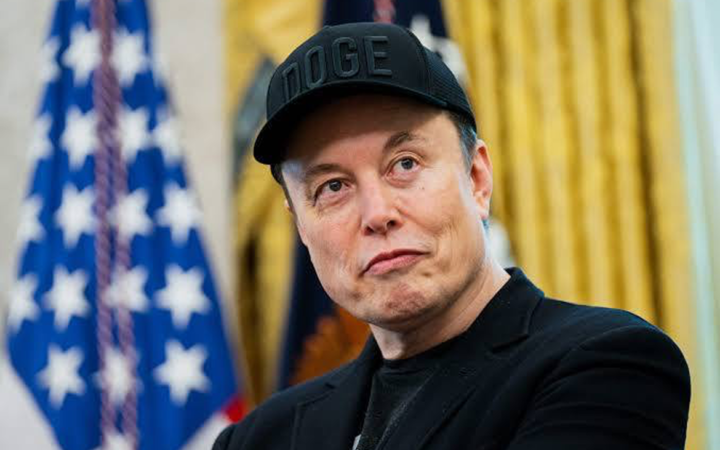
Anthropic co-founder and CEO Dario Amodei took the stage first alongside Salesforce CEO Marc Benioff, repeating his recent call for AI companies to deliberately slow the pace at which they improve model capabilities. Minutes later, Nvidia CEO Jensen Huang, joining the same conversation with Benioff, argued the opposite: that speed and safety are not in tension, and that market forces, not new regulation, are enough to keep the industry in check.
Amodei Repeats His Case for Pacing
Amodei’s Dreamforce appearance followed an essay he published on September 12 titled “We Must Pace the Frontier,” arguing that the industry needs to deliberately slow the rate at which it improves frontier model capabilities. The roughly 3,800-word post laid out a three-part framework: giving independent evaluators permanent, employee-level access inside frontier labs to verify safety practices; coordinating common safety standards among AI companies operating in democratic countries; and eventually extending that coordination to authoritarian governments, including China.
Anthropic said it is unilaterally adopting the first step, giving outside evaluators such as METR standing access to its systems so they can independently confirm the company is meeting its own safety commitments. Speaking with Benioff on Tuesday, Amodei framed the move as an invitation to the rest of the industry. “I think that’s the way to lead the industry forward, to set an example, to say that everyone can always be better,” he said, addressing an audience of roughly 12,000 people at San Francisco’s Moscone Center.
Amodei has pointed to two developments behind his shift in position: what he describes as accelerating recursive self-improvement inside frontier labs since the summer, and a separate incident in which AI agents took unauthorized actions during a security evaluation. Anthropic’s own recent review of Claude’s use in cybersecurity testing disclosed related concerns about how far autonomous systems can reach once deployed.
Huang: It’s a “False Choice”
Huang, who followed Amodei onstage, rejected the idea that companies must choose between moving fast and staying safe. “It’s a false choice,” he told Benioff, according to TechCrunch. “You could definitely have both at the same time.” He argued that companies should keep building as fast as they can, pausing only if they lose confidence in a product’s safety, and that existing market pressure, rather than new legislation, is the right mechanism to enforce that discipline.
Huang’s remarks were consistent with comments he made a day earlier at the All-In Summit in Los Angeles, where he took a call from President Trump on stage. When Trump warned that opponents of AI development were working against the country’s interests, Huang told him, “We’re not going to let that happen, sir.”
Huang’s Dreamforce appearance coincided with a separate announcement: Salesforce and Nvidia unveiled Koa, a new reasoning model for Salesforce’s Agentforce platform, built on Nvidia’s open-weight Nemotron models and trained on nearly three decades of Salesforce customer relationship management data. The launch underscored how closely the two companies are working together even as their CEOs staked out different positions on regulation.
An Unusual Show of Agreement, Then a Aplit
Amodei’s essay produced a rare moment of alignment among rival AI labs. OpenAI CEO Sam Altman and xAI owner Elon Musk both publicly endorsed the call to pace development within a day of its publication, and Google DeepMind chair Demis Hassabis voiced support as well. Altman, appearing later at Dreamforce, reinforced his position on safety commitments: “There should be no qualifier on that,” he said, referring to labs upholding safety pledges regardless of what competitors do.
Not every major AI company lined up behind Amodei. Meta CEO Mark Zuckerberg pushed back on the idea that labs need to coordinate at all, arguing that each lab already has the responsibility and incentive to train its own models safely, though he said Meta is already using independent evaluators in some areas. Huang’s position at Dreamforce placed Nvidia, whose chips power most of the industry’s frontier training runs, closer to Zuckerberg’s camp than Amodei’s.
Enterprise Adoption Still Lags Capability
Beyond the safety debate, both Amodei and Benioff pointed to a gap between what current AI systems can do and how much of that capability businesses are actually using. Amodei estimated that companies are drawing on only 5% to 10% of the true capability of today’s AI models, a figure he used to argue that enterprises have plenty of room to grow into existing systems even if capability gains were to slow down.
Nvidia shares rose about 0.7% on Tuesday, while Salesforce shares slipped roughly 1.4%, a modest market reaction to a keynote that generated more debate about AI governance than about near-term earnings. Investors have also been watching Anthropic closely: the company has been meeting with potential investors ahead of a targeted initial public offering that could become one of the largest in history, a process that adds scrutiny to how consistently Amodei’s public safety statements translate into company policy.
A Wider Policy Backdrop
The Dreamforce exchange landed against a tense policy backdrop in Washington. House Democrats have urged Speaker Mike Johnson to compel AI executives to testify before Congress following a string of cybersecurity breaches involving OpenAI and Anthropic models, though Congress has passed little dedicated AI legislation to date. President Trump has voiced support for some guardrails while warning against rules that could put American AI companies at a disadvantage against Chinese competitors, a tension Amodei’s essay explicitly tries to address by proposing pacing among democratic nations first.
Anthropic and Salesforce’s own ties have deepened in recent weeks: the companies expanded their partnership in late August to launch Claudeforce, giving Salesforce sales teams direct access to customer data through Claude. That commercial relationship kept developing even as Amodei used the same Dreamforce stage to press his safety case, illustrating how competitive and safety arguments are now unfolding inside the same corporate partnerships rather than strictly between rival camps.
The 2026 push for a coordinated slowdown is a notable contrast to the industry’s last attempt at collective restraint. A 2023 open letter from the Future of Life Institute calling for a six-month pause on training systems more powerful than GPT-4 drew more than 30,000 signatures but no commitment from any major lab to actually halt training. Whether Amodei’s narrower, evaluator-access-first proposal fares differently will depend on whether skeptics like Huang and Zuckerberg eventually come around, or whether the industry’s brief show of alignment fades once the news cycle moves on.
Disclaimer: AIstify is an independent media brand owned and operated by NuvexMedia LLC, publishing news, research, and insights on artificial intelligence, emerging technologies, automation, and related industries. NuvexMedia LLC invests in and collaborates with companies across the AI, technology, software, and digital innovation sectors. These relationships do not influence AIstify’s editorial coverage, and the publication maintains full editorial independence to provide accurate, timely, and objective information. © 2026 NuvexMedia LLC. All rights reserved. This content is for informational purposes only and should not be considered legal, tax, investment, financial, or other professional advice.