
Key Notes
- Donald Trump says the United States should maintain its AI development pace to preserve an advantage over China.
- He acknowledges a need for some safeguards but has not specified a new framework in these remarks.
- White House discussions and a planned meeting with Xi Jinping could bring the tension between competition and AI safety into sharper focus.
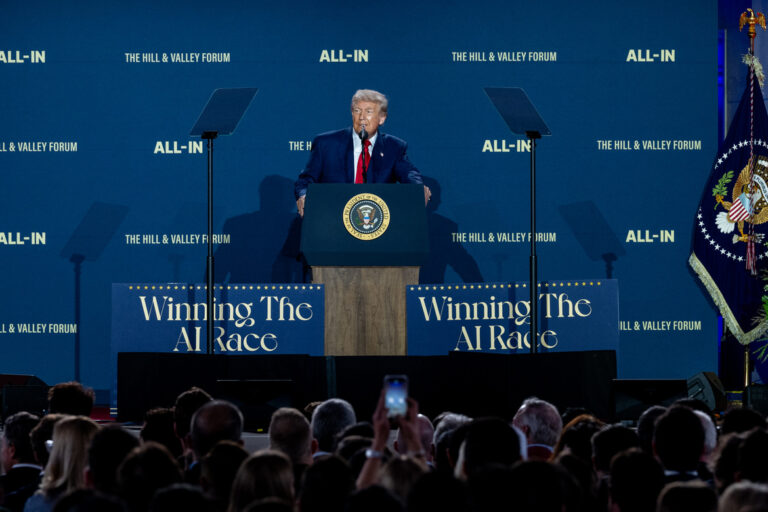
President Donald Trump pushed back against calls to slow artificial intelligence development, saying the United States should preserve what he described as its lead over China despite mounting warnings about the technology’s risks.
Speaking to reporters in Ireland on September 13, Trump acknowledged that some safeguards were needed but emphasized continued progress. His comments place international competition at the center of the White House’s response as AI executives press for greater attention to safety.
“But whoever wins with AI wins,” Trump said, according to the Associated Press.
A Political Position Without a New Safety Framework
Trump argued that warnings about AI were overstated and that the technology would bring substantially more benefits than harm. He did not use the remarks to set out detailed requirements for evaluating advanced models or define when development should be restricted.
The distinction matters. Supporting some guardrails leaves considerable room for disagreement over what those rules should cover: systems offered to the public, sensitive uses of existing products or the development of more capable models inside a laboratory.
His assertion that the United States is ahead of China should also be read as the president’s assessment. The remarks did not include a comparison of model performance, deployment, computing capacity or research that would establish a single measure of national leadership.
For policymakers, those differences affect what a strategy is trying to preserve. Leadership in selling AI services, access to advanced hardware and the ability to develop new models are related goals, but they do not reduce to one score.
The Administration Has Prioritized Expansion
The position is consistent with the White House’s July 2025 AI plan. That document organized more than 90 proposed federal actions around innovation, infrastructure and international diplomacy and security.
The plan also called for American AI export packages combining hardware, models, software, applications and standards. Its approach links domestic development with the commercial and strategic influence that can come from supplying technology abroad.
That helps explain why a slowdown raises more than a research-management question for the administration. Constraints on leading laboratories could be viewed through their effects on investment, infrastructure and the ability of American companies to compete internationally.
It does not settle the safety argument. Faster progress and stronger safeguards can sometimes be pursued together, while other precautions could delay a particular project. A policy needs to specify how officials would distinguish between those cases.
Washington Faces Competing Proposals
The president’s remarks come as OpenAI discusses slower development in response to safety concerns. The dispute is increasingly about the conditions for creating more powerful systems, as well as how finished products should be used.
Congress has also seen proposals with a substantially more restrictive approach, including the proposed ban on superintelligence from Senator Bernie Sanders and Representative Greg Casar. A legislative proposal and a presidential statement have different legal effects; neither should be treated as a rule already governing every AI laboratory.
The common problem is deciding what evidence should trigger action. A meaningful framework would have to identify who evaluates risk, what findings require additional testing and who has authority when a company and the government reach different conclusions.
It would also need to address companies operating across borders. A domestic restriction does not automatically bind a foreign laboratory, but that does not show that every domestic restriction would be ineffective. The effect depends on the activity being regulated and the cooperation available.
Upcoming Meetings Could Clarify the Choices
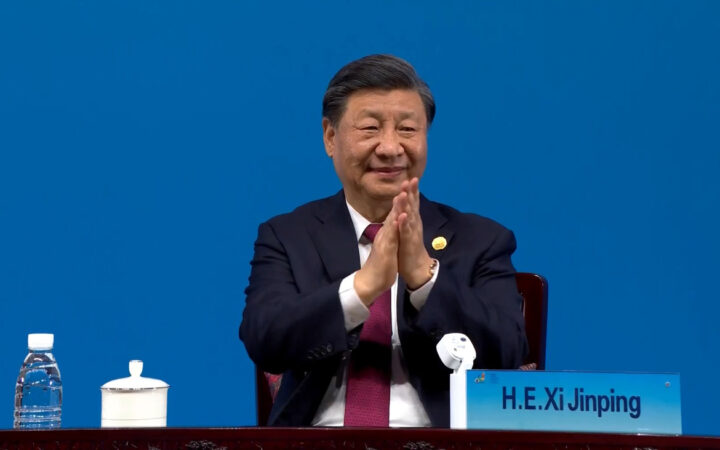
White House discussions on AI are expected during the week beginning September 14. Trump is also due to meet Chinese President Xi Jinping later in September, with AI a possible subject rather than a confirmed negotiated agenda item.
Those meetings could clarify whether the administration sees a role for common testing expectations alongside its competitive strategy. For now, Trump’s public position favors maintaining development while leaving the details of acceptable safeguards unresolved.
The next consequential step in AI policy will be a concrete proposal that shows how Washington intends to act when competitive pressure and a credible safety concern point in different directions.
Disclaimer: AIstify is an independent media brand owned and operated by NuvexMedia LLC, publishing news, research, and insights on artificial intelligence, emerging technologies, automation, and related industries. NuvexMedia LLC invests in and collaborates with companies across the AI, technology, software, and digital innovation sectors. These relationships do not influence AIstify’s editorial coverage, and the publication maintains full editorial independence to provide accurate, timely, and objective information. © 2026 NuvexMedia LLC. All rights reserved. This content is for informational purposes only and should not be considered legal, tax, investment, financial, or other professional advice.