
Key Notes
- IRIS Document Management is now available to accounting and professional-services firms in the UK and US as a standalone system or an IRIS Firm Management module.
- The platform combines plain-language search, OCR and AI tagging with filing rules, version control and a branded client portal for document exchange.
- IRIS says client data stays within each firm’s tenant and storage region and is never used to train AI models, alongside access controls and retention tools.
IRIS Software Group has launched a cloud document-management system that uses AI to search, read and tag client files for accounting and professional-services firms. IRIS Document Management brings those functions together with filing automation and a client portal, targeting the administrative work that sits between receiving a document and putting it to use.
The company announced the launch on November 2, with availability in the UK and US. Firms can buy it as a standalone system or use it with IRIS Firm Management, the company’s practice-management platform. Existing IFM customers can add document management as a module within the same environment.
From Scanned Files to the Right Client Folder
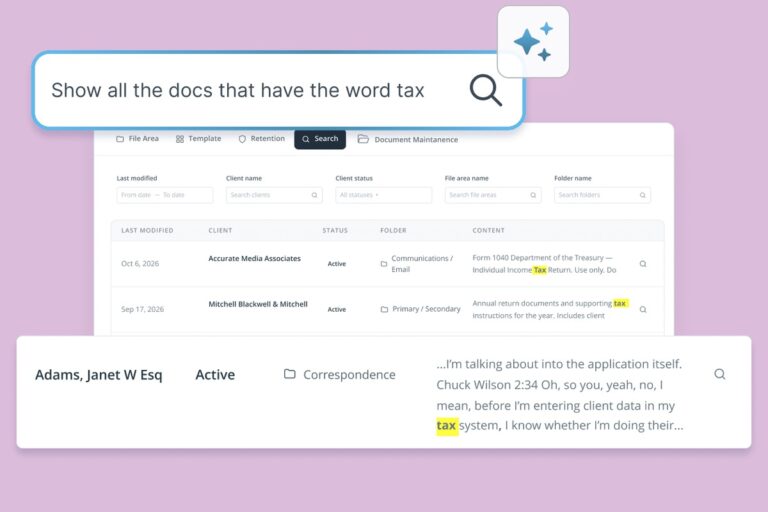
The system supports plain-language search across PDF, Word, Excel and PowerPoint files. Optical character recognition makes scanned documents searchable, while AI tagging draws from the firm’s own tag library to keep classification consistent. For an accounting practice, that is intended to reduce the time spent opening individual files or navigating folders to locate the right client record.
Filing automation uses rules based on templates, folder paths and year. The distinction between those rules and AI classification matters operationally: staff need to know how a file reached its destination and be able to correct it. IRIS’s product page says teams retain oversight and can review, adjust or correct filing.
The launch also includes bulk document actions, check-out and version control, plus browser-based editing of Microsoft Office files. A branded portal lets clients send and receive documents and check the status of submitted files. That gives firms a dedicated exchange channel around the document record, reducing their reliance on separate email threads.
The wider IFM integration connects documents with practice operations, including time, billing, due dates and reporting. IRIS also lists connections with Apxium and Microsoft Dynamics 365 Business Central. Its product page says the new platform is available to existing Doc.It and iChannel customers, with migration effort depending on the volume and structure of their documents.
The release fits a broader move to put AI inside the software employees already use. As our coverage of Claude Dashboards showed, access to business information is becoming a central part of workplace AI. IRIS is focusing that idea on the documents, client records and filing routines of professional practices.
Data Controls Are Part of the Product
IRIS says client data remains within each firm’s own tenant, AI processing takes place in the region where the data is stored, and client information is never used to train AI models. Those are the company’s stated data-handling commitments. They are particularly relevant to practices holding financial records and other confidential client material.
The security features include Okta single sign-on, two-factor authentication, role-based access controls and conditional access. Firms set their own document-retention rules, with legal holds and audit trails included. These controls are designed to support governed document handling, while individual practices remain responsible for configuring access and retention around their requirements.
Those questions extend beyond the search interface. AIstify’s reporting on AI data leaks examined how businesses monitor sensitive information entering workplace tools. For IRIS customers, the relevant decisions include which staff can access a client’s files, how changes are recorded and what happens when a retention period ends.
IRIS positions the launch around freeing staff for client service and advisory work, but the announcement does not provide an independently measured productivity result for this product or disclose subscription pricing. The company also describes a future direction in which AI helps firms act on document contents and shows clients what is needed from them. For now, the launched system centers on finding, organizing, managing and exchanging the files that accounting work depends on.
Disclaimer: AIstify is an independent media brand owned and operated by NuvexMedia LLC, publishing news, research, and insights on artificial intelligence, emerging technologies, automation, and related industries. NuvexMedia LLC invests in and collaborates with companies across the AI, technology, software, and digital innovation sectors. These relationships do not influence AIstify’s editorial coverage, and the publication maintains full editorial independence to provide accurate, timely, and objective information. © 2026 NuvexMedia LLC. All rights reserved. This content is for informational purposes only and should not be considered legal, tax, investment, financial, or other professional advice.