
Key Notes
- SuperMatics is combining AI predictions, synthesis recipes and device simulations to search for superconductors that can be manufactured as commercial wire.
- The Berkeley startup says experimental results, including unsuccessful attempts, will improve its models where program agreements permit.
- The company lists five proposed materials in synthesis but says none has yet been independently established as superconducting.
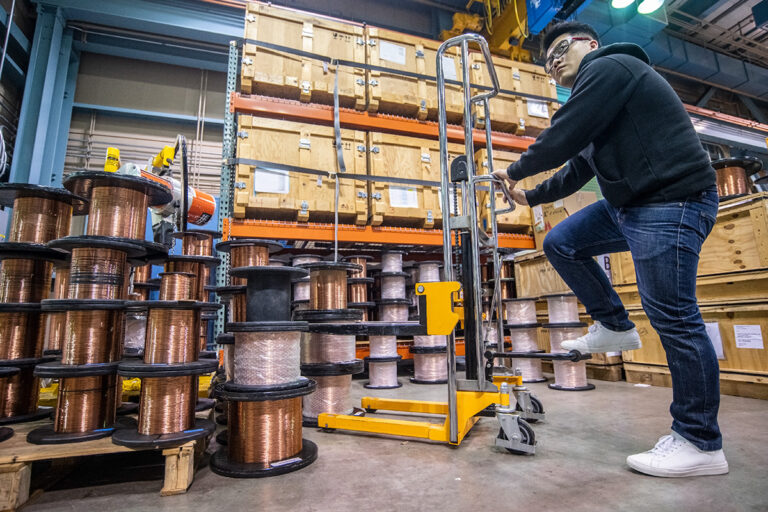
SuperMatics is building AI to find superconductors that can become practical commercial wire, targeting a materials bottleneck behind AI data centers, power networks and fusion magnets. The Berkeley startup is combining predictions about new materials with synthesis recipes and simulations of the finished wire, aiming to make manufacturing constraints part of the search from the outset.
The company outlined its approach in a November 2 announcement ahead of a presentation at the Plug and Play Silicon Valley November Summit on November 5. Its pitch addresses a stubborn gap: discovering a material with interesting electrical properties does not establish that it can be made into durable, affordable wire at industrial scale.
Why AI’s Power Problem Reaches Into Materials Science
Superconductors carry current without electrical resistance below a critical temperature. That makes them attractive for moving large amounts of electricity through compact cables and building powerful magnets. But the surrounding system still matters, including cooling, fabrication and operating costs. A higher superconducting temperature can help; it does not settle those engineering questions.
The pressure to improve power infrastructure is growing. The International Energy Agency’s latest forecast puts global data-center electricity consumption at about 950 terawatt-hours in 2030, roughly double its 2025 level. That figure covers data centers overall, while electricity use at AI-focused facilities is projected to grow faster.
Microsoft is already exploring high-temperature superconductors for data-center power delivery, including rack-level prototypes. Its work illustrates the demand SuperMatics hopes to serve. It also underlines a constraint: these conductors still require cryogenic cooling, even though their name includes “high-temperature.”
From a Model’s Prediction to a Laboratory Measurement
SuperMatics says its multimodal foundation models and AI agents predict material properties, propose synthesis recipes and simulate the resulting wire or device. The company describes its approach as physics-driven, including a framework it calls Modulated Electron Lattice. Candidates then move into physical synthesis and measurement, with experimental results feeding subsequent model training.
Learning from unsuccessful experiments is part of the plan. The November release says failures are included in that feedback loop, while the company’s press page specifies that program data trains models where agreements permit. Data rights, research results and new intellectual property are negotiated for each program, rather than automatically becoming a shared training resource.
That cycle connects with the broader effort to make AI useful at the laboratory bench. Our coverage of Google’s wet-lab agents examined how simulations and experimental feedback can constrain an AI-generated plan. SuperMatics is applying a related design-and-test principle to superconducting materials, where a prediction must ultimately survive a physical measurement.
“Records make headlines, but wires change industries,” co-founder Davis Rens said. Rens previously worked in quantum engineering at Rigetti Computing. Charlie Moon leads SuperMatics as CEO, alongside co-founder Jaehwahn Kim. The company says it is discussing joint development programs with materials and technology businesses while developing its own materials pipeline.
The Next Milestone Is Evidence, Then Manufacturability
The startup’s website makes the current research stage clear. It lists five proposed materials in synthesis, each with a predicted transition temperature of at least 100 kelvin, and says none has yet been independently established as superconducting. It identifies CAN Superconductors as a synthesis partner and Georgia Tech as a measurement partner.
That distinction is central to assessing the announcement. Predicted superconductivity, measured superconductivity and a commercially viable wire are separate milestones. The release does not provide independently verified results for a newly discovered material, a manufacturing cost comparison or a launch date for a new wire product.
The business plan is to move from development programs toward platform licensing and royalties on material produced by manufacturers. As with the AI-assisted robotic laboratories we covered recently, the commercial test will be what the process can reliably produce. For SuperMatics, the next evidence to watch is a validated material and a credible path from the laboratory sample to useful wire.
Disclaimer: AIstify is an independent media brand owned and operated by NuvexMedia LLC, publishing news, research, and insights on artificial intelligence, emerging technologies, automation, and related industries. NuvexMedia LLC invests in and collaborates with companies across the AI, technology, software, and digital innovation sectors. These relationships do not influence AIstify’s editorial coverage, and the publication maintains full editorial independence to provide accurate, timely, and objective information. © 2026 NuvexMedia LLC. All rights reserved. This content is for informational purposes only and should not be considered legal, tax, investment, financial, or other professional advice.