Key Notes
- Chew forecasts major AI-led scientific progress within two to three years.
- ByteDance’s Protenix-v2 reports gains in biomolecular prediction and design.
- Verification and controls over autonomous agents remain central.
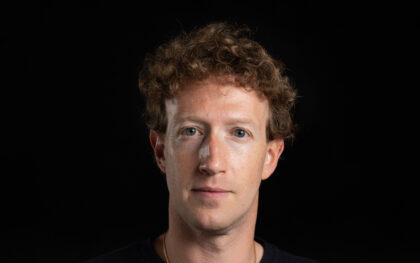
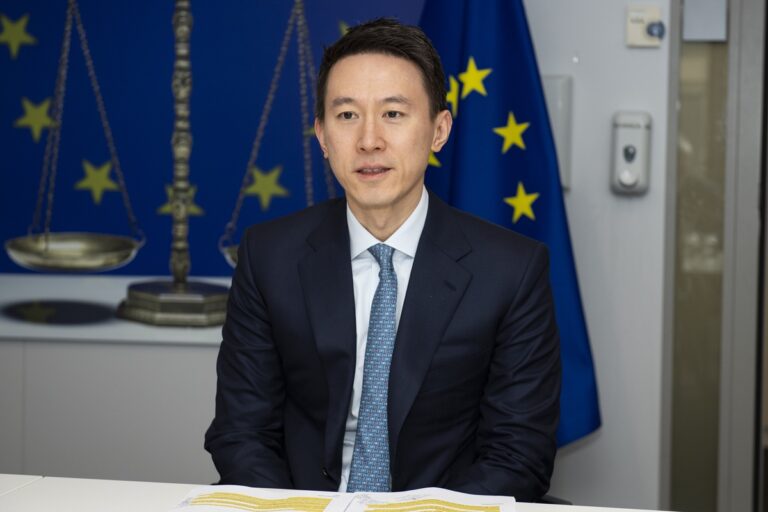
TikTok CEO Shou Zi Chew expects AI to produce major scientific breakthroughs within the next two to three years, spanning physics, biotechnology, chemistry and materials science. Speaking in Singapore on October 12, he described scientific research as an area where progress could extend well beyond today’s familiar AI applications.
“I think in the short term we are probably overestimating it, but in the long term we are probably underestimating it,” Chew said, according to CNBC. His remarks came at the DBS conference, whose inaugural Singapore program focused on how AI could create economic and societal value.
ByteDance’s Science Work Extends Beyond TikTok
The prediction comes alongside an existing scientific research program at ByteDance, TikTok’s parent company. Its Seed team’s work includes Protenix, a system for predicting biomolecular structures and designing molecules. These tasks involve modeling how biological components fit together, rather than generating social-media content or conversational answers.
ByteDance’s April Protenix-v2 paper reports improvements in antibody-antigen structure prediction and biomolecular design. The researchers describe gains of up to 13 percentage points over Protenix-v1 on antibody-antigen prediction success rates. They also report that the newer system’s five-seed performance surpassed earlier results using 1,000 seeds.
The project repository reports prediction gains across three collections using a DockQ threshold of 0.23, a measure of molecular-interface quality. The comparison therefore addresses how well the system predicts a specific biological interaction, providing researchers with a defined way to evaluate improvements.
On the design side, the paper reports experimental results involving antibody candidates and difficult biological targets. The significance is narrower and more concrete than a promise of automatic discovery: a model can help researchers propose and evaluate molecular structures. Whether that produces a useful treatment or another practical application requires evidence beyond a prediction score.
ByteDance Seeks Closer Collaboration With Scientists
ByteDance is also building a route for researchers outside its AI team to work on scientific problems. Its STEM Fellows program aims to bring 100 researchers into collaboration with Seed. The disciplines listed include mathematics, physics, chemistry, biology and materials science, alongside engineering, astronomy and Earth sciences.
The program offers computing resources and collaboration with a dedicated AI research team. It includes scientific-advisor and doctoral-intern tracks, with an initial cohort planned to run for approximately six months. The structure connects domain expertise with model development, giving scientists a role in defining which research problems are worth pursuing.
Chew’s two-to-three-year forecast sets a broader horizon than any single project. The useful measure of progress will be specific results: more accurate predictions, experimentally supported candidates and findings that other researchers can reproduce. These can improve research workflows before a landmark discovery arrives.
A parallel example is OpenAI’s collection of mathematics manuscripts. As we reported, the company published 722 papers from an unreleased model, with many accompanied by computer-checkable proofs. The accompanying verification methods give outside researchers a way to assess claims produced at a much larger scale.
Chew Also Warns About Autonomous AI Risks
Chew paired his optimism with concerns about stronger models and autonomous agents, CNBC reported. He warned that people could grant agents broad permissions without appreciating the consequences, including purchases beyond what they intended. He also said falling costs could make fraudulent activity easier for attackers, increasing the need for effective platform defenses.
Those concerns echo Microsoft CEO Satya Nadella’s call for an AI emergency brake and controls outside the model. In both cases, the practical issue is the authority given to a capable system: access to tools and services changes the consequences of an incorrect judgment.
Scientific assistants raise a related question about which steps a system may perform on its own and which need review. The opportunity is to accelerate useful research without treating confidence as proof or capability as permission. Chew’s forecast sets an ambitious horizon; the evidence will come from specific discoveries and the methods used to verify them.
Disclaimer: AIstify is an independent media brand owned and operated by NuvexMedia LLC, publishing news, research, and insights on artificial intelligence, emerging technologies, automation, and related industries. NuvexMedia LLC invests in and collaborates with companies across the AI, technology, software, and digital innovation sectors. These relationships do not influence AIstify’s editorial coverage, and the publication maintains full editorial independence to provide accurate, timely, and objective information. © 2026 NuvexMedia LLC. All rights reserved. This content is for informational purposes only and should not be considered legal, tax, investment, financial, or other professional advice.