Key Notes
- AMD Helion separates agent execution from model inference, offering a CPU-only rack with up to 32,768 Zen 6 cores and an integrated CPU/GPU option for enterprise deployments.
- The open reference design supports configurable EPYC CPU blades, Instinct MI350P GPU inference and routing between cloud frontier models and locally hosted open-source models.
- AMD plans partner availability for November 2026 and an Open Compute Project contribution, while pricing and real-world agent capacity remain dependent on the final configuration.
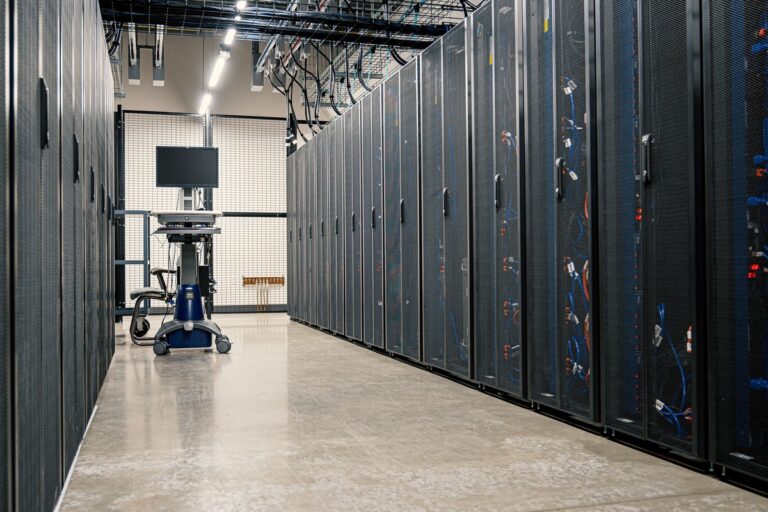
AMD has introduced Helion, a rack-scale reference design for running AI agents, with a CPU-only configuration supporting up to 32,768 Zen 6 cores. The platform also offers an enterprise configuration that brings CPUs, GPU inference and supporting compute into one rack, giving customers different ways to separate an agent’s work from the models it calls.
The October 12 announcement positions Helion as an open blueprint that hardware partners can adapt to a deployment’s workload, power budget and cooling arrangements. AMD says partner configurations are under development and planned for November 2026 availability; that remains a target rather than confirmation that systems are shipping today.
Why AI Agents Need More Than GPUs
An agent’s workload extends beyond generating a model response. It may execute code, retrieve information, interact with business applications and coordinate several steps before requesting another inference. Those activities create different infrastructure requirements from the GPU-heavy task of running a large model.
Helion’s CPU-only design addresses that distinction directly. It provides capacity for agent execution while connecting to separate inference infrastructure, allowing a cloud operator to scale the two resources independently. AMD describes this configuration as suited to hyperscale deployments, including neoclouds and sovereign AI operators.
The distinction is becoming relevant as software platforms introduce more persistent and parallel work. Google Cloud’s Gemini agent, for example, can create subagents for parts of a larger assignment. That does not establish demand for a particular AMD rack, but it illustrates why agent coordination, tool execution and model inference need to be considered separately.
CPU-Only and All-in-One Rack Configurations
AMD’s product specifications describe options built around EPYC 9006-series processors. Dense and balanced CPU configurations list 256 cores at 400W and 600W, respectively, while a performance option lists 96 cores at 5.0 GHz. These are alternative building blocks for different priorities, rather than a single configuration every customer receives.
The enterprise design adds Instinct MI350P GPU blades for inference and general-purpose blades for workloads such as databases and storage. Its token router can direct model requests to frontier models in the cloud or open-source models running within the rack. Keeping agent execution local therefore does not require every model request to be handled locally.
| Configuration | Compute approach | Inference arrangement |
|---|---|---|
| CPU-only hyperscale | EPYC CPU blades for agent execution, with up to 32,768 cores | Connects to separate model inference infrastructure |
| All-in-one enterprise | EPYC CPUs, Instinct MI350P GPUs and general-purpose compute | Routes requests to local open-source models or cloud models |
AMD lists platform specifications of up to 16 MI350P GPUs and up to 102 Tbps of networking bandwidth. Buyers should treat those figures, alongside the maximum CPU count, as configuration-dependent ceilings. They are not a claim that every rack combines all maximum values or sustains that bandwidth for every application.
An Open Blueprint for Hardware Partners
Helion follows AMD’s open-platform approach to its Helios rack-scale solution, while focusing on infrastructure for agent execution. AMD plans to contribute the Helion specification to the Open Compute Project so the wider ecosystem can develop and adopt it. The product page describes a 21-inch ORv3 rack with air-cooled and direct liquid-cooled options.
The announcement includes support from Cisco, Dell Technologies, Hon Hai, HPE, Lenovo, QCT, Supermicro and Wiwynn. Their participation gives customers several potential integration paths, but an ecosystem endorsement is not the same as a published order, a completed deployment or a guarantee that every partner will offer identical hardware.
The design also leaves room to optimize the software that controls an agent. Specialized components such as Microsoft Decision-1 score predefined choices for routing and workflow control. Hardware capacity and software efficiency address different parts of the same operating problem: how much work an agent completes for the resources it consumes.
Availability and the Questions Still Open
AMD’s stated November availability target is the clearest timing guidance in its press release. The company has not announced a universal rack price, and its maximum core count does not provide a direct measure of agents supported, task completion speed or operating cost. Those outcomes depend on the selected blades, models, applications and workload.
For a prospective customer, the useful comparison will be completed tasks per unit of power and cost, together with latency and reliability under realistic load. Helion offers a configurable architecture for that evaluation. Whether a CPU-only or integrated rack is the better fit will depend on where inference runs and how much time the agents spend executing work between model calls.
Disclaimer: AIstify is an independent media brand owned and operated by NuvexMedia LLC, publishing news, research, and insights on artificial intelligence, emerging technologies, automation, and related industries. NuvexMedia LLC invests in and collaborates with companies across the AI, technology, software, and digital innovation sectors. These relationships do not influence AIstify’s editorial coverage, and the publication maintains full editorial independence to provide accurate, timely, and objective information. © 2026 NuvexMedia LLC. All rights reserved. This content is for informational purposes only and should not be considered legal, tax, investment, financial, or other professional advice.