Key Notes
- Nvidia and Cisco plan USFP optics with 400Gb/s-per-lane signaling to increase network density while preserving replaceable modules and familiar maintenance practices.
- Cisco describes 6.4Tb/s capacity for the initial 16-lane design and a path to 12.8Tb/s with 32 lanes, while the companies project improved bandwidth density and power efficiency.
- The USFP specification and hardware ecosystem are still being developed, alongside separate Cisco networking products that range from shipping systems to features planned for 2027.
Nvidia and Cisco have unveiled a new optical connection design aimed at a growing constraint in AI data centers: moving information between computing systems without consuming ever more space and electricity. Their planned Ultra-Dense Small Form Factor Pluggable, or USFP, would increase the bandwidth available from a compact, replaceable module.
The October 12 announcement sets out a development roadmap rather than a product available to order. Nvidia and Cisco say the design could deliver 4x the bandwidth density and approximately 1.3x the power efficiency of 200Gb/s-per-lane pluggable optics, potentially connecting more computing systems without adding another layer of network switches.
Why AI Factories Need Better Connections
An AI factory is infrastructure built to train models or run them at scale. Its performance depends on how effectively computing, storage and networking work together. More capable processors can still be held back when the surrounding network cannot move data quickly enough to keep them occupied.
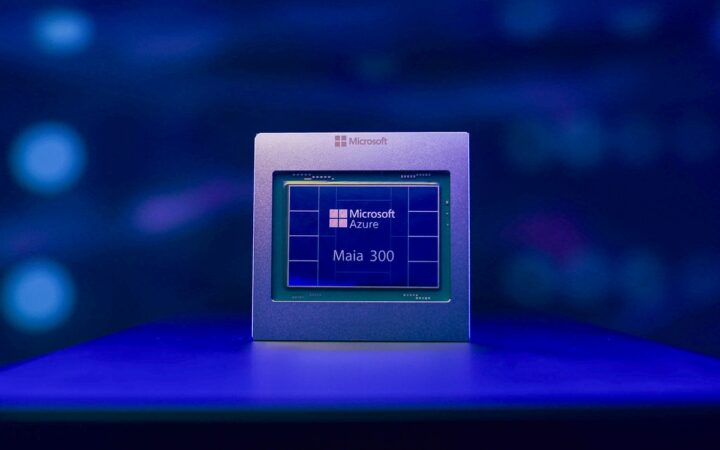
That makes networking a different part of the infrastructure race from the processors themselves. Microsoft’s Maia 300 targets the chips serving AI responses, while AMD’s Helion racks address the compute systems supporting agents. USFP focuses on the connections that help such systems function together.
The proposed modules retain the pluggable approach, in which operators can replace an individual transceiver in the field. Cisco argues that familiar maintenance practices, established supply chains and supplier choice remain valuable as AI networks become larger and more complicated.
What the USFP Bandwidth Figures Mean
Cisco’s technical explanation describes an initial configuration with 16 lanes operating at 400Gb/s each, providing 6.4Tb/s of aggregate capacity. Expanding to 32 lanes would provide a path to 12.8Tb/s. The distinction matters: the larger figure describes the architecture’s expansion path, rather than the initial 16-lane configuration.
The design also supports systems based on both 200G and 400G electrical signaling. Cisco presents that flexibility as a way to increase network capacity while retaining operational practices that data center teams already understand.
Bandwidth density measures how much data a connection can carry within a given physical footprint. It does not mean an AI model becomes 4x faster, and the efficiency claim does not establish an equivalent reduction in an entire facility’s electricity bill. Those outcomes would depend on the complete system and the workloads running on it.
Nvidia and Cisco are working with TE Connectivity and Amphenol on the surrounding hardware ecosystem. They also plan to establish an open specification through a community-led, multi-source project. Supplier participation and an open specification could broaden adoption, but neither alone establishes that finished products will interoperate without further engineering and validation.
Cisco Expands the Network Around AI
USFP was part of a wider set of OCP announcements from Cisco. The company said its first Silicon One G300-based systems are shipping to customers, while systems using its P200 routing silicon are already operating in production at major cloud providers. New G302 switching silicon is planned to start shipping before the end of 2026.
Cisco also outlined networking for coordinated AI workloads spread across facilities. Its approach combines routing systems, buffering and optical links to address traffic congestion and recovery across sites, where network disruption can interfere with a shared computing job.
For operations teams, the announcements included the Cisco 8001 management system, designed to preserve remote access when the main production network fails. Separately, Cisco plans to extend Live Protect runtime vulnerability mitigation to supported SONiC customers from mid-2027, giving them time to test and deploy permanent fixes.
These products sit at different stages of availability, and the USFP announcement gives no firm general release date or pricing. The next meaningful milestones will be the specification, compatible hardware and evidence from deployment. For AI operators, the practical test is whether denser connections let them use more compute within their actual power, space and maintenance limits.
Disclaimer: AIstify is an independent media brand owned and operated by NuvexMedia LLC, publishing news, research, and insights on artificial intelligence, emerging technologies, automation, and related industries. NuvexMedia LLC invests in and collaborates with companies across the AI, technology, software, and digital innovation sectors. These relationships do not influence AIstify’s editorial coverage, and the publication maintains full editorial independence to provide accurate, timely, and objective information. © 2026 NuvexMedia LLC. All rights reserved. This content is for informational purposes only and should not be considered legal, tax, investment, financial, or other professional advice.