Key Notes
- Navitas has developed a 24kW power-delivery board with Nvidia that converts 800V DC to 12V DC in one stage, eliminating an intermediate conversion step.
- The board targets 97% efficiency at full load and supplies a voltage regulator module, which still converts power to the lower voltages required by the processor.
- Navitas plans to showcase the board within Nvidia’s MGX ecosystem at OCP, while pricing, shipment volumes and general availability remain unspecified.
Navitas Semiconductor has announced a 24kW power-delivery board developed with Nvidia for the next generation of AI data centers. The design converts 800V direct current to 12V in a single stage, addressing the increasingly difficult task of supplying dense computing systems without losing excessive energy along the way.
The October 12 announcement expands an existing collaboration rather than establishing a new partnership. Navitas, which trades on Nasdaq as NVTS, plans to show the board in Nvidia’s AI Factory MGX ecosystem display at the OCP Global Summit.
Removing an Intermediate Power Stage
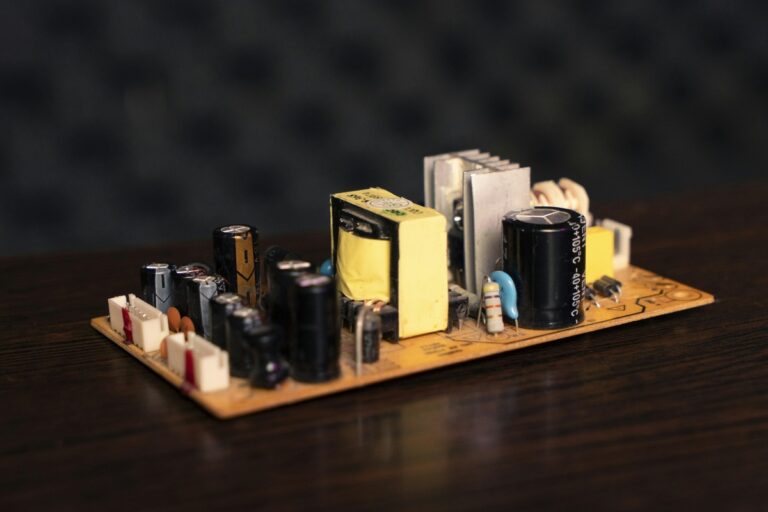
The new board is designed to supply an entire compute tray. It uses Navitas’s GaNFast gallium nitride technology and targets 97% efficiency at full load, with power density exceeding 2,000 watts per cubic inch. Navitas describes a 400mm x 60mm form factor that can be integrated onto the compute motherboard close to the processors.
The central change is the path electricity takes. Rather than stepping power down through a 50V intermediate bus and then converting it to 12V, the board performs the 800V-to-12V conversion in one stage. It supplies the voltage regulator module, which still has to provide the lower voltages required by the processor itself.
Removing a conversion stage can reduce the components and board area devoted to power delivery. Locating conversion closer to the processors also aims to reduce losses in the remaining electrical path. Navitas’s efficiency figure is a design target, however, rather than an independently verified measurement from a deployed data center.
Why Nvidia Is Moving Toward 800V
The wider shift concerns the infrastructure around AI chips. Nvidia’s architecture overview describes centralized AC-to-DC conversion followed by high-voltage distribution to computing racks. Reducing repeated conversions is intended to simplify the power chain and limit the energy lost before electricity reaches the hardware doing useful work.
Higher voltage also allows the same amount of power to be transmitted with less current. That can ease the demands on conductors as racks become more power-hungry, although an 800V system still requires appropriate protection, cooling and facility engineering. A more efficient board is one part of that system, rather than a substitute for the infrastructure around it.
Nvidia has also outlined a transition path for existing facilities. In its August power update, the company described an MGX-compatible 800V power rack intended to bring a hybrid approach to data centers already in operation. That matters because upgrading electrical distribution is a larger undertaking than replacing an individual compute board.
Power and networking are advancing together. Today’s USFP announcement from Nvidia and Cisco targets denser network connections, while Microsoft’s P200 deployment adds routing capacity. Navitas addresses another constraint: delivering electricity efficiently enough for growing compute capacity to be practical.
Navitas Extends Its AI Power Portfolio
The 12V design builds on an earlier 20kW board that converted 800V to 6V. Offering different intermediate voltages gives system designers more choice in how they connect power delivery to the voltage regulators serving their processors, rather than requiring every computing platform to follow an identical layout.
Navitas has also expanded closer to the processor through its Claros acquisition, completed on October 6. Claros develops integrated voltage regulators that bring conversion beneath or very close to the processor, complementing Navitas’s gallium nitride and silicon carbide technologies elsewhere in the power chain.
The announcement does not specify pricing, shipment volumes or a general availability date for the 24kW board. Its near-term milestone is the planned OCP showcase. The commercial test will be how the design performs within complete systems and how quickly customers qualify it for production deployments.
Disclaimer: AIstify is an independent media brand owned and operated by NuvexMedia LLC, publishing news, research, and insights on artificial intelligence, emerging technologies, automation, and related industries. NuvexMedia LLC invests in and collaborates with companies across the AI, technology, software, and digital innovation sectors. These relationships do not influence AIstify’s editorial coverage, and the publication maintains full editorial independence to provide accurate, timely, and objective information. © 2026 NuvexMedia LLC. All rights reserved. This content is for informational purposes only and should not be considered legal, tax, investment, financial, or other professional advice.