Key Notes
- Meta has released Muse Spark Open with 816 billion total parameters and 42 billion active, targeting coding and extended AI-agent tasks.
- The highlighted desktop setup uses two 512GB M5 Ultra Mac Studios, but those memory configurations will not reach buyers until late October.
- Hosted API access is already available, while the downloadable weights carry commercial and attribution conditions under the Muse Model License.
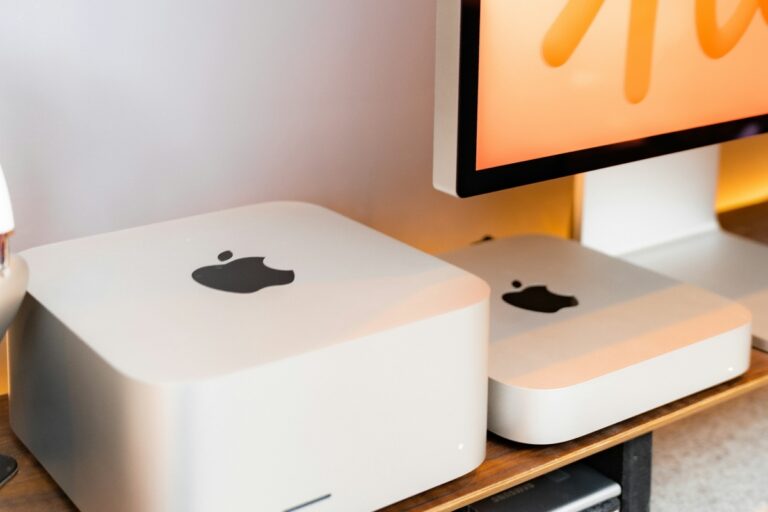
Meta has released Muse Spark Open, an 816-billion-parameter AI model that developers can download and run themselves, including on a pair of high-end Mac Studio computers. The October 15 release brings a substantial hardware requirement alongside its promise of local coding and AI-agent work: the highlighted Mac setup uses two M5 Ultra machines with 512GB of memory each.
The model activates 42 billion parameters for each token and supports a one-million-token context window. Meta describes it as the strongest US open-weight model released so far, a claim about that category rather than a declaration that it beats every proprietary or international rival. It is also available through hosted providers, so trying it does not require buying the Macs.
The release adds a new option to the Muse family. Our Apple partnership coverage examined the companies’ collaboration; the more immediate question for developers is what Spark Open can run on, what it costs to operate and how it differs from Meta’s other models.
Why 42 Billion Active Parameters Still Need So Much Memory
Muse Spark Open uses a mixture-of-experts architecture, selecting part of the model for each token instead of performing every calculation across all 816 billion parameters. That reduces the computation needed for an answer, but the larger collection of weights must still be available. The active-parameter count is therefore a poor shortcut for estimating the computer needed to run it.
Apple’s technical report puts the native BF16 weights at more than 1.6TB. Four-bit NVFP4 compression reduces the model footprint to about 493GB, before the additional memory required during inference. Apple says that overhead prevents it from fitting on a single 512GB Mac Studio.
MLX distributes the work across connected machines. Apple measured 24.99 generated tokens per second on two M5 Ultra Macs using tensor parallelism and 36.73 on four, at an 8,192-token context. Those measurements cover 128 generated tokens; they are not a promise of the same responsiveness at the model’s maximum context or a measure of how quickly an agent finishes a software project.
The Two-Mac Configuration Is Not Yet on Sale
Apple’s availability notice says the 512GB Mac Studio arrives in late October. Its $5,499 M5 Ultra starting price should not be mistaken for the cost of the high-memory configuration used in Meta’s pitch. The model weights and the required retail hardware have different availability dates.
A currently available 256GB M5 Ultra configuration costs at least $10,799, CNBC reported. Four at that price would total $43,196 before tax and provide the same nominal aggregate memory as two 512GB machines. That is a hardware-cost illustration, not a verified recommendation: matching total memory alone does not establish that a particular cluster, interconnect and runtime will deliver the desired performance.
The distinction matters because local inference is an ownership decision as much as a model choice. A business may value keeping inference on its own equipment, but it also takes on setup, maintenance and capacity planning. A developer evaluating a few tasks can start with hosted access before deciding whether that trade-off makes sense.
API Access Offers a Faster Way to Try It
Meta lists Baseten, Fireworks AI, Groq, Modal, Nebius, OpenRouter and Together AI among its hosted inference partners. It also supports deployment paths beyond Apple, including popular inference engines on AMD, Intel and Nvidia hardware. The two-Mac demonstration is one route into the model, not a platform lock-in.
Choosing a provider means checking that provider’s pricing, context limits and data-handling terms. Downloading the weights offers more control over deployment, while an API removes the immediate need to assemble the hardware. Neither route guarantees that a coding agent will complete a real assignment without review or retries.
Where Spark Open Fits Alongside Glimmer and Wonder
Meta’s smaller Muse Glimmer release focused on making local agents practical on a single consumer GPU. Spark Open moves much further up the hardware scale. Developers looking for an assistant on an existing workstation should not assume that the larger model is automatically the more useful choice.
At the other end, Muse Wonder competes in the frontier-model race. Spark Open has a different selling point: developers can take its weights into their own systems. In Meta’s benchmark comparison, Spark Open scores 39 on the Artificial Analysis Intelligence Index, behind GLM 5.3 at 45 and Kimi K3 at 44. Those figures underline why its US open-weight positioning should not be expanded into an overall performance crown.
The model license also deserves attention. It permits broad use and modification subject to conditions, including attribution and a usage policy. Model-as-a-service businesses whose combined revenue with affiliates exceeds $20 million over a consecutive 12-month period need a separate agreement; the text includes exceptions for internal use and qualifying non-model-as-a-service products.
Spark Open consequently broadens Meta’s offer without making deployment free or unrestricted. Its appeal is the ability to choose where a capable model runs and how it connects to a workflow. For most curious developers, the first decision can be much smaller than buying a cluster: test the model on representative work, then decide whether owning the inference hardware adds enough value.
Disclaimer: AIstify is an independent media brand owned and operated by NuvexMedia LLC, publishing news, research, and insights on artificial intelligence, emerging technologies, automation, and related industries. NuvexMedia LLC invests in and collaborates with companies across the AI, technology, software, and digital innovation sectors. These relationships do not influence AIstify’s editorial coverage, and the publication maintains full editorial independence to provide accurate, timely, and objective information. © 2026 NuvexMedia LLC. All rights reserved. This content is for informational purposes only and should not be considered legal, tax, investment, financial, or other professional advice.