
Key Notes
- Kling’s public release doubles the full model’s maximum native video length to 30 seconds and adds more precise control through keyframe images.
- AI assistants can access Kling through MCP and command-line tools, although generation still requires eligible paid credits.
- Flash has a shorter 20-second limit, while HDR output and two-minute video extensions remain listed as upcoming features.
Kling 4.0 is now available to all users, bringing AI-generated videos of up to 30 seconds, stereo sound and finer control over how a scene develops. The public release on October 15 also extends the model to AI assistants through MCP and command-line tools, allowing agents to request video generation as part of a larger task.
Thirty Seconds, With More Control Between Shots
The full model doubles Kling 3.0’s maximum native video length from 15 to 30 seconds. Creators can supply up to 10 keyframe images to guide moments throughout the sequence, rather than specifying only its opening and ending. Stereo audio expands on the native sound already supported by the previous generation.
Kling’s comparison guide also describes a broader reference system: up to 15 assets can be combined, including images, videos, subjects and voice references. The separate limits include 10 images and five videos totaling 30 seconds; those allowances sit within the combined cap, rather than adding up to unlimited inputs.
Existing footage can be revised by changing characters, backgrounds, movement or camera direction. Creative Recreation goes a step further, borrowing the pacing and composition of a reference video while replacing its characters or products. For an advertising team, that could mean testing several versions of one concept without rebuilding every sequence.
Longer generation alone is no longer unusual in this market. Alibaba’s Wan3.0 also introduced 30-second videos. Kling’s practical pitch is the ability to direct and revise that time more precisely, a distinction that matters when a usable campaign needs a specific action or product reveal.
Video Generation Becomes an Agent Tool
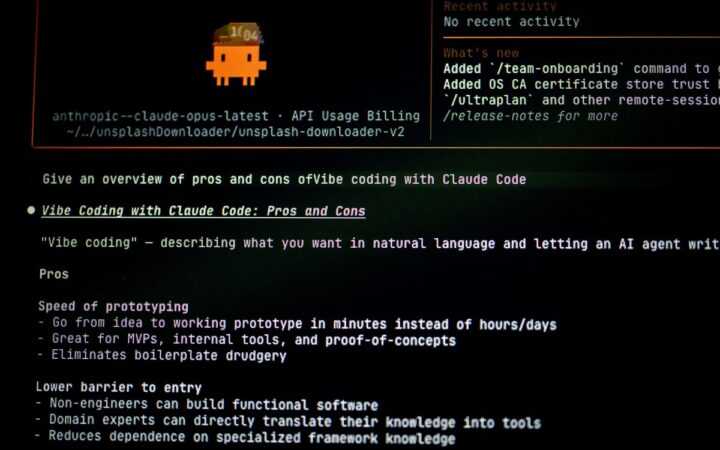
Kling’s integration guide explains how assistants such as Claude and Cursor can call its image and video tools after account authorization. The latest release notes explicitly add Kling 4.0 support, including Omni Reference and keyframe-based generation. Users can describe a task in their assistant and receive the resulting media there.
Generation is asynchronous: a request returns a task identifier, and the assistant checks for completion before retrieving the result. This makes Kling a service an agent can call within a workflow, rather than requiring the user to manually move every prompt into a separate video application.
Access still has limits. The guide says assistant-based generation uses paid credits in a Personal workspace, with no off-peak free generation and no use of bonus credits. Generated download links last 24 hours, and submitted tasks cannot be canceled. Public availability therefore should not be read as unrestricted free video creation.
The distinction from tools such as Claude Motion is useful. Motion builds editable animations from code, reports and charts; Kling generates and transforms footage. An assistant can help coordinate creative work, but the underlying tool still determines what kind of output it can produce.
Flash and Upcoming Features Have Different Limits
Kling 4.0 Flash is positioned as the faster option for frequent creation, but its specifications differ from the full model: it supports clips of three to 20 seconds at 720p. The full model lists 720p, 1080p and 4K output. The announcement still marks 10-bit HDR and repeated video extensions up to two minutes as coming soon.
Kling also claims better realism, motion stability and lip synchronization. Those are the developer’s claims, not an independent comparison. For creators, the meaningful test will be whether characters, timing and sound remain consistent across a finished sequence—and how many paid attempts are needed to get there.
Disclaimer: AIstify is an independent media brand owned and operated by NuvexMedia LLC, publishing news, research, and insights on artificial intelligence, emerging technologies, automation, and related industries. NuvexMedia LLC invests in and collaborates with companies across the AI, technology, software, and digital innovation sectors. These relationships do not influence AIstify’s editorial coverage, and the publication maintains full editorial independence to provide accurate, timely, and objective information. © 2026 NuvexMedia LLC. All rights reserved. This content is for informational purposes only and should not be considered legal, tax, investment, financial, or other professional advice.