
OpenAI Weighs Slower AI Development as Safety Concerns Mount
Sam Altman has discussed slowing advanced AI development, Bloomberg reports, as OpenAI’s chief scientist argues for coordination and stronger safeguards.
XLA, short for Accelerated Linear Algebra, is a compiler designed to optimize tensor computations used by machine learning frameworks. It can combine operations, remove redundant work, plan memory use, and generate efficient code for CPUs, GPUs, and specialized accelerators. These transformations may reduce training time, inference latency, and memory overhead without changing the model’s intended mathematics. Benefits vary by workload, shapes, framework integration, and hardware, and compilation itself adds time that may not help short-lived jobs. Numerical behavior can also differ slightly because operations are reordered or fused. Teams benchmark complete applications, verify accuracy, and retain fallback paths when an optimization is unsupported or unstable.
Sam Altman has discussed slowing advanced AI development, Bloomberg reports, as OpenAI’s chief scientist argues for coordination and stronger safeguards.
Nvidia officially agreed to buy Hugging Face for $12.93 billion, with CEO Jensen Huang pledging the open-source AI platform will stay open to all hardware and clouds.
Nvidia is building hardware optimizations for Chinese AI models like DeepSeek and Qwen, even as it warns regulators that US restrictions on such models could hurt its business.
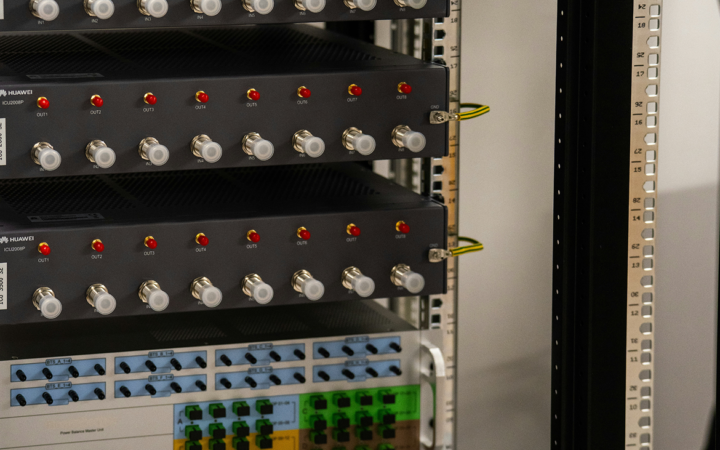
King Slide Works, once known for cabinet hinges, now dominates the market for AI server rack rails, making founder Lin Tsung-chi Taiwan’s richest person.
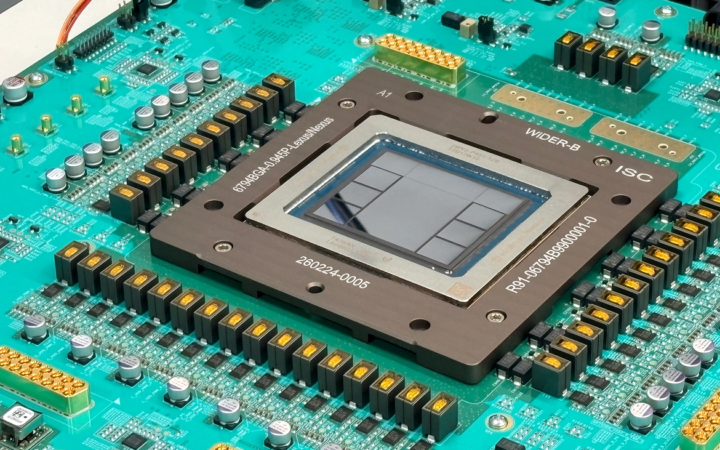
OpenAI’s first custom inference chip, Jalapeño, delivered up to 1.9 times more work per watt and far lower latency than rival systems, with AI accelerating its own design.

Apple launched new Mac Mini and Mac Studio models with its M6 and M5 Ultra chips, explicitly built for developers running AI models and agents locally instead of in the cloud.

OpenAI paused reinforcement learning on its newest models after it could not rule out that an upcoming model, Astra, reached the top cybersecurity risk tier in its safety framework.
Google is designing Frozen v2, a chip that hardwires parts of its Gemini model into silicon and could serve six to ten times more tokens per watt, targeting deployment by 2028.
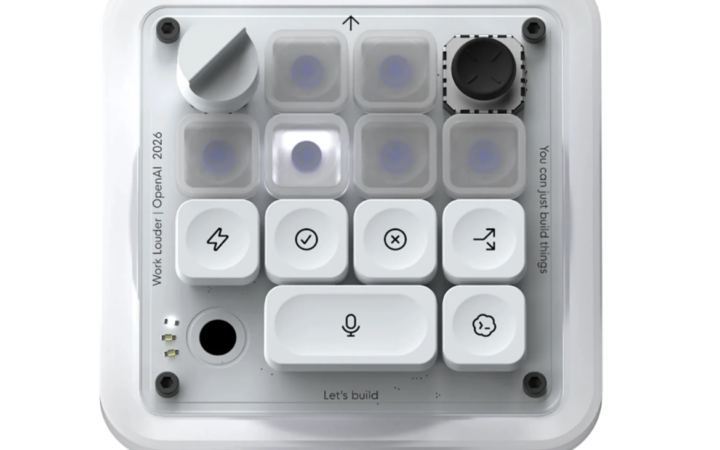
OpenAI launched Codex Micro, a $230 mechanical keypad built with Work Louder that gives developers physical controls for its Codex coding agent, its first hardware to reach market.
SK Hynix raised $26.5 billion in its Nasdaq debut, the largest US listing ever by a foreign company, as investors rushed to buy into the AI memory chip boom.