
Key Notes
- King Slide Works, a Taiwanese furniture-hinge and drawer-slide maker since 1986, now controls roughly 80% of the global market for high-end AI server rail kits. The company pivoted to server rails in 2000-2001 after refusing a client's demand for price cuts, later winning Compaq, IBM and Dell as customers.
- King Slide is expanding capacity in Taiwan and the US, though analysts expect its share of Nvidia-related orders to slip slightly as Nvidia diversifies suppliers.
King Slide Works, a Taiwanese company that spent decades making hinges and drawer slides for cabinets, has become one of the AI boom’s most unlikely winners by dominating the market for the metal rails that hold heavy servers inside data center racks. The Kaohsiung-based firm now controls roughly 80% of the global high-end server-rail market, and its shares have surged nearly 280% since the start of the year.
That rally has made founder and chairman Lin Tsung-chi Taiwan’s richest person, with Forbes estimating his real-time net worth at around $17 billion to $20 billion depending on the day’s trading, surpassing both Yageo chairman Pierre Chen and Foxconn founder Terry Gou. Lin’s path there is unusual even by the standards of AI-boom fortunes: born in Kaohsiung in 1941, he was sent to work as a furniture-factory apprentice at age nine and never returned to school after finishing elementary education, building a business empire on decades of hands-on work with hardware and machinery.
King Slide founded its furniture hardware business in 1986. The pivot into server rails came around 2000, after the company reportedly refused a major client’s demand for price cuts and instead redirected its precision-engineering expertise toward computer hardware, eventually winning Compaq, followed by IBM and Dell, as customers. That early bet has compounded dramatically as AI data center construction has accelerated global demand for server infrastructure.
The financial results underline how lucrative that pivot has become. King Slide’s gross margin reached roughly 87% last quarter, up sharply from around 50% just a few years ago, and notably higher than the margins reported by far larger AI-industry names: Nvidia’s gross margin runs around 75%, and TSMC’s around 68%. First-half net profit for 2026 rose 237% year-over-year.
How Value Flows Through AI Infrastructure Spending
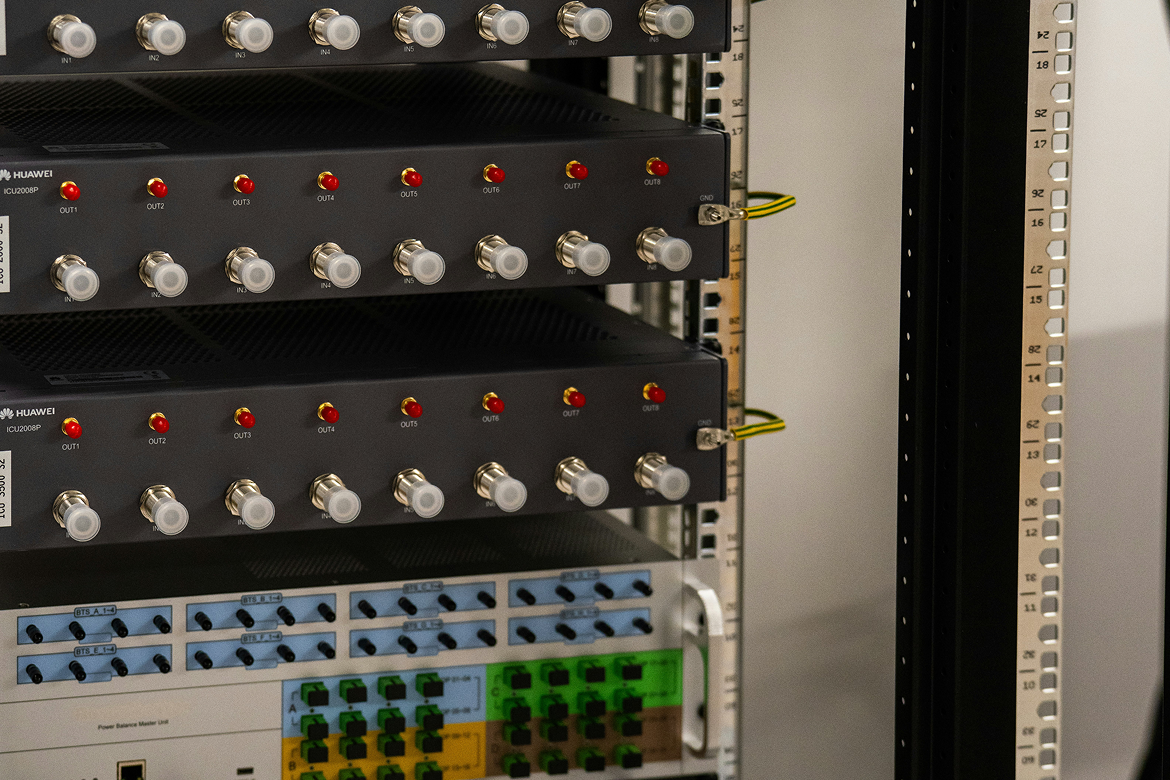
Server rails are a small line item relative to the cost of a fully loaded AI rack, which can run into the millions of dollars once populated with high-end chips, but the rails are also a critical safety and reliability component supporting extremely heavy, expensive equipment. When the cost of failure is measured in rack-scale outages or damaged hardware, customers have shown they are willing to pay a substantial premium for a relatively cheap part, provided it performs precisely and reliably at scale, a dynamic that rewards specialized manufacturing expertise built over two decades rather than raw manufacturing volume.
King Slide is moving to capture more of that demand directly, breaking ground on a fourth Taiwan factory and starting operations at a new Texas plant to serve North American AI infrastructure customers closer to home. Its dominance is not entirely secure, however: Daiwa Securities expects King Slide’s share of Nvidia-related rail-kit orders to slip from around 80% to about 75% next year as Nvidia works to diversify its supplier base, and analysts broadly expect increasingly dense server designs, custom chips and liquid cooling systems to reshape demand for specialized rack hardware in the years ahead.
For now, King Slide stands as a vivid example of how far AI infrastructure spending reaches down the supply chain, turning a business built on cabinet hinges into one of the purest and most profitable AI plays on the Taiwan Stock Exchange.
Disclaimer: AIstify is an independent media brand owned and operated by NuvexMedia LLC, publishing news, research, and insights on artificial intelligence, emerging technologies, automation, and related industries. NuvexMedia LLC invests in and collaborates with companies across the AI, technology, software, and digital innovation sectors. These relationships do not influence AIstify’s editorial coverage, and the publication maintains full editorial independence to provide accurate, timely, and objective information. © 2026 NuvexMedia LLC. All rights reserved. This content is for informational purposes only and should not be considered legal, tax, investment, financial, or other professional advice.