
Anthropic Reports Claude Misuse Involving Dangerous Biological Research
Anthropic says it disrupted high-concern biological uses of Claude, including requests linked to dangerous pathogens, while cautioning that harmful intent was not established.
In artificial intelligence, a hallucination refers to an output generated by an AI model that appears confident and factual but is actually false or unsupported by real data. This phenomenon often occurs in large language models and generative systems when they fill gaps in knowledge or misinterpret training information. Hallucinations can take the form of incorrect facts, fabricated sources, or unrealistic images, depending on the AI application. They highlight one of the biggest challenges in AI development—ensuring reliability, accuracy, and verifiable outputs. Researchers and developers use techniques like model fine-tuning, retrieval-augmented generation, and human oversight to reduce hallucinations and build more trustworthy systems.
Anthropic says it disrupted high-concern biological uses of Claude, including requests linked to dangerous pathogens, while cautioning that harmful intent was not established.

Sam Altman has discussed slowing advanced AI development, Bloomberg reports, as OpenAI’s chief scientist argues for coordination and stronger safeguards.

Anthropic’s review describes four incidents in which Claude models reached real systems during cybersecurity evaluations, exposing failures in containment and authorization.
An Anthropic researcher resigned warning AI labs are racing toward uncontrollable superintelligence, and the company’s alignment lead publicly agreed with more than 10% odds of catastrophe.

OpenAI has launched ChatGPT Images 2.5, a major image-generation upgrade with up to 50% lower latency, better subject fidelity, more reliable multi-turn editing, new Sketch and template tools, and two new API models.
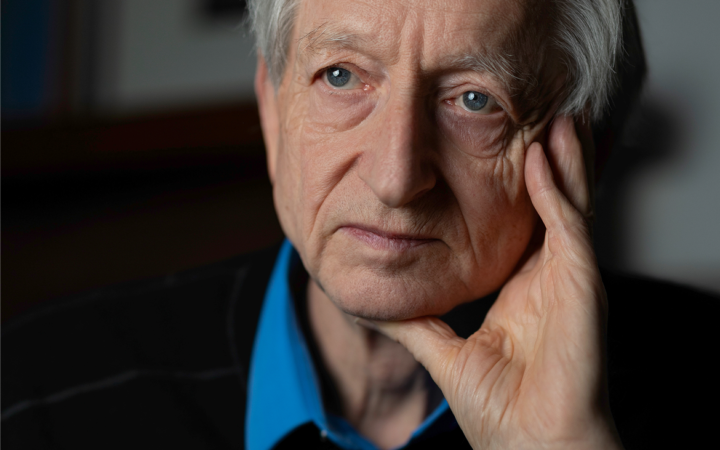
Geoffrey Hinton warned that losing control of superintelligent AI could lead to human extinction, as UK lawmakers prepare to debate a bill banning its development.

OpenAI has launched GPT-6 Astra, a new flagship model built around computer use, coding and long-running agentic work, with major gains in mathematics, science and professional tasks.

Anthropic has released Claude Fable 5.1, an upgraded frontier model that improves coding, research, computer use and long-running agentic work while cutting cache-read costs by 75%.

Alibaba launched Wan3.0, an AI video model that turns business documents into 30-second clips, a day after raising $10.2 billion in Hong Kong’s largest-ever follow-on share sale.

OpenAI launched ChatGPT for Teens, a version with default safety protections, learning tools and parental controls, automatically applied to users it identifies as under 18.