Key Notes
- MIRI president Nate Soares says he has not contributed to retirement savings for roughly a decade, while retaining an old account rather than announcing that he has liquidated it.
- His greater-than-50% estimate of AI-caused extinction within a decade is a personal forecast, and he explicitly says the outcome is not inevitable.
- Elon Musk questions the future role of savings for a different reason, predicting AI-driven abundance, but neither account establishes a general trend among researchers or a guaranteed financial future.
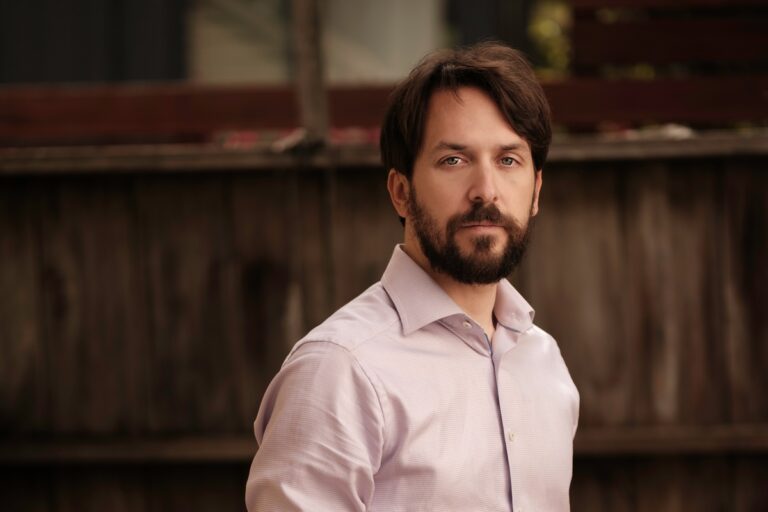
Nate Soares has an unusually bleak reason for not adding to his retirement savings: he fears humanity may not survive long enough for him to need them. The AI safety researcher’s personal decision puts a familiar household habit at the center of the debate over superintelligence.
“I do not save for retirement right now,” the Machine Intelligence Research Institute president told Nicholas Thompson, according to Business Insider’s October 27 report. He said he still has an old 401(k), but has not contributed for roughly a decade. That describes a longstanding choice about new savings, rather than a newly announced liquidation of his retirement account.
Soares put his personal estimate of AI causing human extinction within a decade at more than 50%. The claim is striking enough without turning one researcher’s account into a wider trend. The report does not establish that AI researchers generally are abandoning their pensions.
The Forecast Behind His Decision
MIRI’s biography identifies Soares as its president, responsible for helping shape its strategy, and describes more than a decade of work on AI alignment. He is also a coauthor of If Anyone Builds It, Everyone Dies, making his public position on advanced AI a central part of his professional work.
The institute’s own mission statement argues that alignment research is not on course to make smarter-than-human systems safe before they are developed. It advocates stopping dangerous development until that problem is solved. Those are MIRI’s assessments and policy goals, rather than settled findings that establish a date for catastrophe.
Soares nevertheless rejects inevitability. Business Insider reports that he favors halting training of general-purpose systems while allowing useful, narrower applications, and quoted him saying: “I don’t think it’s inevitable.” His position combines a pessimistic forecast with an effort to prevent the outcome he fears.
A Probability Estimate Is Not a Countdown
The distinction between a belief and a measured result matters especially when the number is as consequential as 50%. It describes how Soares weighs uncertain future developments, including whether highly capable systems can remain under human control. It does not mean researchers have observed a repeatable event with a known failure rate.
A March preprint coauthored by Soares and Greg Kestin illustrates why the audience and question matter. It surveyed people attending a Harvard event about AI existential risk, finding a post-event median estimate of 70% among 89 matched participants. The authors explicitly describe the respondents as self-selected, with unusually high prior concern.
That study concerns risk perceptions after an event, not retirement behavior across the AI profession. Its question also covered extinction or severe disempowerment from unimpeded AI development, which is not identical to the ten-year extinction forecast in the interview. Combining those figures would erase important differences in who was asked and what they were estimating.
Our coverage of the NYC safety hearing examined similar personal forecasts from researchers warning about loss of control. Their arguments deserve to be understood on their own terms. A collection of alarming estimates still does not, by itself, establish a single probability accepted across the field.
Musk Reaches a Similar Question From the Opposite Direction
Elon Musk has also questioned the future importance of retirement savings, as Business Insider notes. His reasoning is radically different: he expects AI and robots to create enough abundance to transform the role of work and money. Soares worries there may be no human future to fund; Musk imagines a future that could make today’s financial arrangements less important.
We explored Musk’s argument that money could fade after his recent interview about AI, robotics and physical resources. His earlier high-income prediction similarly rests on a dramatic expansion of productive capacity. Both are visions of a possible future, rather than an announced system that guarantees household income.
Even within an abundance scenario, producing more and distributing the benefits are separate questions. Lower production costs do not specify who owns the machines, how income reaches people or what happens during the transition. A prediction that money will matter less leaves those mechanisms unresolved.
Soares’s retirement decision is therefore most revealing as an example of how beliefs about AI can shape a person’s present choices. It does not demonstrate that extinction is unavoidable, that abundance is assured or that retirement planning has become obsolete. The disagreement is about the future itself, not evidence that its financial consequences have already been settled.
Disclaimer: AIstify is an independent media brand owned and operated by NuvexMedia LLC, publishing news, research, and insights on artificial intelligence, emerging technologies, automation, and related industries. NuvexMedia LLC invests in and collaborates with companies across the AI, technology, software, and digital innovation sectors. These relationships do not influence AIstify’s editorial coverage, and the publication maintains full editorial independence to provide accurate, timely, and objective information. © 2026 NuvexMedia LLC. All rights reserved. This content is for informational purposes only and should not be considered legal, tax, investment, financial, or other professional advice.