
Key Notes
- An NBC News investigation, summarized by Ars Technica, describes more than $100 million in stolen data-center freight since June based on industry estimates rather than a nationwide police tally.
- Cargo-theft specialists have reported deliberate collisions with security escorts in two cases, while account compromise and false identities expose weaknesses before a load leaves the dock.
- CargoNet’s broader US and Canadian figures show falling incident counts but sharply higher losses, highlighting the financial impact of high-value technology shipments.
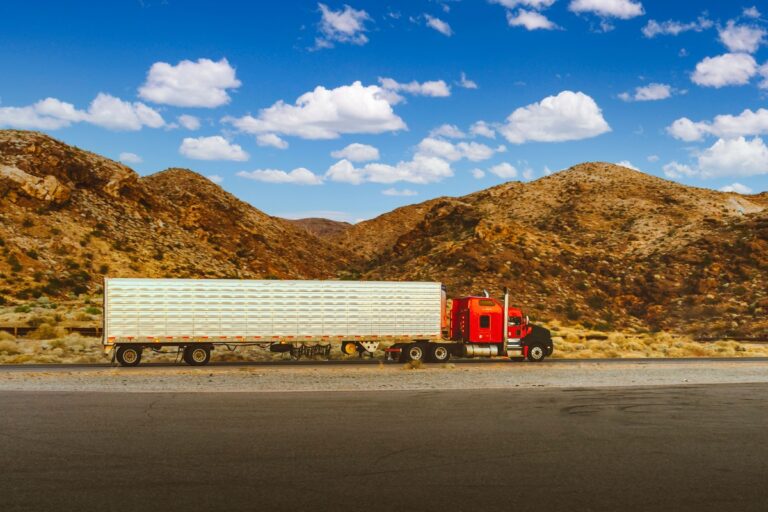
A truck carrying roughly $10 million in server-rack components disappeared after an SUV struck the security vehicle escorting it. Its location tracker offered little help: the coordinates had apparently been falsified, according to an account of the theft reported by NBC News.
It is a striking example of the crime problem following the AI building boom onto American highways. Industry figures cited in the October 26 NBC investigation, summarized by Ars Technica, put stolen data-center freight at more than $100 million since June. That is an industry estimate, not a published nationwide police tally.
The target is the physical equipment behind the AI economy. Expensive components have to move between factories, warehouses and construction sites before they can become working infrastructure. A shipment can look like ordinary freight while carrying a value that makes a single successful interception enormously costly.
A Collision Can Be the Distraction
The attacks on escorts are not merely an October claim. In an August 14 interview account, FreightWaves reported cargo-theft specialist Scott Cornell’s confirmation of two deliberate collisions involving security teams. The shipments’ drivers then continued with the loads.
Cornell, who chairs TAPA Americas, linked those successes to failures in verifying the carriers and drivers. He also cautioned against treating two incidents as evidence that this particular tactic was widespread. The important distinction is between a reported method that worked in individual cases and the broader pattern of freight crime.
He subsequently put known reported losses involving data-center equipment and other high-value technology freight at $110.6 million since June 3. That earlier estimate gives context to the October reporting, but its wider commodity description means it should not be read as a precise total for stolen AI chips alone.
The First Break-In May Be an Account
The digital side is less cinematic and potentially more consequential. Verisk CargoNet’s second-quarter analysis identifies business email compromise as a primary entry point for sophisticated theft schemes. Access to trusted systems can expose valuable shipment information and let criminals impersonate legitimate participants or redirect freight.
That changes the security problem. A gate employee may be dealing with someone whose messages arrive through a real business account. An apparently normal dispatch update can carry a false instruction. Protecting the trailer therefore also depends on knowing who controls the communications used to authorize its movement.
Accounts of the current cases add AI-generated driver’s licenses, falsified tracking information and stolen equipment broken into parts for resale. Those details should be understood as investigators’ reported descriptions, rather than independently established features of every theft. AI is one alleged aid to deception here; organized freight crime does not require an autonomous AI agent.
There is also a distinction between a tracking application displaying false coordinates and proof that a truck’s satellite receiver was manipulated. The reported location discrepancy does not, on its own, establish the precise technical method used. The practical concern is that a reassuring location display can fail to reflect where a load actually is.
Fewer Thefts Can Still Mean Bigger Losses
CargoNet recorded 677 supply-chain theft incidents across the United States and Canada in the second quarter of 2026, down 26% from a year earlier. Yet estimated losses rose to $304.6 million from $135.7 million. Those figures cover its broader cargo dataset, not just data centers, and use reporting cutoffs specified in the analysis.
The company attributed the higher severity partly to multimillion-dollar thefts and continued targeting of metals and enterprise technology. Its explanation captures the mismatch: exceptionally valuable equipment can travel through transportation arrangements designed for conventional dry freight. Counting incidents alone misses the financial weight of the loads being selected.
The demand behind those loads is visible in our coverage of GPU financing and compute commitments. These are separate stories, not evidence that either company’s shipments were stolen. They illustrate the scale of investment turning hardware deliveries into valuable links in the AI supply chain.
A computer can be protected inside a data center and still be vulnerable on the journey there. The reported heists connect two kinds of access that are often treated separately: permission to collect a load and physical possession of it. A convincing account takeover can help deliver the first; a truck takes care of the second.
Disclaimer: AIstify is an independent media brand owned and operated by NuvexMedia LLC, publishing news, research, and insights on artificial intelligence, emerging technologies, automation, and related industries. NuvexMedia LLC invests in and collaborates with companies across the AI, technology, software, and digital innovation sectors. These relationships do not influence AIstify’s editorial coverage, and the publication maintains full editorial independence to provide accurate, timely, and objective information. © 2026 NuvexMedia LLC. All rights reserved. This content is for informational purposes only and should not be considered legal, tax, investment, financial, or other professional advice.