
Key Notes
- NVIDIA’s financial support for AI infrastructure customers is under scrutiny as neocloud shares decline and credit markets demand higher returns.
- Its disclosures distinguish cloud-capacity commitments, leases intended for third parties and conditional guarantees, each with different obligations and timing.
- CoreWeave’s residual-capacity agreement illustrates how NVIDIA can support a customer’s utilization while receiving access to computing resources in return.
NVIDIA’s expanding role as a financier of AI infrastructure is facing a tougher market test as investors mark down the cloud companies buying its systems. The chipmaker has helped customers secure capital, computing capacity and data-center space. Those arrangements also link its financial exposure more closely to the businesses turning AI demand into operating revenue.
CNBC reported on October 24 that shares of CoreWeave, Nebius and IREN had each fallen at least 30% during October. It also reported yields above 15% on CoreWeave bonds maturing in 2031 and 2032. The moves reflect a reassessment of risk and funding costs, while the infrastructure companies still need capital to fulfill long-term customer commitments.
Financing Has Become Part of Selling AI Infrastructure
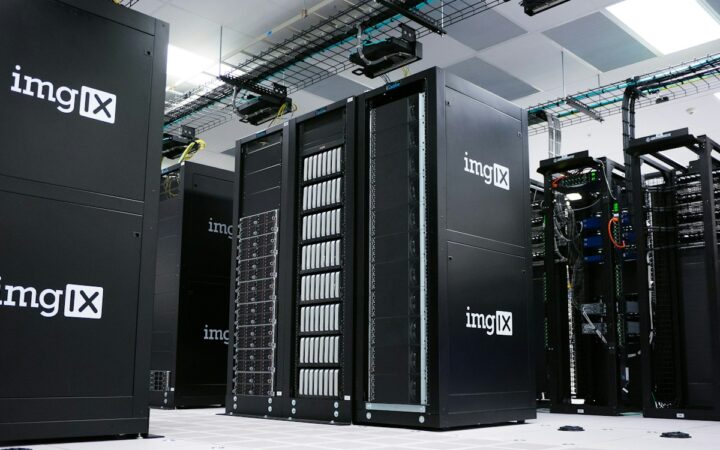
Neoclouds are specialist cloud providers that build GPU infrastructure for AI workloads. Their customers can rent large clusters without developing every facility themselves, but the operator must first finance equipment, construction and power. Our earlier coverage of neocloud contracts showed why major technology buyers have turned to these providers to secure capacity.
NVIDIA’s financing strategy reaches beyond equity investments. In August, it announced partnerships with six financial institutions to establish platforms aiming to mobilize more than $500 billion of third-party capital over time. The initiative was announced through memorandums of understanding and remains subject to definitive agreements.
For NVIDIA, helping a customer obtain funding can accelerate the deployment of its hardware and software. For the customer’s lenders, additional contractual support can make a project easier to finance. The trade-off is that a supplier may retain exposure to equipment utilization or customer performance after the original hardware transaction.
Cloud Commitments and Default Guarantees Carry Different Risks
NVIDIA’s quarterly filing distinguishes the arrangements. For the period ended July 26, it listed $36 billion in AI cloud agreements and $20 billion in data-center leases not yet commenced for third parties. The cloud commitments decrease as capacity is used or sold to other customers; the leases are expected to be reassigned.
The filing separately describes August guarantees capped at $105 billion for the Ohio campus being developed for OpenAI. Obligations generally take effect as individual leases begin, with the first construction phase expected in fiscal 2029. Payments depend on specified tenant defaults and cover defined portions of lease and power payments.
Those terms matter when assessing the headline amounts. A cloud-service purchase can provide NVIDIA with useful computing capacity, while a guarantee creates a payment obligation under specified conditions. The maximum guarantee is an exposure limit, rather than a forecast of losses or cash already paid. Adding different contract categories into a single bill would obscure their timing and triggers.
CoreWeave Shows How a Capacity Backstop Works
CoreWeave’s September 2025 agreement disclosure provides a concrete example. A new order under its existing NVIDIA services agreement had an initial value of $6.3 billion. NVIDIA is obligated to purchase residual unsold cloud capacity through April 13, 2032, subject to delivery, service availability and termination provisions.
The arrangement provides CoreWeave with a buyer for qualifying capacity that its other customers do not use. NVIDIA receives access to computing resources in return. This shifts part of the utilization risk toward the supplier, although the contract’s conditions and termination rights still govern what either company must deliver.
A large customer backlog can support a financing plan, but it does not eliminate the need to fund construction before payments arrive. Operators also need to deliver facilities on time, keep equipment productive and manage the cost of borrowing. Higher yields on traded bonds can make fresh borrowing or refinancing more difficult, even when demand for the underlying service remains substantial.
Strong Demand Still Has to Become Cash Flow
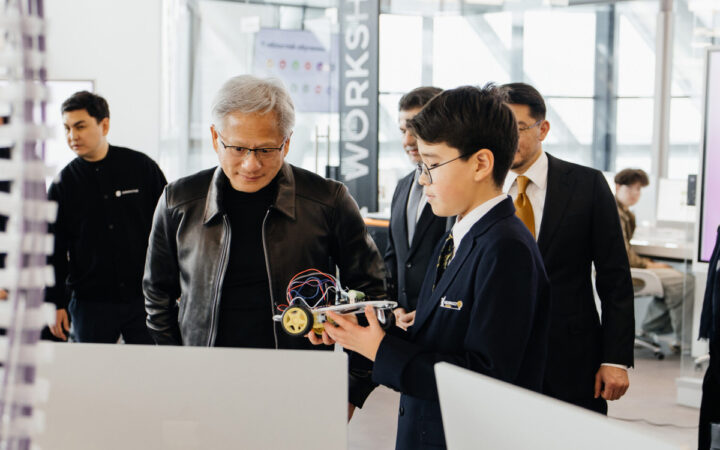
Jensen Huang has continued to emphasize demand. In an October 22 CNBC interview, NVIDIA’s chief executive described neocloud demand as “off the charts” and identified working capital as the missing link. That frames the constraint as financing the buildout, rather than finding people who want to use AI.
The distinction does not remove the commercial challenge. A provider can have prospective customers and still struggle to borrow enough, cheaply enough, to install the systems those customers need. If financing becomes more restrictive, projects may need more equity, revised schedules or different contractual support before they can proceed.
NVIDIA’s broader investment activity continues alongside that pressure. We recently reported on its backing of an AI video platform already using its infrastructure. Equity investment, cloud purchasing and credit guarantees each support the ecosystem through a different mechanism, with different consequences when growth plans change.
The neocloud selloff therefore puts the quality of the financing under scrutiny alongside the strength of the technology. Delivering contracted capacity, collecting customer payments and maintaining access to capital will determine how the infrastructure plans perform. NVIDIA’s support can help close funding gaps, but the underlying projects still have to earn their way through them.
Disclaimer: AIstify is an independent media brand owned and operated by NuvexMedia LLC, publishing news, research, and insights on artificial intelligence, emerging technologies, automation, and related industries. NuvexMedia LLC invests in and collaborates with companies across the AI, technology, software, and digital innovation sectors. These relationships do not influence AIstify’s editorial coverage, and the publication maintains full editorial independence to provide accurate, timely, and objective information. © 2026 NuvexMedia LLC. All rights reserved. This content is for informational purposes only and should not be considered legal, tax, investment, financial, or other professional advice.