
Key Notes
- Kimi K3.1 Pro ranked fourth on Artificial Analysis’s Intelligence Index at launch, three points behind the highest-tested Claude Opus 5.5 configuration.
- Standard API pricing is two dollars per million uncached input tokens and ten dollars per million output tokens, while Highspeed doubles those rates for a claimed two to three times the output speed.
- Moonshot promises full weights by November 4, with the model already available through its hosted products and API.
Moonshot AI has released Kimi K3.1 Pro, a flagship model that brings its planned open-weight lineup closer to the strongest proprietary AI systems. Launched on October 23, the upgrade combines a one-million-token context window with stronger coding, game-development and 3D workflows, while cutting standard API token prices from the previous K3 generation.
Close to Claude, With Independent Results to Back It Up
Artificial Analysis ranked K3.1 Pro fourth on its Intelligence Index at launch, with a score of 55. That puts it three points behind Anthropic’s Claude Opus 5.5 at its maximum tested setting, and just behind Claude Sonnet 5.5 and Muse Wonder Full, both at 56. The result represents an 11-point improvement over Kimi K3.
Moonshot’s own launch report offers another comparison: 65.7% on Terminal-Bench 4.0, narrowly behind Opus 5.5 at 66.4% and above OpenAI’s GPT-6 Astra at 58.2%. Those are the figures in Moonshot’s comparison, which combines its own testing with externally reported rival results. They should not be treated as a controlled test using identical software and settings for every model.
The independent evaluation is especially encouraging on agent tasks, placing Kimi third on GDPval-AA and recording gains in software-service automation. It also finds more moderate improvements on several science and knowledge tests. The evidence supports a much stronger competitor, rather than the broader claim that Kimi has overtaken every rival at every kind of work.
Games and 3D Creation Move Beyond Code Completion
Kimi’s model guide describes workflows spanning Unity, Unreal Engine and Godot. The company says the model can combine coding, search and 3D-generation tools to build interactive experiences, with improvements in composition, animation and visual polish. These are vendor-described capabilities and demonstrations, rather than evidence that every generated project is ready to ship.
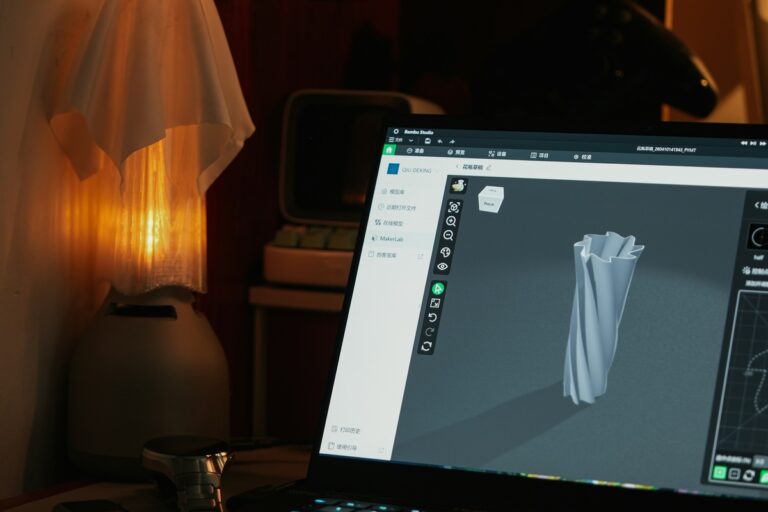
For modeling, K3.1 Pro can write and run scripts for Blender and CAD software, adjusting geometry, materials, components and scene layouts. That matters because the output can be an editable asset inside an existing production tool. It is a different workflow from producing a picture of an object that cannot be manipulated as a 3D model.
Moonshot also highlights financial research and spreadsheet work, where an agent may need to cross-check documents, follow formula dependencies and diagnose calculation errors. The million-token context provides room for larger working inputs. It does not, by itself, guarantee that a model will retrieve every relevant detail or produce a correct calculation.
For a development team, the useful question is how much review and repair remain after the model finishes. A promising game prototype still needs testing, and a plausible CAD asset still needs its dimensions and constraints checked. The launch broadens the tasks worth trying with Kimi, while leaving acceptance standards with the people using the results.
Lower API Prices, a Faster Option and a November Weights Deadline
Kimi’s published API rates are $2 per million uncached input tokens and $10 per million output tokens for K3.1 Pro. Highspeed costs $4 and $20 respectively. Both list cache-hit input at $0.20 per million tokens; cache writes are a separate billable category. The standard input and output prices are one-third below K3’s $3 and $15 rates.
Moonshot says Highspeed preserves the model’s capabilities while delivering roughly 2–3x the output speed. That makes it an option for more responsive coding and agent interactions, at twice the basic input and output rates. Faster generation does not necessarily shorten an entire project by the same amount, because tool calls, testing and human review also take time.
The API is billed separately from Kimi’s subscription products. Kimi Code’s release notes make standard Pro available on Plus or Moderato plans and above, with the full one-million-token context unlocked at Pro or Allegretto and above. Highspeed requires that higher tier too. Readers should distinguish those membership limits from pay-as-you-go API prices.
The company promises full model weights by November 4, 2026. As of October 24, the launch provides hosted access rather than a completed weights release; a future download should be assessed against its actual license and deployment requirements. Our coverage of the K3 weights explained why a model of this scale remains demanding to host, even when only part of its capacity is active for each token.
K3.1 Pro’s significance is the combination: stronger independently measured performance, broader creative workflows and lower standard token prices, with a weights release still ahead. The next test is whether those gains translate into reliable work across the codebases, assets and documents developers actually use.
Disclaimer: AIstify is an independent media brand owned and operated by NuvexMedia LLC, publishing news, research, and insights on artificial intelligence, emerging technologies, automation, and related industries. NuvexMedia LLC invests in and collaborates with companies across the AI, technology, software, and digital innovation sectors. These relationships do not influence AIstify’s editorial coverage, and the publication maintains full editorial independence to provide accurate, timely, and objective information. © 2026 NuvexMedia LLC. All rights reserved. This content is for informational purposes only and should not be considered legal, tax, investment, financial, or other professional advice.