Key Notes
- AI-assisted research helped uncover PHP2Shell, but emergency fixes still require maintainers, hosting providers and website operators to act quickly.
- Amazon detected pre-disclosure attack attempts without establishing whether those early attempts would have compromised production systems.
- PHP has issued additional configuration guidance for an unusual, separate attack path, making current advisories essential alongside version checks.
The PHP2Shell emergency is becoming a test of whether website operators can patch shared software as quickly as AI helps researchers, and potentially attackers, understand its weaknesses. Two critical PHP flaws have prompted emergency updates, while evidence of earlier attack attempts and fresh configuration guidance shows why the response cannot end with a single security alert.
Some technology observers are calling the wider security upheaval “Black October.” Speaking to CNBC on October 23, former U.S. cybersecurity agency director Chris Krebs warned that smaller businesses face a particularly difficult task and urged rapid scanning, patching or taking legacy systems offline. The label captures mounting concern; it is not an official incident classification or a verified count of breached websites.
AI Made Difficult PHP Bugs Easier to Exploit
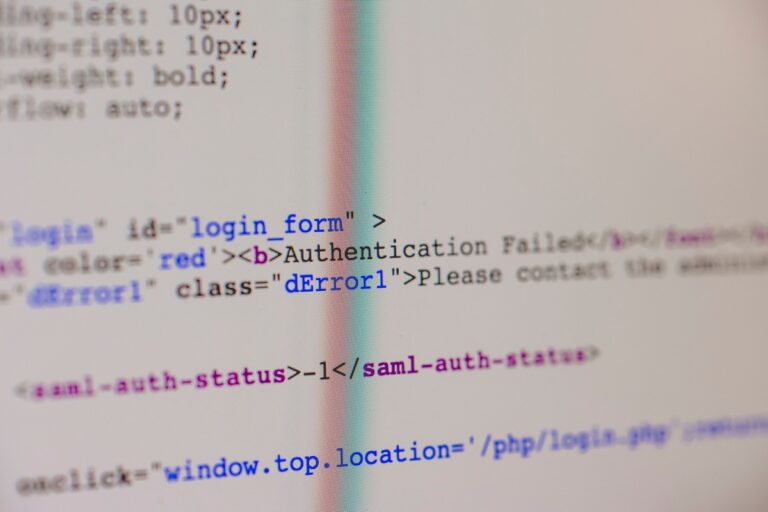
The vulnerabilities, tracked as CVE-2026-109618 and CVE-2026-109619, affect PHP’s core handling of memory and failed requests. Under the right conditions, an attacker without login credentials can execute code on an affected server. Because the weakness sits beneath the application, a well-maintained website can still depend on a vulnerable runtime.
OpenAI says Calif identified a critical flaw using GPT-5.6 Sol through its Patch the Planet initiative, while Wiz independently discovered and reported both vulnerabilities. Wiz’s research credits its Atlas system, GPT-5.6 Sol and Google’s Gemini 4 Argon. This was a coordinated research effort involving specialists and maintainers, rather than a chatbot discovering and fixing the problem alone.
Wiz demonstrated attacks against WordPress, Drupal and Joomla deployments, as well as sensitive information leaking from PHP process memory. Its explanation of AI’s role is more consequential than a simple faster-bug-hunting claim: models helped adapt complex exploit chains to different versions, configurations and memory layouts. A weakness that once demanded substantial specialist effort can become practical to investigate across more targets.
Our earlier PHP2Shell coverage explained the discovery and the first emergency fixes. The subsequent evidence shifts attention toward how quickly those fixes reach running servers, and how much investigation is needed even after an update.
Attack Attempts Predated Public Disclosure
Amazon’s threat intelligence team reported an exploitation attempt against its MadPot honeypot network on October 17, four days before public disclosure. Further attempts appeared before the October 21 release, followed by broader activity after technical details became public. Honeypots are monitored decoys used to study suspicious traffic.
Those observations require careful interpretation. Amazon said it was unclear whether the early attempts would have succeeded against real-world systems, and it did not establish how the actor obtained the information. The telemetry supports reviewing activity before the public advisory; it does not establish a tally of successfully compromised production websites.
The company also argues that AI-assisted analysis is reducing the cost of turning advisories or patch changes into working exploits. Its recommendation is to measure responses to critical internet-facing vulnerabilities in hours and investigate PHP2Shell activity from at least October 17. That is a demanding standard for organizations still relying on infrequent maintenance windows.
The Patch Is Necessary, and Guidance Is Still Evolving
PHP’s security advisory identifies PHP 8.2.35, 8.3.36, 8.4.27 and 8.5.12 as the fixed upstream releases for the two original flaws. Distribution packages can carry backported fixes under different version numbers. PHP 8.1 and older lack normal upstream support, although selected source backports and vendor remedies are available.
On October 23, maintainers added configuration guidance for a separate, unusual remote-code-execution path, tracked as CVE-2026-115560. They recommend disabling session upload progress until the next regular bugfix release. The issue requires a particular combination of session configuration and application behavior; applications that never change the serialization handler at runtime are outside that specific condition.
The additional notice illustrates why operators need current maintainer advice as well as a version check. We recently reported on OpenAI’s Codex skills for checking PHP patch status. Those checks can help establish what is running, but cannot certify that a server was never compromised or that every relevant configuration has been reviewed.
The Bottleneck Includes People, Funding and Deployment
The PHP Foundation’s account complicates the idea that AI suddenly discovered a completely unknown problem. Developers had seen signs of the memory-handling issue in 2024. Fixing it stalled amid difficult compatibility and performance choices, limited staffing and a decision process the foundation acknowledged had failed.
Later research clarified the practical attack paths and made a fix the security team’s priority. The foundation says dedicated funding allowed several people to work intensively on the response. It also describes a growing volume of AI-assisted reports, including invalid or duplicate submissions that still require human assessment.
The emerging challenge is therefore larger than giving every defender a capable model. Faster discovery creates value only when maintainers can validate findings and ship reliable changes, and hosting providers and site owners can deploy them. PHP2Shell shows how AI can strengthen that process while compressing the time available to complete it.
Disclaimer: AIstify is an independent media brand owned and operated by NuvexMedia LLC, publishing news, research, and insights on artificial intelligence, emerging technologies, automation, and related industries. NuvexMedia LLC invests in and collaborates with companies across the AI, technology, software, and digital innovation sectors. These relationships do not influence AIstify’s editorial coverage, and the publication maintains full editorial independence to provide accurate, timely, and objective information. © 2026 NuvexMedia LLC. All rights reserved. This content is for informational purposes only and should not be considered legal, tax, investment, financial, or other professional advice.