Key Notes
- Elon Musk says SpaceX has closed $40 billion in debt financing for GPUs scheduled to arrive in the first and second quarters of 2027.
- He attributes the company’s access to capital to its investment-grade status and revenue from Starlink and rocket launches, while the posts leave detailed borrowing terms undisclosed.
- His prediction of widespread failures among smaller AI cloud providers remains an assessment, and the new financing still has to become deployed capacity and productive customer workloads.
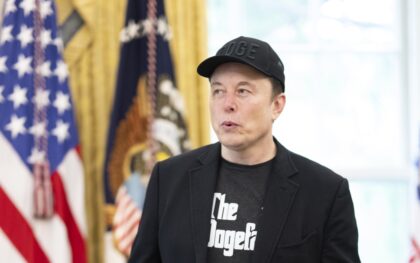
SpaceX has closed $40 billion in debt financing to buy graphics processing units for its AI business, Elon Musk said on October 25. The announcement puts a large new pool of capital behind the company’s computing expansion as Musk warns that smaller AI cloud providers face a much harder borrowing market.
Musk attributed SpaceX’s access to funding to its investment-grade status and revenue from Starlink and rocket launches. In a subsequent post, he said the financing was primarily callable debt for GPUs arriving in the first and second quarters of 2027, with little effect on the current quarter.
SpaceX closed $40B of debt for GPUs.
The Chips Are Due in 2027
The delivery schedule separates the financing announcement from the arrival of usable computing capacity. Musk’s posts do not specify the number or model of GPUs, the borrowing rate, maturity or participating lenders. His statement that the deal has closed is the basis for the announcement; it does not provide those underlying contract details.
The planned purchase had previously been linked to NVIDIA hardware. CNBC reported, citing Bloomberg’s earlier coverage, that financing discussions involved a special-purpose vehicle intended to keep the debt off SpaceX’s balance sheet and protect its credit ratings. Musk’s posts do not establish whether every element of that proposed structure appears in the completed financing.
Nor does a financing total establish how much a chip supplier will recognize as revenue in a particular quarter. The timing of equipment deliveries, contractual terms and deployment all matter. For SpaceX’s AI customers, the relevant milestone will be when the additional hardware is installed and available to run workloads.
Starlink and Launches Give SpaceX a Different Credit Story
Musk’s explanation centers on the business supporting the borrowing. SpaceX can point to activities outside AI data centers when making its case to lenders. A specialist cloud provider has a different pitch: it generally needs to turn investment in computing facilities into revenue from customers renting that capacity.
That difference matters because an AI infrastructure project needs money before its equipment starts earning. Chips alone do not make an operating service; facilities, power, networking and customer demand also have to come together. Access to debt can help fund the buildout, but it leaves the borrower responsible for financing costs while that process unfolds.
The purchase also supports a wider commercial effort around Grok. SpaceXSI recently launched a network for companies building with the technology. More computing capacity could support that expansion, although neither of Musk’s financing posts assigns the new GPUs to particular products or customers.
Musk Predicts a Neocloud Shakeout
Alongside the financing news, Musk said debt markets had largely stopped funding companies without substantial revenue independent of AI data centers. He predicted failures and consolidation among more than 200 neoclouds, the specialist providers that rent computing infrastructure for AI. That is his assessment of the market and its likely outcome, rather than confirmation that those businesses are about to fail.
The warning follows a period of pressure on the sector. Our examination of neocloud financing looked at how supplier commitments, debt and customer contracts connect the AI buildout. Those arrangements can help projects secure funding while leaving exposure to construction delays, unused capacity and refinancing costs.
For now, SpaceX’s announcement points to uneven access to capital rather than an end to AI spending. Musk says his company has secured the money for a major hardware purchase. The next test is converting the 2027 deliveries into computing capacity that customers use, and revenue sufficient to support the investment.
Disclaimer: AIstify is an independent media brand owned and operated by NuvexMedia LLC, publishing news, research, and insights on artificial intelligence, emerging technologies, automation, and related industries. NuvexMedia LLC invests in and collaborates with companies across the AI, technology, software, and digital innovation sectors. These relationships do not influence AIstify’s editorial coverage, and the publication maintains full editorial independence to provide accurate, timely, and objective information. © 2026 NuvexMedia LLC. All rights reserved. This content is for informational purposes only and should not be considered legal, tax, investment, financial, or other professional advice.