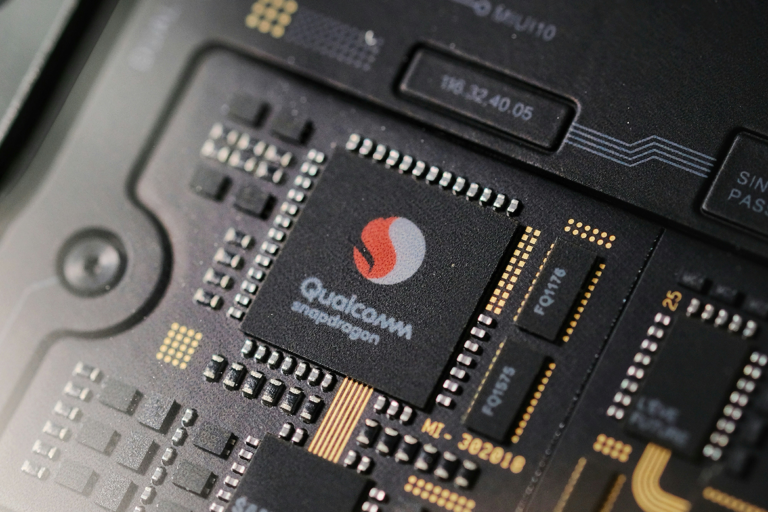

Qualcomm said it has reached an agreement to acquire Modular, an AI software startup, to strengthen the software behind its push into data center and edge computing. The deal gives Qualcomm a unified platform that lets AI models run across CPUs, GPUs, NPUs and custom chips without rewriting code for each one.
Qualcomm framed the move as a bet that the industry is shifting toward open, multi-vendor architectures that need a more modern software foundation. Bloomberg reported the transaction values Modular at about $4 billion. The deal is expected to close in the second half of 2026, subject to regulatory approval.
Modular was founded in 2022 by Chris Lattner and Tim Davis, engineers who met at Google and grew frustrated with AI’s fragmented infrastructure. Lattner is a notable figure in software, having created the LLVM compiler framework and Apple’s Swift programming language, and later worked on Tesla’s Autopilot. Modular’s core products are the Mojo programming language and the MAX inference engine, which let developers write a model once and deploy it across hardware from Nvidia, AMD, Intel and Qualcomm.
The startup raised $250 million in September at a $1.6 billion valuation, bringing total funding to $380 million, so the reported price more than doubles its value in nine months. Backers included DFJ Growth, General Catalyst, Google Ventures and Greylock.
The strategic logic centers on inference, the phase of running AI models rather than training them, where efficiency and cost increasingly decide what scales. Qualcomm CEO Cristiano Amon called the deal a pivotal moment for the AI industry and argued the future belongs to developer-friendly, horizontal platforms that run across many environments.
Lattner said joining Qualcomm gives Modular the scale and reach to advance an open ecosystem while improving portability across hardware. Qualcomm plans to fold Modular’s stack into its data center strategy to support more efficient inference, orchestration and deployment.
Why It Matters
The real target is Nvidia’s software moat. Nvidia’s dominance rests not only on its chips but on CUDA, the programming ecosystem that locks developers into its hardware. A vendor-neutral layer like Modular’s makes a non-Nvidia chip far less risky to adopt, since whoever controls how models are matched to silicon can steer workloads onto their own.
For Qualcomm, still best known for the Snapdragon chips in phones, owning that layer is a way to make its data center silicon credible to buyers deep inside Nvidia’s world, rather than trying to out-muscle Nvidia on raw hardware alone.
The Bigger Strategy
The acquisition is part of a broader, two-track push into AI. Qualcomm has also been exploring a deal for chip startup Tenstorrent, pairing hardware ambitions with the Modular software bet, and it is reportedly in talks with ByteDance to provide custom chip design services.
The timing is pointed, landing around Qualcomm’s investor day, where analysts expect the company to detail a data center strategy that one JPMorgan estimate sees reaching $35 billion in revenue by fiscal 2031. The deal also fits a wider wave of consolidation, as chipmakers race to buy the AI infrastructure software and talent that increasingly determine which hardware wins.
Disclaimer: AIstify is an independent media brand owned and operated by NuvexMedia LLC, publishing news, research, and insights on artificial intelligence, emerging technologies, automation, and related industries. NuvexMedia LLC invests in and collaborates with companies across the AI, technology, software, and digital innovation sectors. These relationships do not influence AIstify’s editorial coverage, and the publication maintains full editorial independence to provide accurate, timely, and objective information. © 2026 NuvexMedia LLC. All rights reserved. This content is for informational purposes only and should not be considered legal, tax, investment, financial, or other professional advice.