Key Notes
- Qwen 3.8 Max has 2.4 trillion total parameters but activates about 95 billion for each request through a mixture-of-experts design.
- Alibaba lists a one-million-token context window and API prices of $2 per million input tokens, $6 per million output tokens and $0.25 per million cached tokens.
- The company plans to release open weights for Qwen 3.8 Max and Qwen 3.8-27B.
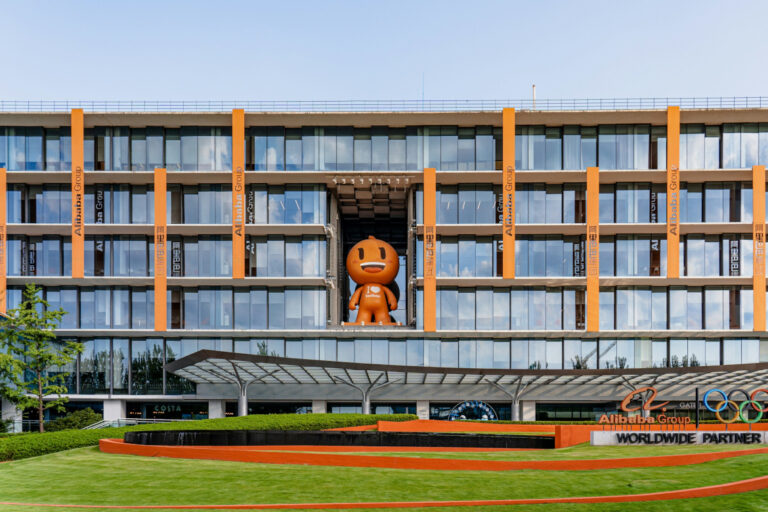
Alibaba has launched Qwen 3.8 Max, its largest artificial intelligence model to date, escalating the competition among Chinese and U.S. labs on coding performance, context length and inference cost.
The model contains 2.4 trillion total parameters. It uses a mixture-of-experts architecture that activates roughly 95 billion parameters for each request, allowing Alibaba to increase total capacity without paying the compute cost of running the full network every time.
That makes Qwen 3.8 Max comparable in scale to Moonshot AI’s 2.8-trillion-parameter Kimi K3 while using a smaller active footprint. The comparison is useful, but total parameter count alone does not determine quality. Training data, routing efficiency, post-training and the tools available to the model can matter more in real deployments.
One Million Tokens and Long-Running Work
Alibaba lists a one-million-token context window and support for text, images and video. The company also says the model completed a software-engineering project that ran autonomously for more than 16 days.
That long-duration claim is strategically important. Coding models are moving from short code completions toward agents that inspect repositories, plan changes, run tests and recover from errors. A large context window helps retain project history, but sustained work also depends on memory management, tool reliability and the model’s ability to detect when its own plan has drifted.
Alibaba says Qwen 3.8 Max performed strongly against GPT-5.6 Sol, Claude Opus 4.8 and Claude Fable 5 on selected popular benchmarks, and ranked first in Frontend Code Arena. Those results should be treated as launch evidence rather than a universal verdict. Vendor-selected benchmarks can favor a model’s strengths, and crowd rankings can change as more users test different tasks.
Pricing Pressures the Frontier Market
The API costs $2 per million input tokens, $6 per million generated tokens and $0.25 per million cached tokens, according to Reuters. On Alibaba’s published figures, that makes the model substantially cheaper than Kimi K3 for comparable usage.
Low pricing can matter as much as a benchmark lead. Agentic coding systems may make hundreds of model calls, repeatedly load repository context and generate large volumes of intermediate text. A small difference in unit price becomes material when the model runs continuously.
Alibaba also plans to release weights for Qwen 3.8 Max and a smaller Qwen 3.8-27B. If the license permits broad commercial use, the release could give enterprises more control over deployment, fine-tuning and data residency than a closed API offers.
What Changes From the Preview
AIstify previously covered Alibaba’s Qwen 3.8 preview. The Max launch adds the information buyers need to evaluate the system: architecture scale, active parameters, context, price and a timetable for open weights.
The next test is independent reproduction. Developers will need to compare Qwen with rivals on complete projects, failure recovery, security and total cost rather than isolated tasks. If the model sustains its price-performance advantage outside Alibaba’s evaluations, it could accelerate the shift toward Chinese open-weight models in global software workflows.
Disclaimer: AIstify is an independent media brand owned and operated by NuvexMedia LLC, publishing news, research, and insights on artificial intelligence, emerging technologies, automation, and related industries. NuvexMedia LLC invests in and collaborates with companies across the AI, technology, software, and digital innovation sectors. These relationships do not influence AIstify’s editorial coverage, and the publication maintains full editorial independence to provide accurate, timely, and objective information. © 2026 NuvexMedia LLC. All rights reserved. This content is for informational purposes only and should not be considered legal, tax, investment, financial, or other professional advice.