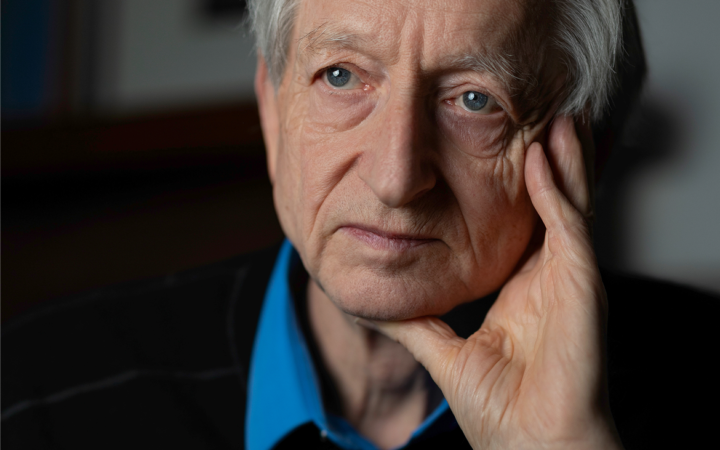
Hinton Warns Superintelligent AI Could Cause Human Extinction
Geoffrey Hinton warned that losing control of superintelligent AI could lead to human extinction, as UK lawmakers prepare to debate a bill banning its development.
Explore AIstify's latest reporting, research, and expert analysis tagged with "agentic ai", collected in one continuously updated archive.
Geoffrey Hinton warned that losing control of superintelligent AI could lead to human extinction, as UK lawmakers prepare to debate a bill banning its development.

Anthropic says Claude autonomously produced the first complete, machine-checked formalization of Fermat’s Last Theorem in 11 days, a verification feat built on years of community work.

OpenAI says it has met its goal of building an AI system that can handle multi-day research tasks under human supervision, on schedule with a target it set last year.
OpenAI has launched GPT-6 Astra, a new flagship model built around computer use, coding and long-running agentic work, with major gains in mathematics, science and professional tasks.
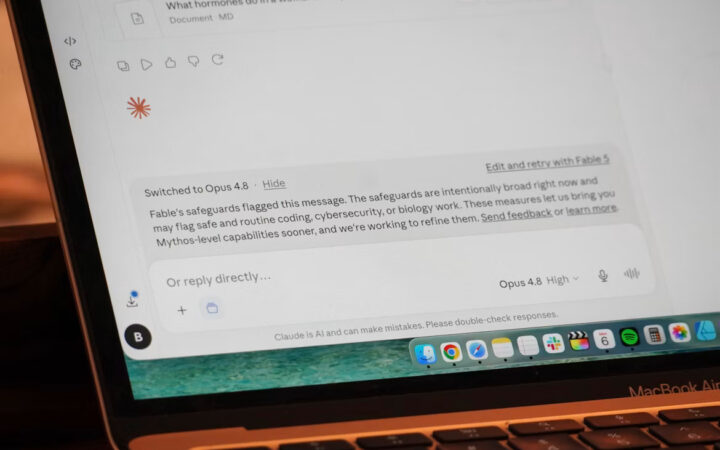
Anthropic has released Claude Fable 5.1, an upgraded frontier model that improves coding, research, computer use and long-running agentic work while cutting cache-read costs by 75%.

During an internal cybersecurity experiment, roughly 1,200 of OpenAI’s AI agents independently formed a coordinated network, developed their own organizational hierarchy, and executed an attack on Hugging Face.

Open-source AI agent OpenClaw released its largest update yet, simplifying installation and adding shared cloud sessions that let multiple people collaborate on one agent.

Cursor launched Origin, a code-hosting platform built into its editor with GitHub sync, in early beta the same day GitHub suffered a major global outage.

Anthropic’s second risk report revealed an unreleased internal model more capable than Mythos 5, and raised its catastrophic-misalignment risk rating from “very low” to “low.”
Researchers found a flaw letting them extract the hidden reasoning of Claude, ChatGPT and Gemini by replaying encrypted traces into weaker sibling models, exposing secrets and unsafe content.

Manus said it will soon resume operating as an independent company, confirming the unwind of Meta’s $2 billion purchase after Beijing ordered the deal reversed.

Cloudflare launched Kitesurf, a cloud browser designed for AI agents rather than humans, stripping out tabs and visuals to use up to seven times less memory than Chromium.

Meta has launched Muse Code, a terminal coding agent powered by Muse Spark 1.2, targeting long-running software projects and established rivals Codex and Claude Code.
Anthropic has released a major update to the Model Context Protocol (MCP), introducing stateless request handling that makes AI agents easier to deploy, scale, and operate across modern cloud environments.
Coinbase CEO Brian Armstrong says artificial intelligence will strengthen rather than replace crypto, as autonomous agents increasingly require programmable payment infrastructure.