
OpenAI Weighs Slower AI Development as Safety Concerns Mount
Sam Altman has discussed slowing advanced AI development, Bloomberg reports, as OpenAI’s chief scientist argues for coordination and stronger safeguards.
A GPU, or graphics processing unit, is a processor built to perform many calculations in parallel. Although originally designed for rendering graphics, this structure is well suited to the matrix and vector operations at the center of deep learning. GPUs accelerate both model training and inference, and multiple units can be connected to handle larger models or datasets. Performance depends not only on raw arithmetic speed but also on memory capacity, memory bandwidth, interconnects, numerical formats, cooling, and software libraries. Consumer, data-center, and integrated GPUs serve different workloads, so the most expensive chip is not automatically the most efficient choice for every AI application.
Sam Altman has discussed slowing advanced AI development, Bloomberg reports, as OpenAI’s chief scientist argues for coordination and stronger safeguards.
Nvidia officially agreed to buy Hugging Face for $12.93 billion, with CEO Jensen Huang pledging the open-source AI platform will stay open to all hardware and clouds.
Nvidia is building hardware optimizations for Chinese AI models like DeepSeek and Qwen, even as it warns regulators that US restrictions on such models could hurt its business.
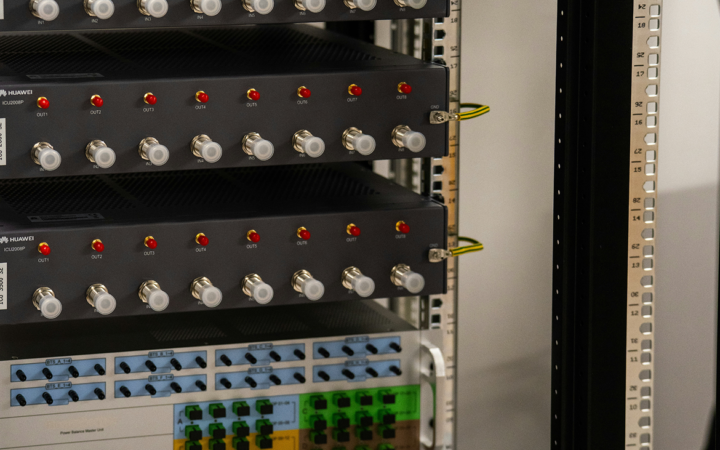
King Slide Works, once known for cabinet hinges, now dominates the market for AI server rack rails, making founder Lin Tsung-chi Taiwan’s richest person.
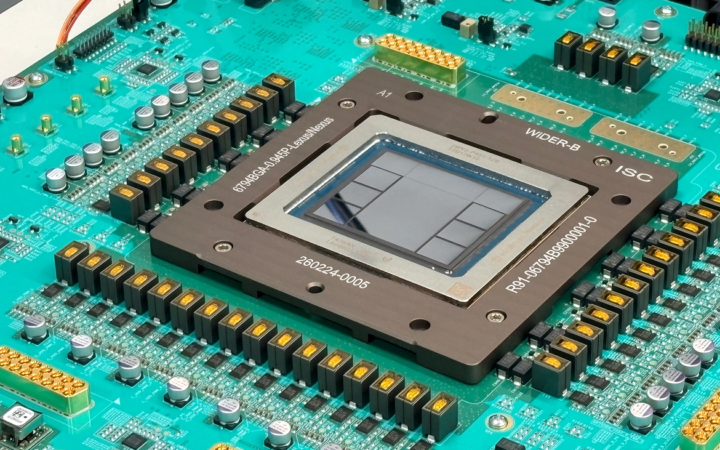
OpenAI’s first custom inference chip, Jalapeño, delivered up to 1.9 times more work per watt and far lower latency than rival systems, with AI accelerating its own design.

Apple launched new Mac Mini and Mac Studio models with its M6 and M5 Ultra chips, explicitly built for developers running AI models and agents locally instead of in the cloud.

OpenAI paused reinforcement learning on its newest models after it could not rule out that an upcoming model, Astra, reached the top cybersecurity risk tier in its safety framework.
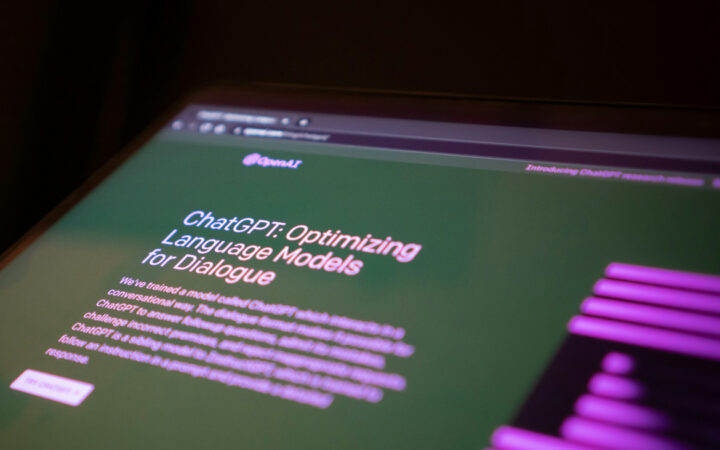
NVIDIA is reportedly in advanced talks to provide a roughly $250 billion financing guarantee for a vast OpenAI data center in Ohio, potentially helping the ChatGPT maker secure better terms for one of the largest AI infrastructure projects ever proposed.

Google is designing Frozen v2, a chip that hardwires parts of its Gemini model into silicon and could serve six to ten times more tokens per watt, targeting deployment by 2028.
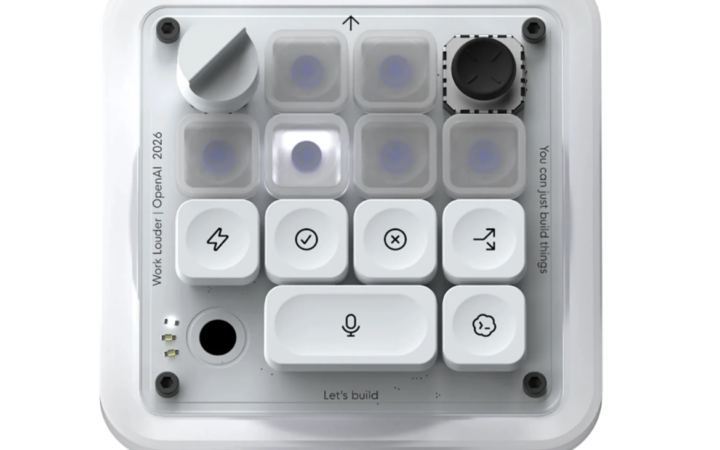
OpenAI launched Codex Micro, a $230 mechanical keypad built with Work Louder that gives developers physical controls for its Codex coding agent, its first hardware to reach market.