Key Notes
- Alibaba announced the Zhenwu V900 AI chip, a processor it says triples the performance of its predecessor and supports clusters of up to 500,000 cards, with mass production targeted for early 2027.
- The company also confirmed it is training Qwen 4 while planning Qwen 4.5 and Qwen 5 models scaled to between 5 trillion and 10 trillion parameters.
- Alibaba paired the announcements with a target of more than 20 gigawatts of global Alibaba Cloud data center capacity by 2032.
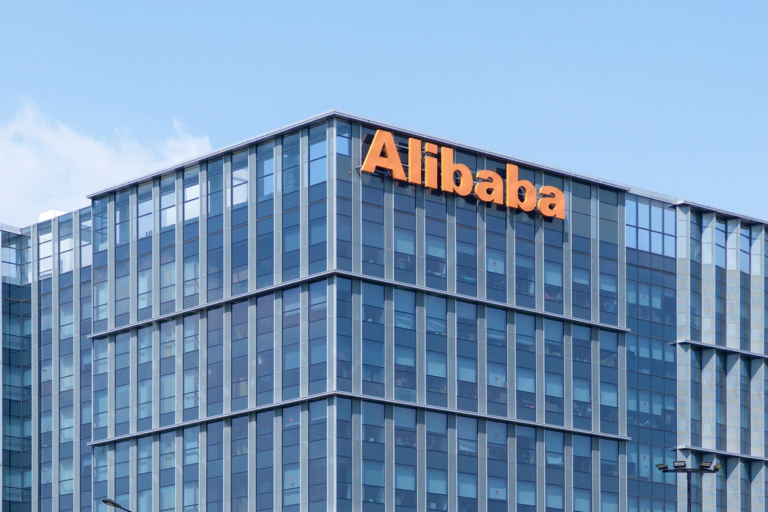
Alibaba laid out one of its most ambitious artificial intelligence roadmaps to date at its annual Apsara Conference in Hangzhou, unveiling a new in house AI chip and confirming plans to train a Qwen model as large as 10 trillion parameters.
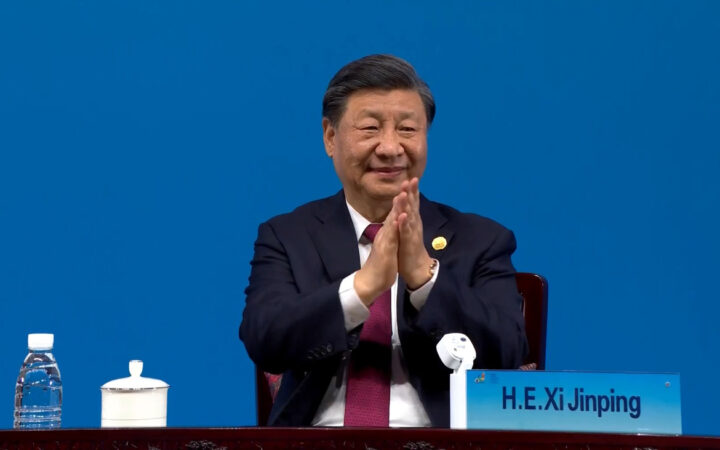
Alibaba Group chief executive Eddie Wu announced the plans on stage at the conference, describing the new Zhenwu V900 chip as the most powerful AI chip in China today and setting out a data center buildout that the company says will exceed 20 gigawatts of capacity worldwide by 2032.
A Chip Built For Half a Million Card Clusters
The Zhenwu V900, developed by Alibaba’s T-Head semiconductor unit, delivers three times the performance of its predecessor, the Zhenwu M890, according to Wu. The chip is designed to support clusters of up to 500,000 cards working together for model training and inference, and Alibaba says mass production and commercial release are targeted for the first quarter of 2027.
Chinese trade reports from the event, cited by Technology.org, put the V900’s memory at 216 gigabytes per chip with 1,200 gigabytes per second of chip to chip bandwidth, up from the 144 gigabytes and 800 gigabytes per second Alibaba listed for the M890 when that chip launched earlier this year.
Alibaba’s Zhenwu chips already serve more than 650 customers across the automotive, finance, energy, and manufacturing sectors, and the company said it expects significant growth in annual chip shipments going forward.
Developing its own accelerators gives Alibaba more control over performance and cost, and carries strategic weight given continued US restrictions on the export of advanced AI chips to China. Alibaba’s Hong Kong listed shares rose roughly 5 percent following the announcements, reaching a one month high.
Qwen Heads Toward 10 Trillion Parameters
Alongside the chip, Wu said Alibaba’s Qwen team is already training its next generation model, Qwen 4, with the following Qwen 4.5 and Qwen 5 series expected to scale to between 5 trillion and 10 trillion parameters. That would put the largest planned models at up to roughly four times the size of Alibaba’s current flagship, Qwen3.8-Max, which the company says has 2.4 trillion parameters.
Wu also pointed to progress on what Alibaba calls recursive self improvement, describing a process in which its models identify their own limitations, design experiments, synthesize data, and evaluate the results as part of an ongoing improvement cycle, and said the company is working toward what it calls artificial superintelligence.
Alibaba’s roadmap places it in more direct competition with the largest US model releases, and with domestic rivals such as Moonshot AI, whose Kimi K3 model has been described as the world’s largest open weight model at 2.8 trillion parameters.
A Bigger Bet on Cloud Infrastructure
Beyond chips and models, Alibaba set a target for Alibaba Cloud to exceed 20 gigawatts of global data center capacity by 2032, an infrastructure commitment the company says reflects what it called exponentially accelerating demand for AI computing power. Alibaba has previously disclosed plans to invest roughly 53 billion dollars in AI infrastructure over a three year period, according to figures reported around the announcement.
Running facilities at that scale requires substantially more than raw processor output. Electricity has to cover networking, storage, and cooling equipment as well as the chips themselves, and Alibaba’s target implies a buildout on par with some of the largest data center commitments announced by US hyperscalers over the past two years.
What Comes Next
None of the figures Alibaba announced have been independently verified, and the company has not published a technical report or a firm release date for Qwen 4, Qwen 4.5, or the Zhenwu V900’s commercial launch beyond the first quarter of 2027 target. Alibaba also did not disclose pricing for V900 based cloud instances or say how many of the chips it intends to manufacture in the initial production run.
The announcements nonetheless mark one of the clearest signals yet that Alibaba intends to compete across the full AI stack, from custom silicon through frontier scale models to the cloud infrastructure needed to train and serve them, rather than depending on outside suppliers for any single layer of that stack.
That strategy mirrors moves by other Chinese technology groups, several of which have accelerated in house chip programs since tighter export controls limited access to some of Nvidia’s most advanced processors. For Alibaba specifically, the Zhenwu line has grown quickly since the M890’s debut earlier this year, and Wu’s comments suggest the company expects that pace to continue rather than level off as it works toward the larger Qwen models it has now put a number on for the first time.
Disclaimer: AIstify is an independent media brand owned and operated by NuvexMedia LLC, publishing news, research, and insights on artificial intelligence, emerging technologies, automation, and related industries. NuvexMedia LLC invests in and collaborates with companies across the AI, technology, software, and digital innovation sectors. These relationships do not influence AIstify’s editorial coverage, and the publication maintains full editorial independence to provide accurate, timely, and objective information. © 2026 NuvexMedia LLC. All rights reserved. This content is for informational purposes only and should not be considered legal, tax, investment, financial, or other professional advice.