Key Notes
- Google plans to launch a refrigerator sized experimental satellite on October 1 carrying four TPU chips that will attempt to process simple Gemini queries in orbit.
- The mission will also test how the hardware withstands space radiation and extreme temperature swings, part of Google's early research into a longer term vision of networked satellites linked by laser communication and powered directly by solar panels.
- Google has not disclosed a timeline for additional test satellites or a cost comparison against ground based data centers.
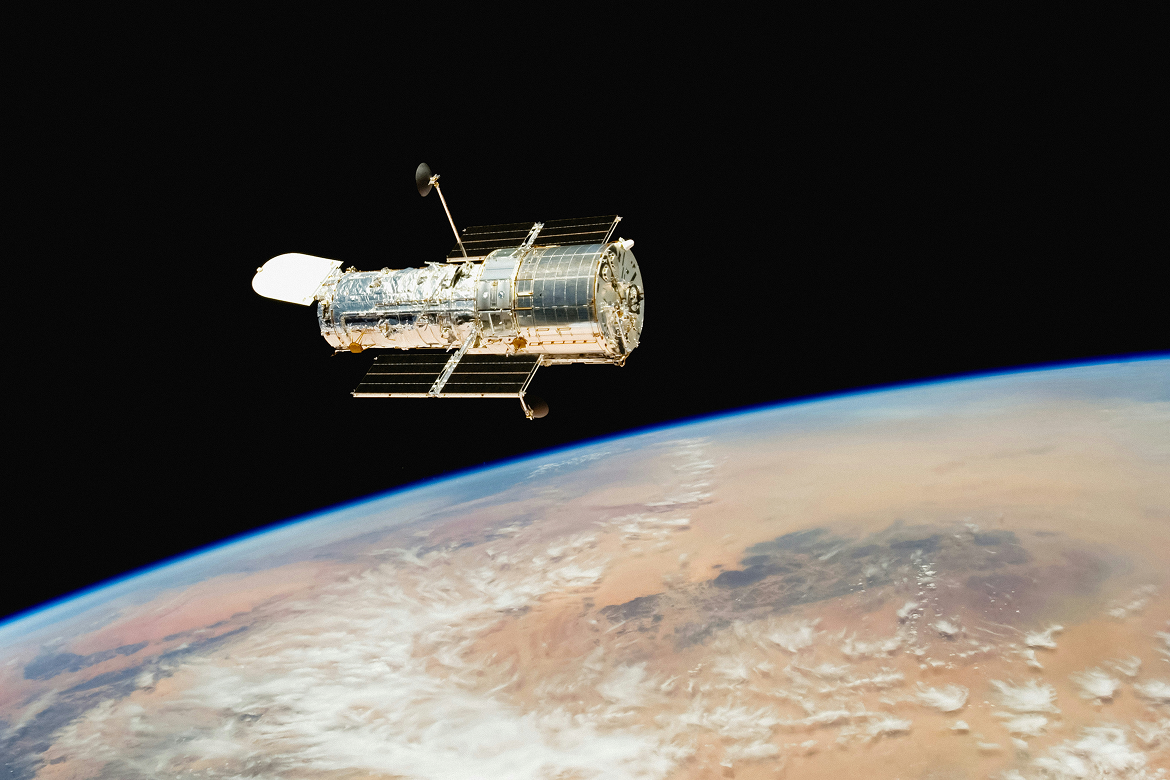
Google plans to launch an experimental satellite on October 1 carrying four of its Tensor Processing Unit chips into orbit, an early test of whether space based data centers could eventually help meet the AI industry’s soaring demand for computing power.
A Refrigerator Sized Test of an Ambitious Idea
According to New York Times, the satellite is roughly the size of a refrigerator and will attempt to process simple queries to Google’s Gemini model while in orbit. Its onboard cooling system allows the TPU chips to run for only about 15 minutes at a stretch before requiring a pause, a limitation that underscores how far the concept remains from anything resembling a functional data center in space.
Beyond testing whether the chips can handle basic AI inference workloads in orbit, Google also plans to use the mission to study how the hardware holds up against space radiation and the extreme temperature swings satellites experience as they move in and out of sunlight, both significant engineering challenges for electronics never designed to operate outside a climate controlled facility on Earth.
A Long Term Vision Built Around Solar Power and Laser Links
Google’s longer term concept involves networking multiple satellites together using laser based communication links, with each satellite drawing power directly from solar panels rather than relying on batteries or any connection to terrestrial electrical grids.
In theory, satellites positioned correctly could have far more consistent access to sunlight than ground based solar installations, which lose output overnight and during poor weather, potentially offering a more constant power source for the intensive computing that training and running large AI models requires.
This first launch is explicitly framed as a way to determine which pieces of that broader vision actually hold up once hardware is operating in real orbital conditions, rather than as a step toward near term commercial deployment.
Google has not said how many additional test satellites it plans to launch, what timeline it is targeting for a larger scale demonstration, or what the projected cost comparison might look like between orbital and traditional ground based AI data centers once launch, hardware, and maintenance costs are factored in.
Part of a Broader Industry Interest in Off Planet Computing
Google is not alone in exploring the idea of moving AI computing infrastructure into space. The concept has drawn interest across the space and technology industries as ground based data centers face mounting constraints around electricity supply, water for cooling, and local permitting and community opposition to new construction, all of which have become significant bottlenecks for AI companies racing to expand their computing capacity.
Space based infrastructure would sidestep some of those terrestrial constraints, though it introduces a different set of engineering problems, including the difficulty and cost of physically repairing or upgrading hardware once it is in orbit, and the challenge of dissipating heat from densely packed chips without the air or liquid cooling systems available on the ground.
Whether orbital data centers ever become commercially viable will likely depend heavily on the cost of launching mass into orbit continuing to fall, an area where reusable rocket technology has already driven prices down substantially over the past decade.
For now, Google’s October 1 launch represents an early, deliberately modest step meant to generate real world engineering data rather than a working prototype of the vision the company has described for its longer term satellite network.
How This Fits into Google’s Wider AI Buildout
The satellite test comes as Google and its AI industry rivals continue to expand ground based data center capacity at a rapid pace, an effort that has drawn scrutiny over its electricity and water use even as companies including Nvidia continue shipping the chips that power those facilities.
TPUs, Google’s custom designed AI accelerator chips, are used both internally to train and run models such as Gemini and are also rented out to external customers through Google Cloud, making any long term shift toward orbital infrastructure a potential complement to, rather than a near term replacement for, the company’s existing terrestrial buildout.
Google has not said whether the October satellite is reusable, what becomes of the hardware once its test mission concludes, or whether the company plans to make any of the resulting engineering data public for other researchers and companies exploring similar concepts.
Given how early stage the experiment is, most of what the mission demonstrates is likely to be incremental: confirmation of whether TPU chips can survive the launch and space environment at all, rather than any meaningful signal about when, or whether, orbital AI computing could become cost competitive with data centers built on the ground.
Disclaimer: AIstify is an independent media brand owned and operated by NuvexMedia LLC, publishing news, research, and insights on artificial intelligence, emerging technologies, automation, and related industries. NuvexMedia LLC invests in and collaborates with companies across the AI, technology, software, and digital innovation sectors. These relationships do not influence AIstify’s editorial coverage, and the publication maintains full editorial independence to provide accurate, timely, and objective information. © 2026 NuvexMedia LLC. All rights reserved. This content is for informational purposes only and should not be considered legal, tax, investment, financial, or other professional advice.