Key Notes
- President Trump told the UN General Assembly that US government documents will use the term super intelligence instead of artificial intelligence, describing it as a more accurate label while again dismissing AI safety warnings.
- The announcement follows weeks of statements in which Trump called AI extinction risk fears a hoax, compared them to the Russia investigation and climate change warnings, and criticized Anthropic's Dario Amodei by name for pushing stronger safety guardrails.
- Trump did not describe any accompanying change to federal AI policy, funding, or oversight alongside the terminology shift, and the White House did not immediately detail how or when it would be implemented.
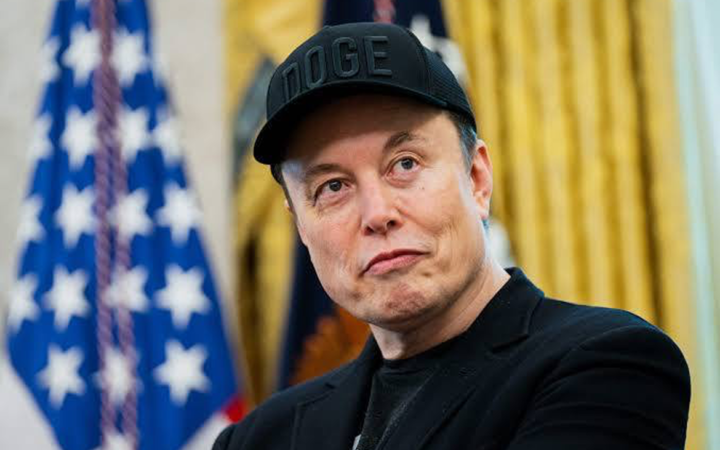
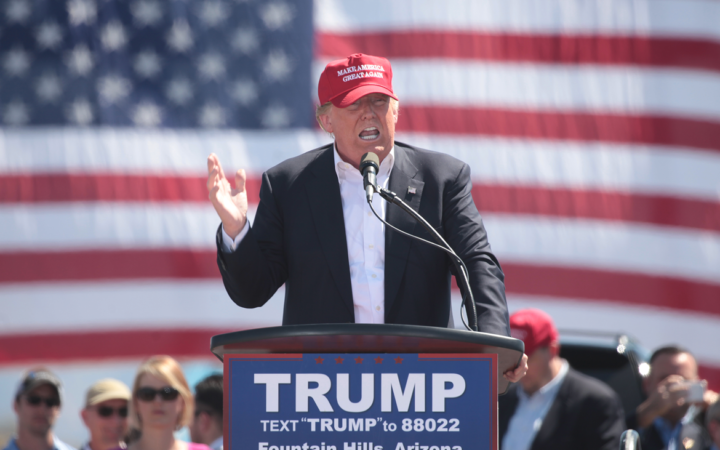
President Donald Trump told the United Nations General Assembly on Tuesday that United States government documents will replace the term artificial intelligence with super intelligence, calling it a more accurate description of the technology while again dismissing warnings about AI risk as unfounded.
Speaking in New York, Trump said the change would apply across federal documents and expressed hope that other countries would follow. He paired the announcement with a familiar argument against regulating the industry.
A More Accurate Term, According to Trump
According to a Reuters report, Trump told the assembled world leaders that from this point forward, all United States documents, and hopefully the world’s, would be changed to use the term super in place of artificial, making it super intelligence. He added that he was not going to stifle the growth of something he described as bigger than the industrial revolution.
The speech extends a pattern Trump began weeks earlier when he ran an informal poll asking his followers to help choose a new name for artificial intelligence, part of a broader effort to reframe how the technology is discussed in official US communications. Tuesday’s remarks mark the first time he has described the rebranding as an imminent change to government documents rather than an open question.
Part of a Longer Campaign Against AI Safety Warnings
The UN comments follow a string of statements in which Trump has dismissed AI risk warnings as a hoax. In a series of Truth Social posts on September 14, he compared fears that AI could harm humanity to what he called the Russia hoax and the global warming scam, and singled out Anthropic chief executive Dario Amodei for criticism after Amodei and other industry figures called for stronger safety guardrails.
The following week, Trump repeated the claim during an on stage phone call with Nvidia chief executive Jensen Huang at the All-In Summit, telling Huang the fears were all a hoax while Huang, speaking to the conference, said robots would not be taking over. Trump has also said he intends to name an AI czar and create a new AI Force modeled on the Space Force, though he has not named anyone to that role.
A Response To Mounting Safety Concerns
Trump’s UN remarks arrive against a backdrop of growing public warnings from within the AI industry itself. Anthropic’s Amodei has previously said he believes there is a meaningful chance advanced AI could cause serious harm if development is not managed carefully, and a former Google DeepMind researcher, Bilal Chughtai, resigned earlier this month citing concern that AI could pose an extinction level risk to humanity.
Trump has repeatedly cast such warnings as a coordinated effort to slow down American AI companies, arguing instead that AI and the data centers that power it represent the greatest economic opportunity in generations and that the United States cannot afford to fall behind China in the race to build it. His administration has resisted congressional efforts to impose new AI specific regulation, even as individual states and some lawmakers continue to push for guardrails.
An Unclear Practical Effect
It remains unclear what, if anything, changing the terminology in government documents would alter in practice, since Trump did not describe any accompanying change to federal AI policy, funding, or oversight. The White House did not immediately provide additional detail on how or when the terminology change would be implemented across agencies, and it is not clear whether the shift would apply to existing regulations, contracts, or legislation that already uses the term artificial intelligence.
The renaming effort has so far remained largely rhetorical, with Trump’s own remarks framing it as a matter of accuracy and salesmanship for a technology he wants Americans to embrace rather than fear, and it is not yet clear whether other governments will take up his call to do the same.
A Term Already in Use Elsewhere
Super intelligence is not a term Trump invented. Researchers and AI company executives, including Amodei, have used it for years to describe a hypothetical future system that would exceed human capability across most cognitive tasks, distinct from the more general and already deployed systems commonly described as artificial intelligence today. Trump’s version of the phrase strips out that distinction, applying it broadly to the technology as it exists now rather than to a future capability threshold.
That looser usage puts Trump’s preferred terminology at odds with how many researchers, including some at the same companies he has criticized, continue to use the term internally, where super intelligence typically still refers to a capability level that has not yet been reached. Whether federal agencies adopt Trump’s broader usage, or whether the change amounts to little more than a stylistic preference in speeches and social media posts, is likely to become clearer as agencies begin, or decline, to update their own documents and public communications in the weeks ahead.
Disclaimer: AIstify is an independent media brand owned and operated by NuvexMedia LLC, publishing news, research, and insights on artificial intelligence, emerging technologies, automation, and related industries. NuvexMedia LLC invests in and collaborates with companies across the AI, technology, software, and digital innovation sectors. These relationships do not influence AIstify’s editorial coverage, and the publication maintains full editorial independence to provide accurate, timely, and objective information. © 2026 NuvexMedia LLC. All rights reserved. This content is for informational purposes only and should not be considered legal, tax, investment, financial, or other professional advice.