
Key Notes
- Sam Altman reiterated that people must remain in control of AI, reinforcing comments he made before election day.
- Democratic victories in both chambers of Congress increase the prospect of tougher oversight, while Trump remains president.
- AI infrastructure also faces bipartisan pressure over electricity costs and local impacts, making data-center approvals a separate political challenge.
Sam Altman is putting human control at the center of OpenAI’s public message as a Democratic sweep of Congress raises the political stakes for artificial intelligence. For the companies building increasingly autonomous systems, the next test will be explaining how people can remain in charge—and how those promises should be enforced.
“People should always be in control of the future,” the OpenAI chief executive wrote in a post on X, published early November 4 UTC as election results arrived in the United States. He rejected the idea that superintelligent systems should decide which human activities deserve rewards, arguing that preserving human control must constrain AI progress.
People should always be in control of the future.
— Sam Altman (@sama) November 4, 2026
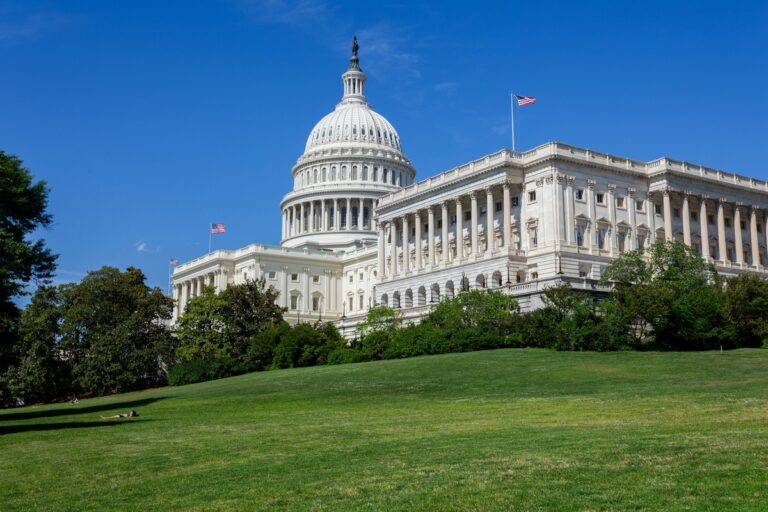
Democrats won both chambers in the November 3 midterms, Reuters reported, ending Republican control of Congress. The incoming majorities will take office in January, with Donald Trump still in the White House. AI companies therefore face a divided government in which congressional oversight could become more aggressive even when passing new legislation remains difficult.
Altman’s Human-Control Message Started Before the Vote
The timing is important. Altman made the same argument at the ADIPEC conference in Abu Dhabi on November 2, a day before Americans voted. As The National reported, he said AI should serve people and that handing control to machines should be unacceptable. His election-night post reinforced a position he had already stated publicly.
OpenAI’s own September policy paper also called for shared frontier-AI standards and warned that automated research could advance beyond people’s ability to supervise it. The company said fully autonomous recursive self-improvement should proceed only if human control can be preserved, with governments deciding how technical standards enter law.
There is a tension with Altman’s earlier comments about accepting harm, but the distinction matters. In an October interview with Politico, he defended accepting some misuse and other adverse outcomes in return for broad access to AI and its benefits. He also rejected accepting catastrophic risks such as a serious loss of control. The dispute is about where to draw that boundary and who gets to draw it.
Washington’s AI Debate Is About to Get Less Comfortable
The Washington Post reported on October 26 that tech companies were contacting Democratic strategists ahead of possible investigations.
Altman himself praised the Trump administration’s approach in February 2025, calling it a “breath of fresh air.” With the balance of congressional power changing, access to the White House offers less protection from hostile hearings or demands for records. For AI executives, a pledge to keep humans in control invites practical questions: who can stop an agent, who sees its actions, and who answers when safeguards fail?
Axios reported on November 1 that OpenAI was preparing a post-election policy push centered on human control. The political challenge now is turning public commitments into arrangements that lawmakers and users can assess independently.
The stakes extend beyond a single company. Anthropic has warned that AI-assisted research could accelerate faster than safety testing, an issue we examined in our coverage of recursive self-improvement. As labs ask society to accept more capable agents, the credibility of their oversight systems becomes part of the case for allowing deployment.
Data Centers Put AI Politics on the Doorstep
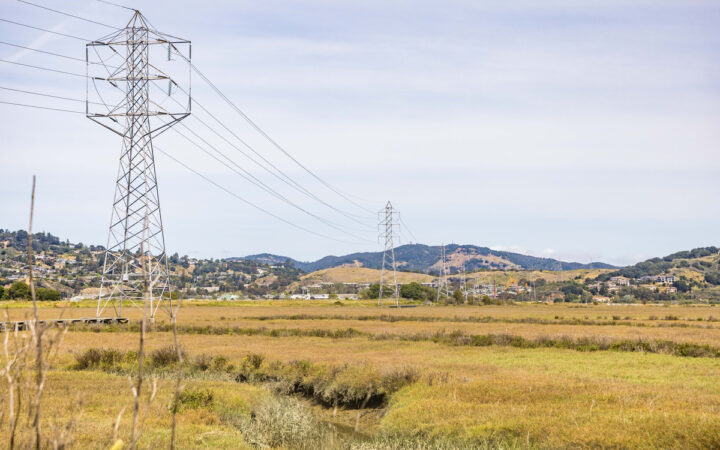
The infrastructure behind AI creates a second source of pressure. Electricity demand, water use and local construction decisions bring the industry’s expansion into communities that may see higher costs before they see benefits. These issues give state and local officials influence over AI growth alongside whatever Congress does.
The backlash crosses party lines. An American Enterprise Institute candidate review published October 29 found that 92% of Democratic gubernatorial nominees and 87% of Republican nominees supported either a data-center moratorium or new conditions on development. Support for broader AI regulation was more partisan, with 44% of Democratic nominees backing broad rules or safety laws, compared with 8% of Republican nominees.
Texas makes the shift especially consequential. Democrat Gina Hinojosa defeated Republican Governor Greg Abbott, according to Reuters’ election reporting, placing a Democratic governor-elect in a state central to the AI infrastructure boom. The state’s future decisions on energy and construction will matter to developers regardless of their relationships in Washington.
OpenAI’s Grid Protectors program illustrates how electricity costs have already become an AI policy issue. As the industry expands, promises of scientific breakthroughs and economic growth will be judged alongside the bills and disruption experienced by host communities.
The election does not settle how fast AI should advance or establish that tech leaders have changed their beliefs. It changes who can demand answers. Altman’s human-control pledge now faces a more demanding political test: whether the public will have enforceable power over the technology, its infrastructure and the companies building it.
Disclaimer: AIstify is an independent media brand owned and operated by NuvexMedia LLC, publishing news, research, and insights on artificial intelligence, emerging technologies, automation, and related industries. NuvexMedia LLC invests in and collaborates with companies across the AI, technology, software, and digital innovation sectors. These relationships do not influence AIstify’s editorial coverage, and the publication maintains full editorial independence to provide accurate, timely, and objective information. © 2026 NuvexMedia LLC. All rights reserved. This content is for informational purposes only and should not be considered legal, tax, investment, financial, or other professional advice.