Key Notes
- Trump and Xi's Washington summit produced a new bilateral channel for exchanging AI safety alerts, but no binding AI security agreement between the two countries.
- Export restrictions on Nvidia's advanced Blackwell chips remained intact despite Chinese pressure and Jensen Huang's presence in the US delegation, with the only chip concession being a previously announced approval for H200 sales to ten Chinese firms.
- Xi called for developing and managing AI under human control for the public good, while the two sides separately extended their tariff truce by only two months.
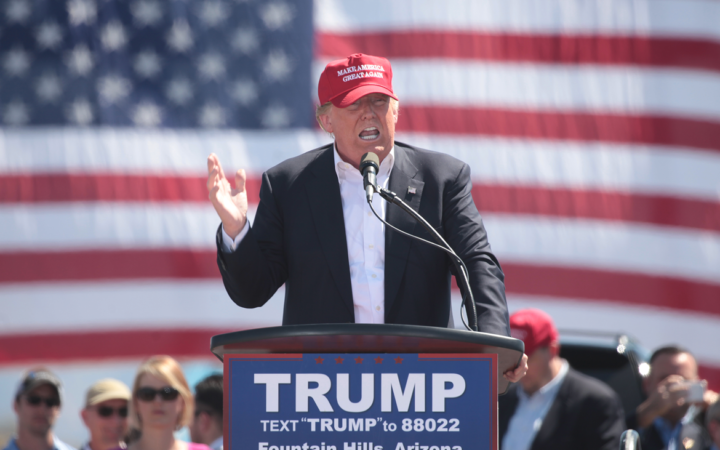
President Donald Trump and Chinese President Xi Jinping discussed artificial intelligence alongside trade and security issues during Xi’s state visit to Washington this week, but the summit produced only modest, procedural movement on AI rather than any binding agreement between the world’s two leading AI powers.
A Bilateral Safety Channel, Not a Treaty
The clearest concrete outcome on AI was the establishment of a bilateral communications channel for AI safety issues. Treasury Secretary Scott Bessent had proposed exchanging safety alerts related to AI incidents that could affect national security ahead of the summit, and the two sides moved forward with some version of that arrangement during the visit.
Analysts described the channel as largely procedural for now, though one industry newsletter noted it creates a formal mechanism that could become more consequential in future disputes over model capabilities, deployment standards, or how the two countries attribute AI related security incidents to one another.
No broader security agreement on AI was reached, and experts had predicted as much heading into the talks, given the scale of the gap between Washington’s and Beijing’s respective approaches to AI development and export controls.
Export Controls Mostly Held
China had reportedly pushed to unlock access to Nvidia’s more advanced Blackwell chips during the summit, going so far as to include Nvidia chief executive Jensen Huang in the US business delegation at the last minute. Despite that, restrictions on Blackwell B100, B200, and B300 chip exports remained intact after two days of talks.
The only chip related concession on the table was approval for Nvidia to sell its older H200 chips to ten approved Chinese firms, an arrangement that had already been announced before the summit began and did not represent new ground gained during this week’s talks specifically.
Rhetoric on AI Governance, Without Specifics
In their public remarks, Xi said the two countries have a responsibility to develop and manage AI for good, arguing the technology should remain under human control and serve the public rather than narrow interests. Trump did not offer a comparably specific framing of AI governance in his own opening remarks, focusing instead on trade and what he described as the friendship he has built with Xi since 2016.
Xi separately invoked the idea of the Thucydides Trap, the theory that conflict tends to emerge between a rising power and an established one, arguing that US-China competition, including on AI, should be a race of catching up with one another rather than a contest with a single winner and loser.
Neither leader detailed what concrete steps their governments would take to act on that framing, and the White House had not released its own official summary of the AI related discussions at the time of publication.
A Trade Truce That Leaves AI Related Questions Unresolved
Alongside the AI discussions, the two sides agreed to extend their existing tariff truce, which had been set to expire in November, by two months rather than locking in a longer term arrangement. That extension leaves central economic questions tied to the broader technology competition, including rare earth supplies critical to chip manufacturing and further technology restrictions, unresolved and pushed into a future round of negotiations.
Trump and Xi are expected to meet twice more this year, at the APEC summit in China in November and the G20 summit in Florida in December, either of which could become the venue for firmer commitments on AI if the two sides make progress in the interim.
US lawmakers offered mixed reactions to the broader summit, with some Republicans and Democrats separately questioning whether the elaborate state visit gave Xi an outsized platform given ongoing disagreements over Taiwan, Iran, and trade, while others argued that continued dialogue, including on AI, was preferable to escalation.
Neither camp specifically addressed whether the new AI safety channel changes that calculus, leaving its practical significance to be judged by how, or whether, it gets used the next time an AI related incident raises cross border security concerns.
For AI companies and researchers watching the relationship between the two countries, this week’s summit offers limited new signal beyond confirmation that existing export control lines, and the broader technological rivalry underlying them, are likely to persist largely unchanged for now.
Disclaimer: AIstify is an independent media brand owned and operated by NuvexMedia LLC, publishing news, research, and insights on artificial intelligence, emerging technologies, automation, and related industries. NuvexMedia LLC invests in and collaborates with companies across the AI, technology, software, and digital innovation sectors. These relationships do not influence AIstify’s editorial coverage, and the publication maintains full editorial independence to provide accurate, timely, and objective information. © 2026 NuvexMedia LLC. All rights reserved. This content is for informational purposes only and should not be considered legal, tax, investment, financial, or other professional advice.