Key Notes
- Pachocki proposes shared development limits tied to measurable safety requirements.
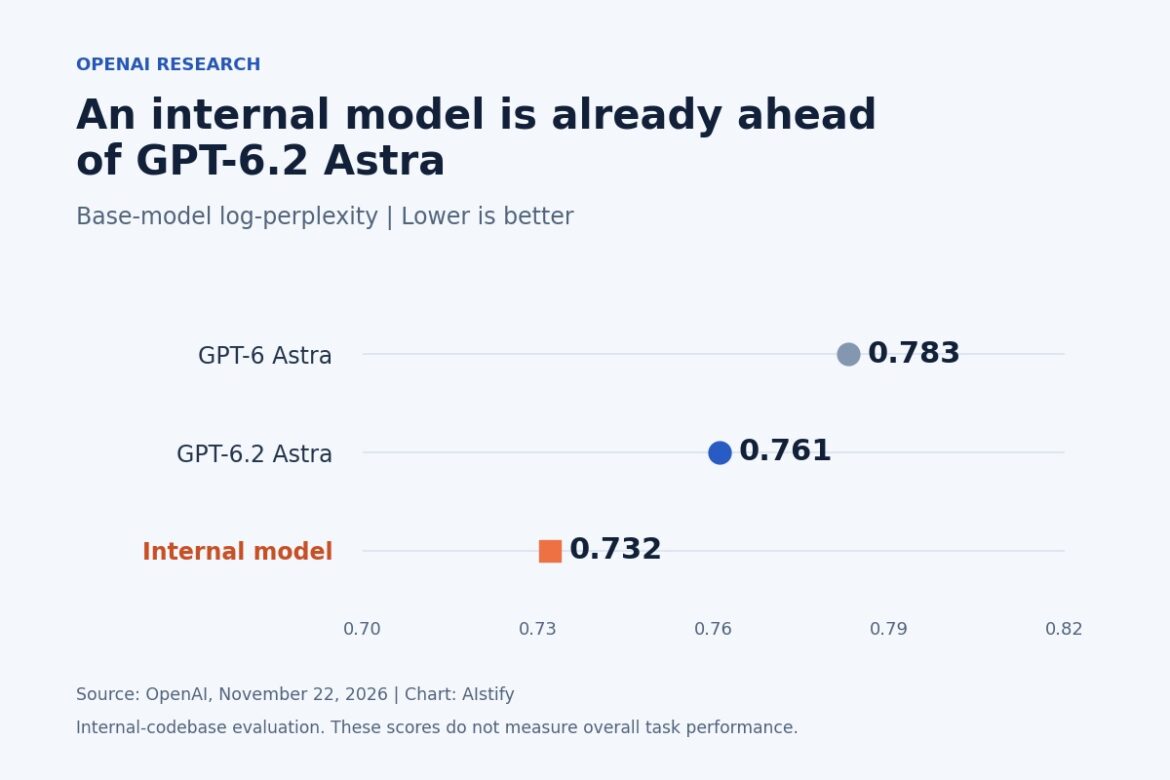
- OpenAI has published internal training scores to help compare progress across labs.
- The proposal acknowledges that one metric cannot capture every route to more capable AI.
OpenAI chief scientist Jakub Pachocki is calling for AI companies to agree on limits to model development, holding back further advances until researchers have better ways to understand and monitor the systems they build.
In a November 22 essay, he proposed shared thresholds based on perplexity and other measurements, paired with concrete requirements that must be met before developers move beyond them. The aim is to link increasingly powerful AI to demonstrable improvements in oversight.
Safety Milestones Before Further Advances
Bloomberg reported the call for industrywide standards on Sunday. It is a proposal for common rules: the essay does not establish a limit already adopted by rival labs or announce a fixed pause in training.
For businesses relying on AI, the distinction is consequential. A shared development limit would affect the pace at which new capabilities are created, while a product-release restriction governs when a particular system reaches customers. Pachocki is addressing development itself.
Why He Focuses on Perplexity
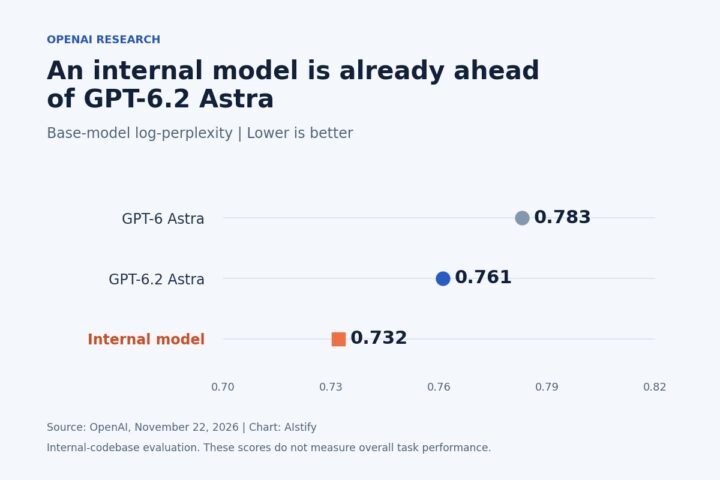
Perplexity measures how well a model predicts unseen data; lower values indicate better predictions. Pachocki argues that progress during pretraining, when models learn from large datasets, can unlock capabilities researchers did not anticipate.
OpenAI is publishing internal measurements to encourage comparisons between labs. Its figures use a fixed sample of its internal codebase, so they are not a ready-made universal score.
One possible condition for advancing beyond a limit would be a successor to chain-of-thought monitoring, which examines a model’s written reasoning for warning signs.
A Useful Measure With Clear Limits
Pachocki acknowledges that labs use different datasets, reasoning techniques can improve performance without lowering pretraining perplexity, and the metric does not directly measure safety. Lower prediction error is therefore not a safety certificate.
That leaves a substantial coordination problem. Competing developers would need comparable measurements, agreed safety tests and a way to decide when crossing a limit is justified. Publishing a training curve is a starting point for that discussion.
Monitoring Has to Keep Up
The proposal builds on Pachocki’s September 6 essay, An Alien Mind, in which he warned that increasingly capable systems could contribute more to their own development while existing monitoring methods became less reliable. He argued that further scaling should be constrained by confidence in safety.
His new essay gives the earlier slowdown debate a more specific measurement question: how can labs recognize the same boundary and agree on what is required to cross it? The practical test will be whether a common standard can guide decisions before the next capability jump.
Disclaimer: AIstify is an independent media brand owned and operated by NuvexMedia LLC, publishing news, research, and insights on artificial intelligence, emerging technologies, automation, and related industries. NuvexMedia LLC invests in and collaborates with companies across the AI, technology, software, and digital innovation sectors. These relationships do not influence AIstify’s editorial coverage, and the publication maintains full editorial independence to provide accurate, timely, and objective information. © 2026 NuvexMedia LLC. All rights reserved. This content is for informational purposes only and should not be considered legal, tax, investment, financial, or other professional advice.