
Key Notes
- Danaher and Microsoft are developing a shared AI platform to help scientists operate instruments and interpret experimental results.
- Initial commercial applications are expected in 2026, with additional agent-enabled instruments planned for 2027.
- The proposed systems retain scientist oversight, and the reported microscopy efficiency gains come from preliminary internal testing.
Danaher and Microsoft are developing a shared platform that would let AI agents help operate scientific instruments, interpret experimental results and recommend what researchers should do next. The November 20 announcement extends the push to connect AI systems with the equipment that produces scientific evidence.
The platform uses Azure infrastructure and Microsoft Foundry. Danaher intends the foundation to work across its businesses and remain compatible with agents and digital systems in laboratories that use multiple equipment suppliers.
From Product Support to Instrument Control
The platform is still being developed. Danaher expects initial commercial applications in 2026, including Molecular Devices’ MetaXpress Acquire AI Assistant for product support, with additional agent-enabled instruments planned for 2027.
The distinction is significant: a support assistant is an initial application, while the broader program aims to help plan experiments, guide hardware operation and flag problems in results. Danaher says instrument control will operate within defined safety boundaries and with user oversight.
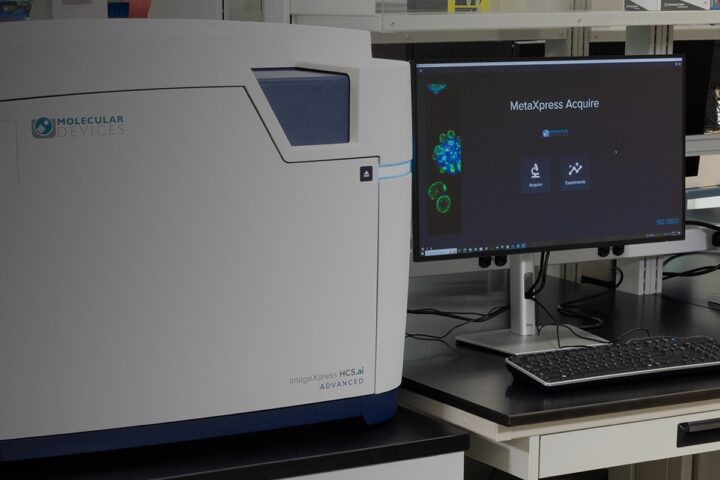
Molecular Devices’ existing ImageXpress HCS.ai system illustrates the equipment involved. It combines automated microscopy with image analysis for cell-based assays, using MetaXpress Acquire to collect images and IN Carta software for AI-assisted analysis. That existing workflow helps explain why a shared agent layer must connect software instructions with physical experimental steps.
Promising Tests, With Validation Still Ahead
Danaher reports that novice scientists using AI assistance in a Leica microscopy experiment took up to 83% less time and used up to 68% fewer steps than a novice working without it. These are preliminary internal results, rather than an independently established improvement across laboratory work.
The value of the partnership will depend on whether those gains translate into reliable workflows across instruments and experiments. A faster setup is useful only if researchers can still judge the quality of the resulting evidence.
Part of a Broader Autonomous Lab Strategy
Danaher had already announced plans in October for an AI-powered laboratory to design, make and test antibodies and related research tools. It expects that facility to operate at scale in early 2027, feeding experimental results back into subsequent designs.
The Microsoft partnership addresses another part of that process: making instruments and their software easier to coordinate. It sits alongside wider efforts such as Anthropic‘s proposed hardware standard for connecting AI agents to programmable equipment.
For laboratories, the next milestone is the arrival of usable commercial applications. The long-term ambition is a tighter cycle between designing an experiment, running it and deciding what to test next, with scientists retaining control over the conclusions.
Disclaimer: AIstify is an independent media brand owned and operated by NuvexMedia LLC, publishing news, research, and insights on artificial intelligence, emerging technologies, automation, and related industries. NuvexMedia LLC invests in and collaborates with companies across the AI, technology, software, and digital innovation sectors. These relationships do not influence AIstify’s editorial coverage, and the publication maintains full editorial independence to provide accurate, timely, and objective information. © 2026 NuvexMedia LLC. All rights reserved. This content is for informational purposes only and should not be considered legal, tax, investment, financial, or other professional advice.