Key Notes
- Anthropic opened a research preview of the Model Hardware Standard (MHS), its first physical-world product, letting AI agents like Claude operate lab and manufacturing hardware (microscopes, liquid handlers, robotic arms) via a standardized, model-agnostic driver.
- Anthropic says MHS cuts device-integration time from weeks/months to hours; partners include AWS, Danaher, Genentech, QIAGEN, Tecan, Universal Robots and Hugging Face, with Anthropic citing internal tests like a 3x-faster serial dilution run and blocking six induced fault conditions.
- Anthropic discloses real limits: Claude's spatial reasoning still needs expert oversight (e.g., Genentech had to correct it for treating a physical fluid-handling issue as a software bug), and MHS doesn't yet work with hardware lacking a programmable interface; the standard will stay closed during this preview before an eventual open-source release.
Anthropic opened a research preview of the Model Hardware Standard, or MHS, a shared specification that lets AI agents operate physical lab and manufacturing equipment, marking the company’s first product designed to work in the physical rather than digital world. The standard is being shared initially with a select group of scientific research labs and advanced manufacturers, ahead of an eventual open-source release.
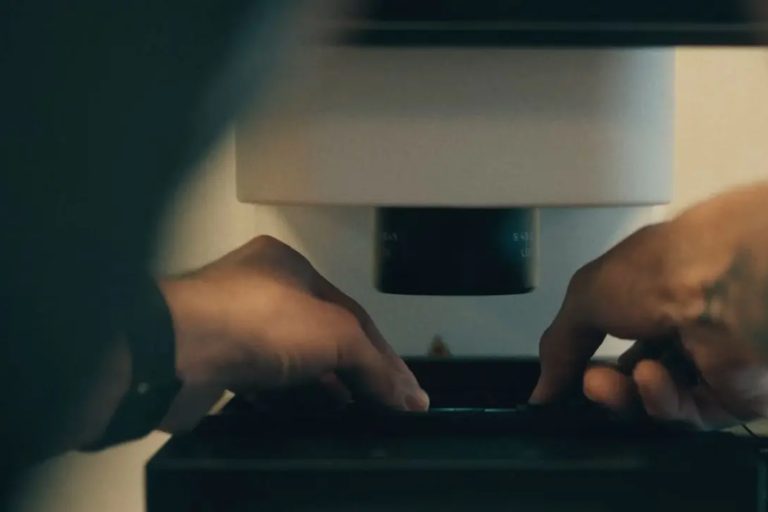
MHS is built to let agents like Claude control multiple instruments in parallel, such as microscopes, liquid handlers and robotic arms, performing tasks ranging from routine drug discovery experiments to laser calibration on a quantum computer. Anthropic says integrating a piece of lab or factory hardware typically takes weeks or months, since most devices don’t communicate with each other and require specialists to build custom integrations; MHS aims to cut that to hours or minutes through a standardized driver that translates between a computer’s operating system and any device with a programmable interface.
The driver uses simple commands, such as “read” or “write,” that any hardware can understand, and makes devices discoverable in a standard format so agents can find and communicate with them without a bespoke translator program. It also lets users describe a device’s characteristics, such as a robot arm’s weight, in natural language, which the system turns into a reference file telling the agent what the device can measure, adjust and safely do. Notably, MHS is model-agnostic, meaning it works with any AI agent, not only Claude, using standard protocols like the Model Context Protocol that Anthropic open-sourced in 2024.
The standard grew out of a collaboration between Anthropic and the HHMI Janelia Research Campus. Early partners spanning biotech, robotics, quantum computing and electronics include Amazon Web Services, which is building MHS support into its Strands Robots library; Danaher and Genentech, exploring uses in biomedical research; QIAGEN, testing troubleshooting on its nucleic acid purification platform; Tecan and Universal Robots, integrating it into liquid handling and robotic arm systems; and Hugging Face, adding support to its LeRobot library.
Anthropic shared its own account of testing the system, describing Claude interacting with a laser calibration task in an exploratory, scientist-like manner: adjusting the laser, observing the result through a camera, and repeating the process until it could package what it learned into a deterministic script that ran the alignment as a single command without needing to reason through every step.
Real Limitations, Disclosed Upfront
Anthropic was notably candid about where the system still falls short. Because Claude, as a large language model, learns about the physical world primarily through text and images, its spatial and physical reasoning has real limitations that still require expert human oversight. In one disclosed example, Genentech researchers had to guide Claude to recognize that foaming in protein samples was a physical failure requiring a physical fix, not a software bug it could troubleshoot by retrying commands.
MHS also does not yet work with hardware lacking a programmable interface, and Anthropic says it is working with manufacturers to build in support for more devices, including electronics like boards and cameras that developers already operate through Claude Code.
Why It Matters
The launch places Anthropic squarely in the growing contest over “physical AI,” alongside Nvidia, which has championed the idea that industrial companies will increasingly become robotics companies, and Hugging Face, which separately debuted a robotics product the same day, though not built on MHS.
Anthropic frames MHS’s role as similar to how MCP standardized software connections between AI agents and data sources: a shared, open specification meant to prevent vendor lock-in and fragmented, proprietary hardware integrations that Anthropic’s head of science partnerships, Jonah Cool, said often leave scientific equipment “brittle” and poorly suited to researchers’ needs. Anthropic says it will use the research preview to build additional safety evaluations with launch partners and develop a broader physical-safety roadmap before the standard is opened to the wider developer community.
Disclaimer: AIstify is an independent media brand owned and operated by NuvexMedia LLC, publishing news, research, and insights on artificial intelligence, emerging technologies, automation, and related industries. NuvexMedia LLC invests in and collaborates with companies across the AI, technology, software, and digital innovation sectors. These relationships do not influence AIstify’s editorial coverage, and the publication maintains full editorial independence to provide accurate, timely, and objective information. © 2026 NuvexMedia LLC. All rights reserved. This content is for informational purposes only and should not be considered legal, tax, investment, financial, or other professional advice.