
Key Notes
- Alibaba’s Qwen Glasses N1 series has gone on sale in China, with reported prices before discounts of 2,999 yuan for N1 and 3,499 yuan for N1 Pro.
- The Pro version adds eye tracking for visual interaction and iris-based payment verification, while the series uses a 50-megapixel camera sensor.
- Qwen Clip costs a reported 1,299 yuan and combines a Bose-co-engineered open-ear design with translation, AI notes and voice-driven tasks.
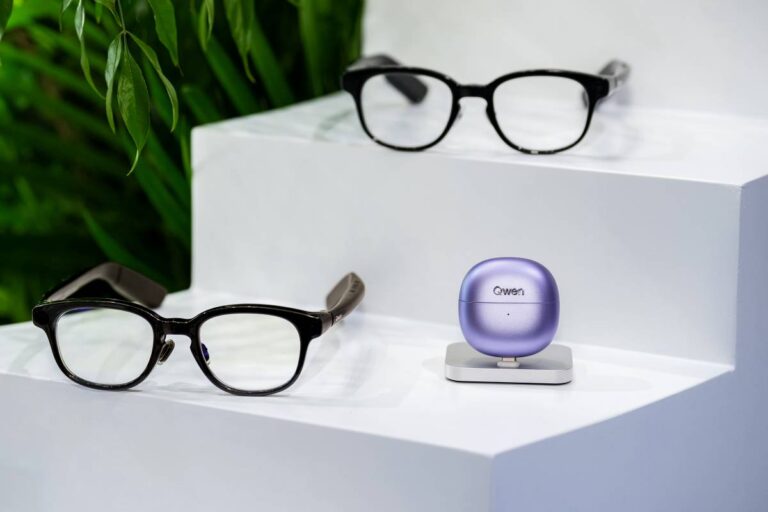
Alibaba has started selling its Qwen Glasses N1 series in China, putting its AI assistant into camera-equipped eyewear and introducing a Pro version that can follow the wearer’s gaze. Alongside the glasses, the company is launching Qwen Clip, a pair of open-ear AI earbuds developed with Bose.
The standard glasses start at 2,999 yuan, approximately $450, before discounts, while N1 Pro costs 3,499 yuan, Bloomberg reported from the October 13 launch in Hangzhou. Qwen Clip is priced at 1,299 yuan. Those reported prices should be distinguished from temporary retailer offers and subsidies, which can reduce the amount buyers pay in China.
The products were first shown at September’s Apsara Conference. Alibaba’s hardware announcement set September 22 for preorders and October 13 for official sales. Today’s retail launch turns that earlier preview into a consumer product offering, rather than marking the first disclosure of the N1 family.
N1 Pro Makes Looking Part of the Interface
Alibaba says the N1 series uses a 50-megapixel sensor for first-person capture. The Pro model adds eye tracking for visual interaction, including recognizing objects, and iris-based payment verification. These are the clearest differences in the company’s published overview between the standard glasses and the more expensive version.
Gaze tracking could make a wearable assistant easier to direct. Instead of describing which object they mean, users can look toward it and ask a question. The practical test is whether the system consistently connects the request to the right object, especially when several items are close together or the wearer is moving.
The glasses also support voice interaction with Qwen, shopping, payments and health tracking, according to the launch account. Alibaba quoted up to nine hours of music playback or 25 hours of standby on a charge, Bloomberg reported. Those figures describe different operating modes; they should not be read as a promise of nine hours of continuous camera use or AI processing.
The combination gives Alibaba a way to move shopping assistance closer to the moment someone notices a product. A camera can supply visual context, gaze tracking can narrow the target, and the assistant can handle a spoken request. That is a different interaction from opening a shopping app and typing a search.
The reported launch prices place the three products at different entry points:
| Product | Price before discounts |
|---|---|
| Qwen Glasses N1 | 2,999 yuan |
| Qwen Glasses N1 Pro | 3,499 yuan |
| Qwen Clip | 1,299 yuan |
Qwen Clip Offers Another Route Into the Assistant
Qwen Clip puts the assistant in an open-ear, clip-on design. Alibaba says the Bose-co-engineered earbuds support face-to-face translation, AI note-taking and tasks initiated by voice. At the reported 1,299-yuan price, they provide a lower-cost way into the wearable lineup for people who do not want camera-equipped glasses.
The two formats also suggest different everyday uses. Glasses can connect a spoken request to a visual scene, while earbuds are better suited to an audio interaction that does not require the user to point a camera. Translation and notes offer a straightforward starting point for a device that people may already wear for listening and calls.
Alibaba brings an established commerce ecosystem to that contest. In its May shopping announcement, the company said Qwen’s app had gained access to Taobao and Tmall’s full catalog, allowing users to browse, compare, order and manage deliveries through conversation. That app integration provides context for the glasses’ shopping ambitions, although it does not establish that every app function is available on each wearable.
The launch extends a broader effort to make Qwen useful beyond a chat window. We have covered Alibaba’s multimodal model work and its expanding AI hardware roadmap. Those projects address the models and infrastructure behind the assistant; wearables bring the competition into everyday routines, where users judge how quickly and easily a task gets done.
For now, the confirmed retail launch is in China. The stronger long-term proposition is an assistant that can connect what a person sees or hears with an action they want completed. Whether buyers keep wearing these devices will depend on how well that experience works in ordinary settings, alongside comfort, battery life and reliable confirmation of purchases.
Disclaimer: AIstify is an independent media brand owned and operated by NuvexMedia LLC, publishing news, research, and insights on artificial intelligence, emerging technologies, automation, and related industries. NuvexMedia LLC invests in and collaborates with companies across the AI, technology, software, and digital innovation sectors. These relationships do not influence AIstify’s editorial coverage, and the publication maintains full editorial independence to provide accurate, timely, and objective information. © 2026 NuvexMedia LLC. All rights reserved. This content is for informational purposes only and should not be considered legal, tax, investment, financial, or other professional advice.