
Key Notes
- Donald Trump says he and Xi Jinping have agreed to develop joint safeguards for artificial intelligence.
- Scott Bessent says the two countries want humans involved in major military decisions using AI, with no autonomous launch of major operations.
- Public statements leave technical standards and enforcement unspecified, while American restrictions on advanced computing access continue.
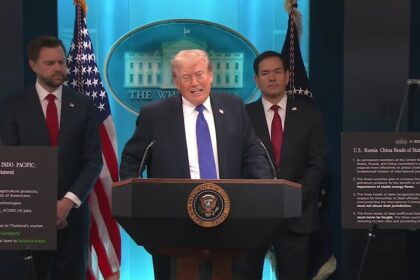
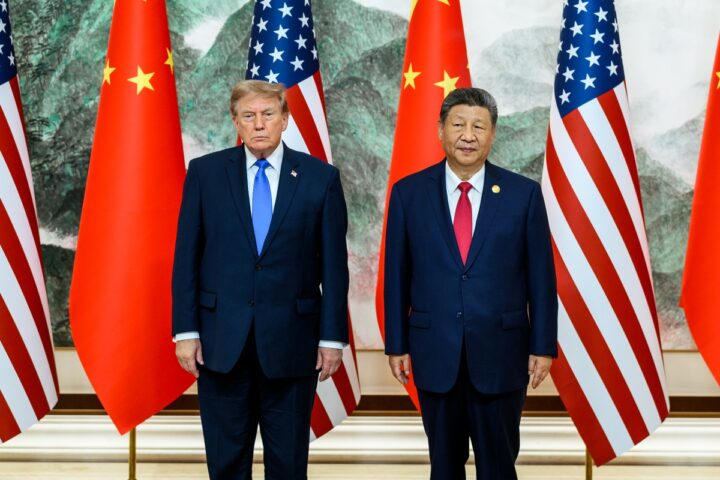
President Donald Trump said on November 20 that the United States and China would develop joint safeguards for artificial intelligence, following his meeting with Chinese President Xi Jinping in Shenzhen. The announcement puts cooperation on AI risks alongside the two countries’ increasingly restrictive competition over advanced computing.
Speaking at a White House news conference after returning from Asia, Trump said: “President Xi and I agree that we’re going to do some joint guardrails, the two of us.”
The clearest substantive commitment described by his administration concerns military use. Treasury Secretary Scott Bessent said the two leaders agreed that humans must remain involved in major military decisions involving AI, and that the technology should not autonomously initiate major military action.
The public remarks outline an agreement to pursue safeguards. They do not set out a completed regulatory framework, technical standards or an enforcement mechanism for AI companies.
Human Control Over Military AI
Bessent discussed the understanding in an interview with CNBC’s Squawk on the Street on Friday. Reuters reported that he presented human involvement in military decisions as a major achievement of Trump’s visit, separate from the competition between American and Chinese AI developers.
His description gives the diplomatic pledge a specific focus: decisions about launching major military operations. It does not amount to a general prohibition on military AI or establish detailed requirements for every system used by armed forces.
China’s published account of the November 19 bilateral meeting says Xi called for stronger communication and coordination to manage AI security risks and keep the technology under human control. That account supports the broad direction of cooperation, while offering no technical definition of the safeguards.
For AI developers, the unresolved question is how that principle would be translated into the design, testing and deployment of systems. A commitment to human involvement leaves important practical details to be negotiated, including which decisions are covered and what oversight must entail.
Safety Talks Continue Alongside Chip Restrictions
The two governments already have a channel for these discussions. A September White House fact sheet announced a bilateral dialogue on AI risks and benefits, along with a communication channel for AI incidents. The administration calls the technology “super intelligence,” a term Trump also used at Friday’s news conference.
As our coverage of the September summit explained, creating a diplomatic channel was an initial step. Friday’s remarks identify human control in military decisions as a concrete subject of agreement, while broader rules remain to be developed.
At the same time, Washington has tightened controls on access to the computing power needed to develop advanced models. On November 16, the Commerce Department’s Bureau of Industry and Security released a rule aimed at preventing restricted users from obtaining advanced American chips and servers remotely through data centers in third countries.
That issue is central to suppliers such as NVIDIA and to cloud providers serving AI developers. AIstify examined how the measure extends the export-control contest beyond physical chip shipments to access to overseas computing infrastructure.
The two tracks address different questions: safety cooperation concerns how powerful AI is used, while export restrictions govern who can obtain the technology needed to build it. The summit statements provide a basis for further negotiations, but leave companies waiting for the standards, scope and implementation details that would turn the leaders’ pledge into operational rules.
Disclaimer: AIstify is an independent media brand owned and operated by NuvexMedia LLC, publishing news, research, and insights on artificial intelligence, emerging technologies, automation, and related industries. NuvexMedia LLC invests in and collaborates with companies across the AI, technology, software, and digital innovation sectors. These relationships do not influence AIstify’s editorial coverage, and the publication maintains full editorial independence to provide accurate, timely, and objective information. © 2026 NuvexMedia LLC. All rights reserved. This content is for informational purposes only and should not be considered legal, tax, investment, financial, or other professional advice.