Key Notes
- Anthropic sought six-month rival-work restrictions for core IPO bankers, Reuters reports.
- Project Lantern used small teams and controlled document access, Reuters says.
- Anthropic's completed IPO and concurrent private placement totaled about $119.5 billion before fees.
Anthropic asked senior bank officials to sign documents preventing core IPO deal-team members from working with competitors for six months after its stock-market debut, Reuters reported on November 22, citing people familiar with the matter. The named rivals included OpenAI, Cursor, DeepSeek and Hugging Face.
The proposed limits applied to core deal-team members, rather than every service offered by the banks.
Inside Project Lantern
The IPO, code-named Project Lantern, included instructions to some underwriters to limit teams to four senior bankers. Reuters also described NetRoadshow documents carrying individual watermarks and access tracking, with downloads blocked.
At least one banker declined to sign the rival-work agreement. Anthropic, Goldman Sachs and Morgan Stanley declined to comment to Reuters.
The Scale Behind the Negotiations
Anthropic announced on November 20 that its IPO had closed after underwriters exercised their full option to buy additional shares. The completed offering comprised 1.127 billion shares at $83 each, including 147 million option shares.
That brought gross IPO proceeds to about $93.5 billion, including shares sold by existing stockholders. Anthropic itself received approximately $91.6 billion before fees and expenses. A separate $26 billion private placement lifted the combined transactions to roughly $119.5 billion; the total includes money paid to selling stockholders, as well as capital raised by the company.
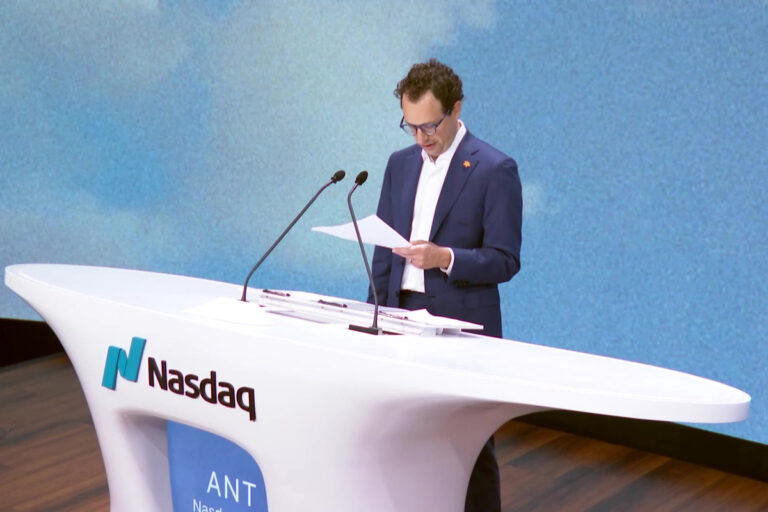
Goldman Sachs and Morgan Stanley led the underwriting syndicate. Anthropic began trading on Nasdaq under ANT on November 19, with its first-day close above the offer price.
AI Competition Reaches the Deal Team
For banks, the practical question is who can take the next assignment. Limits on individual bankers would affect how a firm staffs rival mandates, even if other teams remain available. In that sense, the reported demands extend AI competition beyond customers and computing power to the advisers who help companies raise their next round of capital.
Disclaimer: AIstify is an independent media brand owned and operated by NuvexMedia LLC, publishing news, research, and insights on artificial intelligence, emerging technologies, automation, and related industries. NuvexMedia LLC invests in and collaborates with companies across the AI, technology, software, and digital innovation sectors. These relationships do not influence AIstify’s editorial coverage, and the publication maintains full editorial independence to provide accurate, timely, and objective information. © 2026 NuvexMedia LLC. All rights reserved. This content is for informational purposes only and should not be considered legal, tax, investment, financial, or other professional advice.